
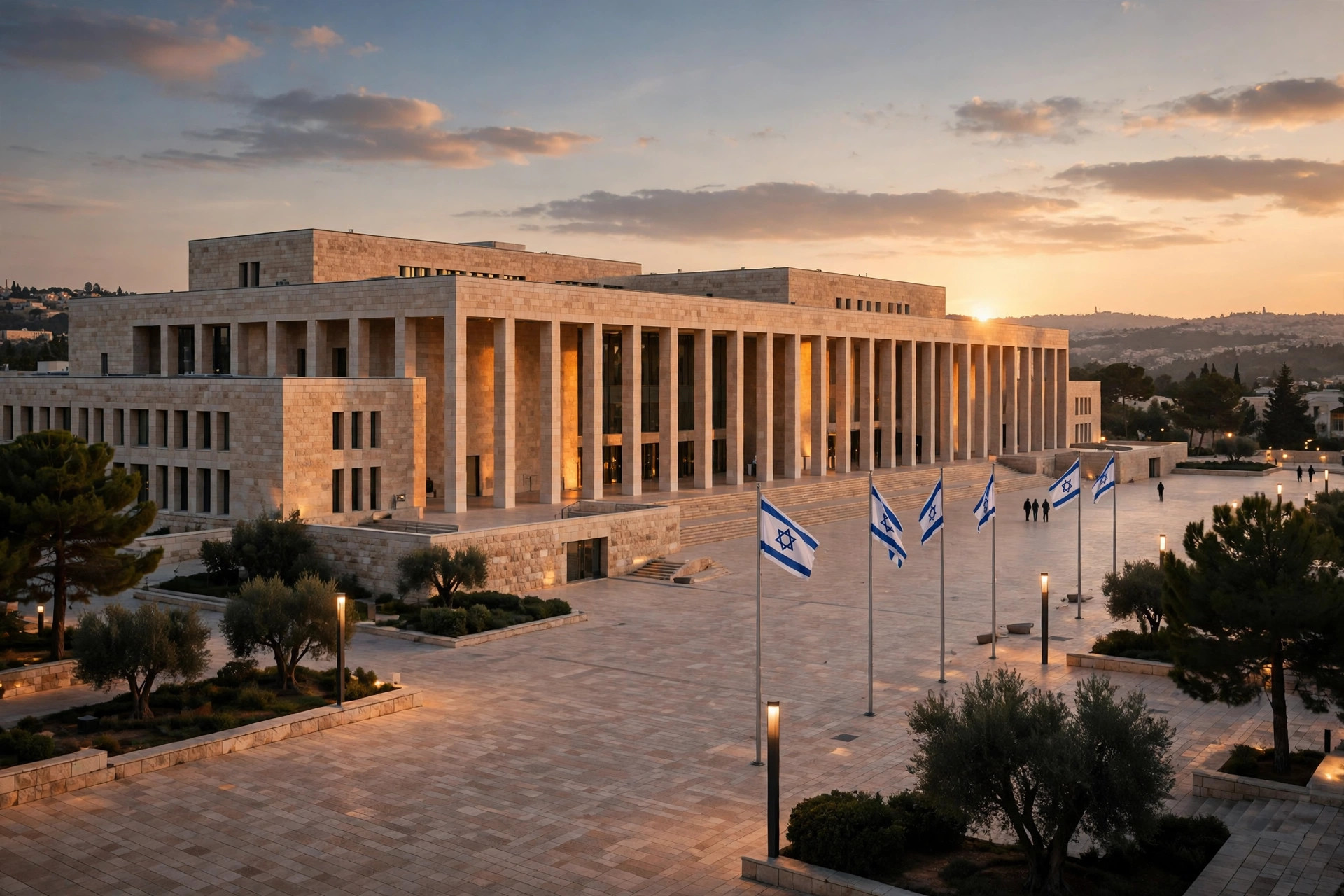
The Israel election results 2026 final count left Israel without a clear winner. With 100% of votes counted, Prime Minister Benjamin Netanyahu's bloc won 53 seats in the 120-seat Knesset, the opposition bloc won 48, and the two Arab parties won 19, according to figures reported from the Central Elections Committee. No bloc reached the 61 seats needed to form a majority government. Likud emerged as the largest individual party with 27 seats, followed by Gadi Eisenkot's Yashar with 21 and Naftali Bennett's B'Yachad (Together) with 12. The result, announced on Thursday 29 October after the count of Tuesday's election was completed, set up weeks of coalition talks, and possibly months of bargaining, with the possibility of a fresh vote if no government can be formed. This article explains the final numbers, how they changed from the exit polls, why the Arab parties matter more than ever, and what President Isaac Herzog must do next.
Israel election results 2026 final: the seat-by-seat breakdown
The final bloc breakdown, as reported by United with Israel and by JFeed from the committee's figures, was 53 seats for Netanyahu's current coalition, 48 for the opposing bloc and 19 for the Arab parties. The committee said 5,589,836 votes were cast, of which 5,564,764 were valid and 25,072 invalid, according to Globes reporting summarised in the coverage. Within the blocs, the party results were: Likud 27; Yashar 21; B'Yachad 12; the Joint List 11; the Democrats and Ra'am eight each; Yisrael Beiteinu, Otzma Yehudit and United Torah Judaism seven each; and Shas and the Religious Zionism-Zehut alliance six each. The outgoing coalition of Likud, Shas, United Torah Judaism, Otzma Yehudit and Religious Zionism therefore held 53 seats, eight short of a majority. The opposition "change bloc" of Yashar, B'Yachad, the Democrats and Yisrael Beiteinu held 48, thirteen short.
The arithmetic that matters most is the combined opposition figure. Adding the change bloc's 48 seats to the Arab parties' 19 gives 67 seats, a majority in the 120-seat Knesset. But that is only arithmetic: no such alliance had been agreed, and the reporting stressed the obstacles. Two of Eisenkot's own allies have refused to rely on the Arab parties, according to one account of the talks, and Avigdor Lieberman of Yisrael Beiteinu has repeatedly insisted he will not work with the Arab parties. The Arab parties themselves, however, indicated willingness to cooperate with the opposition to end Netanyahu's hold on power, according to the reporting. Whether that willingness can be turned into a workable political arrangement, or even into a looser arrangement for a specific vote, was the central question of the days after the count. The final count changed little from the last partial results: Likud gained one seat while Shas lost one, according to one summary, and the overall balance was not predicted to change once the double-envelope ballots of soldiers, diplomats and others voting away from their usual polling station were counted.
Israel election results 2026 final: how the count compared with exit polls
Exit polls on election night had put Netanyahu's bloc at 50 seats, short of 61, in our earlier reporting of the first projections. The final count of 53 was therefore better for Netanyahu than the exit polls suggested, but still well short of a majority. The gap between exit polls and final counts is normal in Israeli elections, because exit polls are surveys of voters leaving polling stations and do not fully capture late-counted ballots, including the double-envelope votes. What the final count confirmed was the broad shape of the exit polls: a narrow lead for Netanyahu's bloc, no majority for either camp, and a much larger Arab representation than in the outgoing Knesset. CNN's summary put it plainly: Netanyahu had not won, but he had not lost either, at least not yet. His task after the count was to stop his rivals from building their own government, while his rivals' task was to find a formula, with or without the Arab parties, that could reach 61 without breaking their own bloc apart.
Turnout was a major part of the story. Overall turnout reached 77.7%, the highest in an Israeli election since 1999 and 7.1 percentage points higher than in 2022, according to the reporting of the final results. Turnout in Arab communities was reported at approximately 80%, exceptionally high after years of decline, and Le Monde reported turnout of nearly 80% in Arab and so-called mixed cities. The Arab parties' combined 19 seats, up from 10 held by Arab parties in the outgoing Knesset, reflected that mobilisation. The Joint List won 11 seats and Ra'am eight. Arab citizens make up about 21% of Israel's population, according to Le Monde. The increase in representation was hailed by Arab leaders as historic, but it came with a bitter aftertaste, Le Monde reported, because the unprecedented turnout did not, by itself, deliver the pivotal role the parties had hoped for. The opposition bloc still did not treat them as partners, even while seeking their votes.
Why the Arab parties hold the balance in the Israel election results
The Arab parties' position illustrates a distinction in parliamentary politics between holding seats and holding power. With 19 seats, the Joint List and Ra'am together held more seats than any party except Likud and Yashar, and enough seats to give either bloc a majority if added to it. But neither bloc could simply add them without political cost. For Netanyahu's bloc, which had tried to keep Arab parties off the ballot in earlier disputes, cooperation was not a realistic path. For the opposition, cooperation raised difficult questions about the composition of a government and about which parties would sit in it, support it from outside, or merely vote with it on specific measures. Le Monde reported that Arab leaders sent multiple statements urging the opposition to establish political cooperation, if not an alliance, and said they had formed a united front to drive from power a government dominated by the far right and its figures Itamar Ben-Gvir and Bezalel Smotrich. The opposition's response, in public at least, remained cautious.
One early test discussed in the reporting was control of the Knesset itself. An opposition move, with Arab support, to replace the current Likud Speaker of the Knesset with one of its own would give the opposition control over the legislative agenda and allow it to advance legislation Netanyahu would oppose. Such a move would signal that the 67-seat arithmetic could be used in practice, even if a full governing coalition could not be agreed. It would also test whether the parties that refuse to rely on Arab parties in government would accept their votes for a procedural decision. The reporting suggested such a move was likely, but the coming days would tell. Readers should be careful not to treat any single procedural vote as proof that a government has been formed: in a hung parliament, control of the agenda and the ability to govern are related but different things.
What happens next: Herzog, consultations and coalition talks
Under Israel's system, the next move belonged to President Isaac Herzog, who consults the elected parties and tasks a member of the Knesset, usually the leader of the largest party or the leader judged most likely to succeed, with forming a government. The candidate then has a set period to negotiate a coalition that can command the support of at least 61 members, with the possibility of extensions. If that candidate fails, the President may task another candidate, and if no candidate succeeds, the Knesset may face another election. CNN reported that the inconclusive result could mean weeks, possibly months, in which Netanyahu's survival remained on the line, and that Netanyahu, in a political career spanning more than three decades, had been written off many times only to survive. That history is a warning against treating the final count as the final political outcome: the count settles the seats, but the bargaining that follows settles who governs.
Three paths were visible after the final count, and each carried obstacles. The first was a Netanyahu-led government that found eight additional seats, which would require support from parties currently outside his bloc, a prospect the reporting treated as difficult. The second was an Eisenkot-led government that found thirteen additional seats, which on the numbers required Arab support in some form, which some of his allies resisted. The third was a broader or rotation arrangement that crossed bloc lines, which would require compromises that neither side had signalled it was ready to make. A fourth possibility, another election, remained in reserve if talks failed. None of these paths could be judged from the seat numbers alone, because coalition talks turn on policy, personalities, legal questions and the order in which concessions are made. What could be said with confidence was that Israel faced a period of negotiation in which the Arab parties, the smaller opposition parties and the President's consultations would all matter more than they had in the outgoing parliament.
Why the deadlock matters beyond Israel
An inconclusive election in Israel matters beyond its borders because the country is in a period of war and regional tension, with questions about the future of Gaza, relations with the United States, and the handling of the conflict with Iran all awaiting government decisions. A caretaker or transitional government can manage day-to-day affairs, but major decisions about war, peace and budgets are harder to take without a stable majority. At the same time, Israeli politics has recent experience of extended deadlock and repeated elections, and the system is designed to keep government functioning while talks proceed. The international response to the result was therefore likely to be watchful rather than immediate: allies and neighbours would wait to see who could form a government and what that government said it would do. For readers, the key discipline is to follow the consultations and the coalition arithmetic, not the claims of victory made on election night. Netanyahu's claim of a majority, noted in the reporting, was not supported by the count, which showed 53 seats, not 61. The final Israel election results 2026 count is the baseline for everything that follows, and every coalition claim should be tested against it. Related coverage includes our voting-day report on polls opening as Netanyahu fought for survival, the Netanyahu versus Eisenkot deadlock explainer, and the exit-poll results that first showed no bloc reaching 61.