
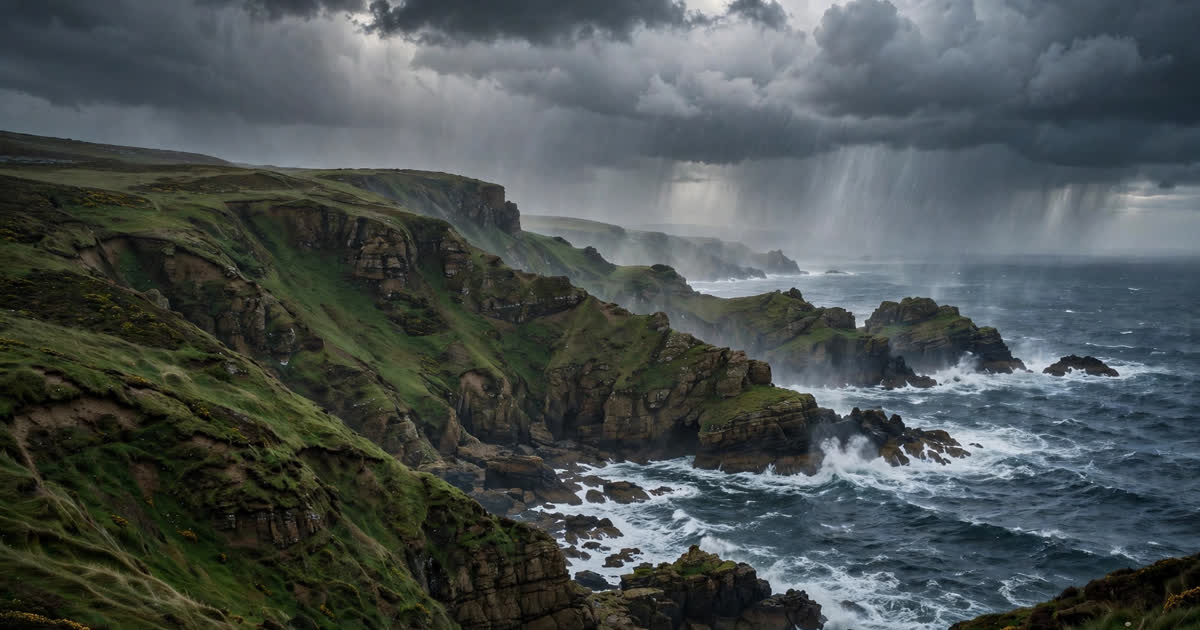
How to Read the Ireland Weather Forecast
The Ireland weather forecast is best read as three layers: the headline, the hourly detail, and the warnings. The headline tells you the broad story for today and tomorrow, such as rain clearing to showers with strong winds. The hourly detail tells you when the rain actually arrives in your county, which is what decides whether to walk, cycle or drive. The warnings tell you whether the weather crosses from unpleasant into dangerous, and they are the layer most people skip until a storm arrives.
Start with Met Eireann's website or app, enter your county or town, and look at the hourly forecast rather than a single daily symbol. A day marked as rain may be dry until late afternoon, and a day marked as cloudy may include the week's best bright spell. Wind is often the real story in Ireland: gusts matter more than average wind speed, especially on exposed coasts, bridges and high ground. The Ireland weather forecast always pairs wind with rain for a reason, because the combination is what disrupts travel and outdoor plans.
Met Eireann Warnings: Yellow, Orange and Red Explained
Met Eireann issues colour-coded warnings by county and by weather type, most often wind, rain, snow, fog, thunderstorms and coastal flooding. Status Yellow is the lowest level: weather that may cause localised disruption, such as surface water on roads or difficult driving in exposed places. It is a prompt to check conditions, not a reason to cancel everything. Status Orange is a step up: be prepared, because disruption is likely, with possible power outages, fallen trees, coastal overtopping and difficult travel.
Status Red is rare and serious. It means dangerous weather is expected, with a risk to life, and the advice is usually to stay indoors, avoid all non-essential travel, and secure loose objects. Red warnings are issued only when forecasters have high confidence in severe impacts, which is why they should never be treated as exaggeration. Warnings also carry valid times and counties, so an Orange warning for Donegal from 2pm to 9am does not mean Dublin faces the same risk. Read the warning itself, not just the colour, and re-check it during the event, because the Ireland weather forecast and its warnings are updated as storms evolve.
Storm Names and the Atlantic Pattern
Ireland's storms arrive from the Atlantic, usually from the west and south-west, and the strongest tend to cluster in autumn and winter. When a storm is expected to bring medium or high impacts, Met Eireann and the UK Met Office give it a name from a shared seasonal list, alternating male and female names. Naming is a communication tool: a named storm is easier to track in news and social media, and it signals that the public should pay attention.
Not every windy day gets a name, and an unnamed system can still bring heavy rain and local flooding. The pattern to watch is a deep low-pressure system tracking close to Ireland, which brings strong winds on its southern flank and heavy rain ahead of it. After the front passes, blustery showers often follow, with hail and even thunder in colder air. Understanding this rhythm helps you read the Ireland weather forecast like a local: the worst weather usually arrives with the front, and the clean-up weather afterwards is showery rather than calm.
Ireland Weather Forecast by Region and Season
Ireland's weather varies more by region than many visitors expect. The west and south-west coasts are wettest and windiest, catching Atlantic systems first, while the east around Dublin is often drier and more sheltered. The north-west faces the full Atlantic fetch, and inland counties can see colder nights and fog in calm, clear spells. Mountains add another layer: conditions on a summit can be far worse than in the valley below, with lower temperatures, stronger winds and sudden cloud.
Seasonally, summer brings the longest days and the best chance of settled spells, though rain is possible in any month and sunshine is rarely guaranteed for a whole week. Autumn is storm season, winter brings short days, gales and occasional snow, and spring mixes bright days with cold snaps and late frosts. For trip planning, the Ireland weather forecast for your exact county beats any national summary, and packing a waterproof layer in every season is simply good sense. If your plans include driving, also read our guide to travelling on a budget, which covers flexible bookings that help when weather forces a change.
Planning Travel Around the Ireland Weather Forecast
The practical rule is to check twice: once when planning, once on the day. For ferries, flights and long drives, check the operator as well as the forecast, because a Status Orange warning may cancel sailings or flights even while roads remain passable. Coastal walks, beach days and boat trips need extra care: tide times, wave height and wind direction matter as much as rainfall, and exposed headlands can be dangerous in gusts that feel manageable inland.
Drivers should watch for surface water, spray and fallen branches, and allow extra time rather than extra speed. Cyclists and walkers should choose sheltered routes in strong winds and carry a charged phone. Event organisers and sports fans should check venue announcements, since matches and festivals are sometimes postponed for safety. And remember that the Ireland weather forecast is a forecast, not a promise: if conditions on the ground look worse than predicted, trust what you see and delay the journey. For longer trips, travel insurance explained covers what weather disruption policies usually do and do not include.
Ireland Weather Forecast: A Daily Checklist
Make the Ireland weather forecast part of your morning routine and it stops being a source of surprises. First, check today's hourly forecast for your county, noting when rain starts and stops and how strong gusts will be. Second, check warnings for your county and any county you will travel through, including coastal warnings if you are near the sea. Third, check rainfall radar for the next few hours if you are deciding whether to go out now or wait.
Fourth, dress for wind as well as rain: a windproof outer layer matters as much as waterproofing in Irish conditions. Fifth, keep a backup plan for outdoor days, such as an indoor attraction or a shorter route, so a wet afternoon does not ruin the day. Over time you will learn your own local patterns, such as which wind direction brings rain to your town and which brings bright, blustery sunshine. That local knowledge, plus the official Ireland weather forecast, is the best combination for living well with Irish weather.