
What Makes Irish Everyday Recipes So Practical
Irish everyday recipes are built around ingredients that are cheap, filling and forgiving: potatoes, cabbage, carrots, onions, oats, dairy and, traditionally, bacon, beef and lamb. That practicality is their strength. A good Irish stew, a pot of colcannon or a loaf of soda bread does not need special equipment or rare ingredients, and the dishes improve with slow cooking, which suits busy households that want dinner ready with minimal fuss at the end of the day.
The other secret is flexibility. Irish everyday recipes were developed by cooks who used what was in the pantry and the garden, so substitutions are expected rather than frowned upon. Swap lamb for beef in a stew, use kale instead of cabbage in colcannon, or add carrots to a soup without worrying that you have broken a rule. Learn the basic methods, browning meat properly, simmering gently, and seasoning gradually, and you can cook a whole repertoire from a small set of techniques.
Weeknight Irish Everyday Recipes: Stews, Soups and One-Pot Dinners
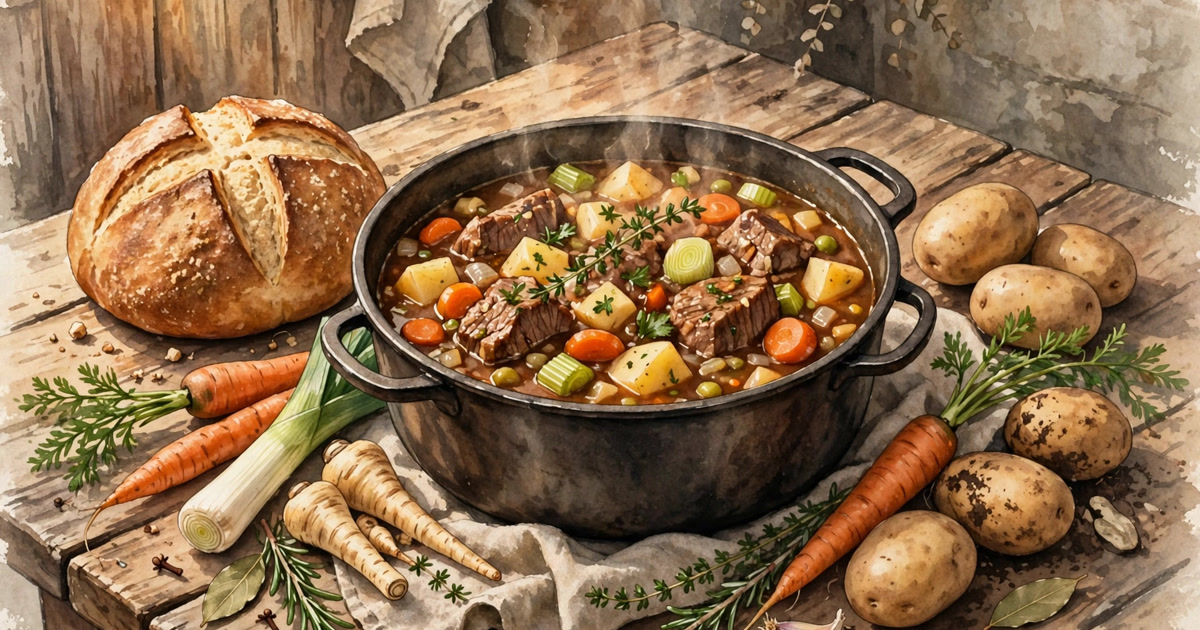
The classic Irish stew is the foundation of Irish everyday recipes, and it is simpler than its reputation suggests. Brown lamb or beef, soften onions and carrots, add potatoes cut into chunks, cover with stock, and simmer gently until the meat is tender and the potatoes begin to thicken the liquid. Season with salt, pepper, thyme and parsley, and serve with soda bread to mop up the juices. A slow cooker version works beautifully if you start it in the morning.
For faster nights, try a vegetable and barley soup, a bacon and cabbage skillet, or a potato and leek soup blended smooth with cream or milk. These dishes come together in under half an hour, use one pot, and reheat well for lunch the next day. Keep a well-stocked pantry of stock cubes, tinned tomatoes, dried herbs, oats and potatoes, and a weeknight Irish dinner is never more than a short preparation away, even when the fridge looks nearly empty.
Potatoes, Bread and Sides in Irish Everyday Recipes
No guide to Irish everyday recipes is complete without potatoes, and Ireland cooks them in more ways than most countries. Boiled potatoes with butter and parsley, champ mashed with spring onions and milk, colcannon mashed with cabbage or kale, and boxty potato pancakes all start from the same humble ingredient. The trick with mash is to use floury potatoes, drain them well, and mash while hot with warm milk and butter for a fluffy result.
Soda bread is the other essential: flour, bicarbonate of soda, salt and buttermilk, mixed briefly, shaped into a round, crossed on top, and baked until hollow-sounding when tapped. It takes minutes to mix and needs no yeast or proving, which is why it remains a daily bread in many Irish homes. Serve it warm with butter, soup or stew, and it turns a simple meal into something that feels complete. For a lighter side, a simple cabbage salad or buttered carrots balances the richness of the main dishes.
Seasonal Irish Everyday Recipes Through the Year
Irish everyday recipes change gently with the seasons, and following that rhythm keeps cooking cheaper and tastier. Spring brings new potatoes, spring onions and lamb, and lighter soups and salads. Summer suits cold meats, salads with new potatoes, and berries with cream for dessert. Autumn is the season for root vegetables, apple desserts and hearty stews as the weather turns, and winter calls for slow-cooked beef, barley soups and baked puddings.
Seasonal cooking also means using what is plentiful rather than forcing out-of-season ingredients. A cabbage in winter, a glut of apples in autumn, or fresh herbs in summer each suggest their own dishes, and building meals around them reduces waste and cost. Freeze soups and stews in portions for busy weeks, label them clearly, and you will always have a homemade dinner ready, which beats takeaway on both cost and flavour, and our guide to starting to run safely pairs well with hearty home cooking for a balanced routine.
Cooking Irish Food Well: Tips, Shortcuts and Serving
A few habits lift Irish everyday recipes from good to excellent. Brown meat in batches rather than crowding the pan, since crowded meat steams instead of browning and loses flavour. Season in stages, tasting as you go, rather than adding all the salt at the end. Simmer, never boil hard, when cooking stews and soups, so meat stays tender and vegetables hold their shape.
Serve family-style where possible: a pot in the middle of the table, bread to share, and simple sides let everyone help themselves and keep the meal relaxed. Leftovers are part of the tradition, not an afterthought: stew tastes better the next day, mashed potato becomes potato cakes, and soda bread toasts beautifully. Cooked this way, Irish food is not a special-occasion project but a practical, generous everyday cuisine, and checking what travel insurance covers is the only preparation you need before travelling to taste it at source.
Making the Most of Irish everyday recipes
The practical lesson of this guide is simple: use the official Irish everyday recipes sources first, note what applies to your own circumstances in Ireland, and double-check dates, eligibility and costs before you commit to anything connected with food: everyday recipes. Small checks at the start prevent the most common problems, from missed deadlines to wrong assumptions about what a service covers.
Save this guide, set reminders for any deadlines it mentions, and return to Irish everyday recipes whenever your situation changes, since a new job, move, or family change can alter what applies to you. Shared with family or colleagues who face the same questions, Irish everyday recipes advice becomes easier to follow, and you will find that the system, once understood, is far more navigable than it first appears.
It also helps to keep a short personal note alongside this guide: the dates you applied, the offices you contacted, the reference numbers you were given, and the outcomes, since that record answers most follow-up questions without a fresh search. Official guidance on Irish everyday recipes changes over time, so a dated note of what applied when you acted protects you if a rule later changes or a decision is questioned.
In the end, the goal is not to memorise every detail of food: everyday recipes in Ireland, but to know where to look, whom to ask, and what to check before deciding. With official sources bookmarked, documents organised, and Irish everyday recipes revisited at the right moments, you can handle this topic with confidence, and help others do the same.