
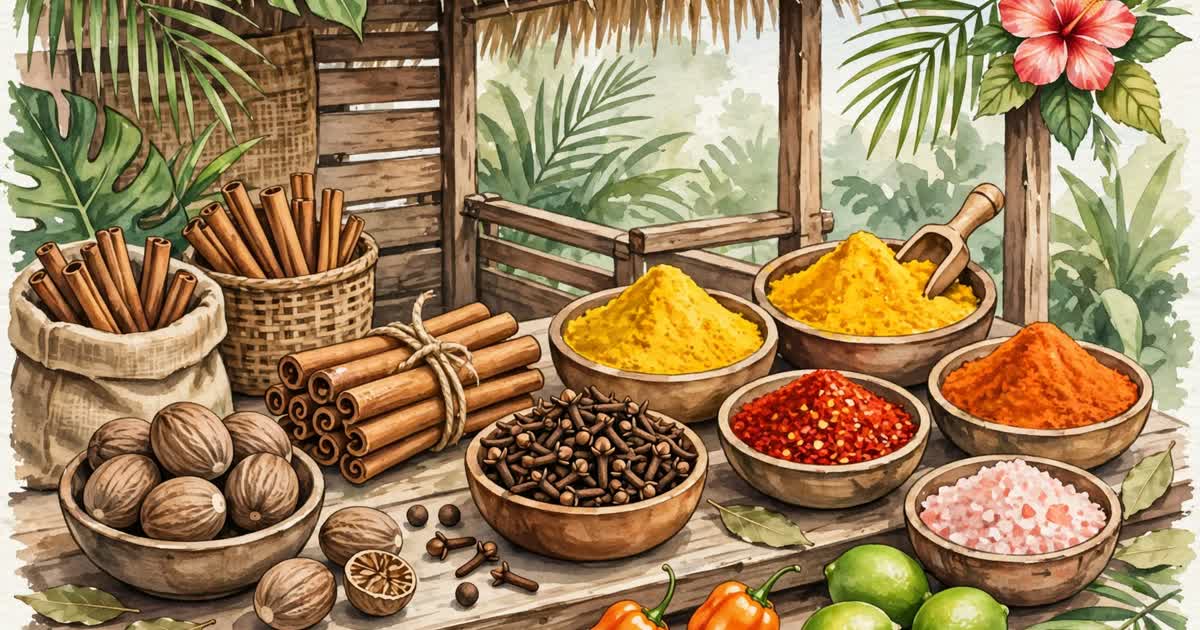
Grenada spice culture is the island calling card: the Spice Island grows nutmeg, cinnamon, cloves, ginger, and turmeric in such abundance that spices scent the air, flavour every kitchen, and even appear on the national flag. Food here is inseparable from spice, from the national dish oil down simmered with breadfruit and salted meat to market stalls piled with fresh produce. Understanding spice is understanding Grenada itself.
This guide explores Grenada spice culture in depth, from plantations and spice tours to signature dishes and food festivals, and then covers a second reason many visitors come to the island: medical study. Grenada hosts a major international medical university, and this guide explains student visas and study basics for prospective medical students alongside the food story.
Nutmeg and the Roots of Grenada Spice Culture
Nutmeg dominates Grenada spice culture, and the island was once among the world largest producers, earning the nickname Spice Island and a nutmeg symbol on its flag. Nutmeg trees, introduced in the nineteenth century, thrive in Grenada volcanic soil and humid climate, producing both nutmeg seed and mace, the lacy red covering used as a separate spice. Hurricane damage in past decades reduced production, but replanting and cooperative farming have revived the industry.
Visiting a nutmeg processing station reveals Grenada spice culture at work: farmers deliver sacks of fruit, workers dry and sort the seeds, and the fragrant warehouses smell of spice for streets around. The Grenada Cooperative Nutmeg Association, based near St. George, processes and exports much of the crop, and its facilities welcome visitors interested in how a global spice travels from Grenadian soil to kitchens worldwide. Buying nutmeg directly from growers supports the farmers behind the flavour.
Spice Tours and Grenada Spice Culture Experiences
Spice tours are the best way to experience Grenada spice culture firsthand, with working plantations and spice gardens across the island offering guided walks among nutmeg, cinnamon, cocoa, clove, and vanilla plants. Guides explain how each spice grows, when it is harvested, and how it is dried and processed, often letting visitors smell, taste, and handle fresh spices straight from the plant. Many tours end with a traditional lunch cooked with the garden own produce.
Popular Grenada spice culture stops include Belmont Estate, a historic plantation with cocoa processing and a restaurant, and smaller family gardens where tours feel personal and unhurried. Spice markets in St. George sell packaged spices, spice necklaces, and cocoa balls for visitors to take home, and market vendors happily explain uses for unfamiliar spices. A spice tour pairs naturally with rainforest hikes and waterfall visits, since plantations sit amid Grenada lush interior.
Grenada Food Culture: Oil Down and Island Dishes
Oil down, Grenada national dish, embodies Grenada spice culture in a single pot: breadfruit, salted meat or chicken, callaloo, dumplings, and vegetables simmered in coconut milk with turmeric, garlic, and herbs until the liquid reduces to a rich oil. Traditionally cooked outdoors over wood fires for family gatherings, oil down is social food, shared communally and eaten slowly. Restaurants across the island serve it, but the most authentic versions come from home kitchens and community cookouts.
Beyond oil down, Grenada food culture features fresh seafood, including lambi, or conch, grilled fish, and crab, alongside provisions such as yam, dasheen, and sweet potato. Cocoa tea, spiced with cinnamon and nutmeg, starts many Grenadian mornings, while rum punches flavoured with local spice close many evenings. Food festivals, including the annual Grenada Chocolate Festival, celebrate the island cocoa heritage, linking Grenada spice culture to its growing fine chocolate industry.
Spice Festivals, Markets and Everyday Grenada Spice Culture
Markets are where Grenada spice culture lives daily, especially the St. George market, where vendors sell fresh nutmeg, cinnamon sticks, turmeric roots, ginger, vanilla, and handcrafted spice products alongside fruit, vegetables, and fish. Bargaining is gentle and friendly, and vendors offer cooking advice freely, turning a shopping trip into a culinary lesson. Saturday mornings are liveliest, when farmers from across the island bring produce to town.
Festivals extend Grenada spice culture beyond the kitchen: the Chocolate Festival celebrates cocoa with farm tours, tastings, and chocolate-making workshops, while Carnival food stalls showcase spiced street food at its best. Home cooks keep spice traditions alive through recipes passed across generations, and visitors who take a cooking class learn to use Grenadian spices long after returning home. Spice is not a tourist theme in Grenada; it is everyday life, seasoning, medicine, and livelihood at once.
Studying Medicine in Grenada and Student Visas
Medical study is the other major reason visitors come to Grenada, since St. George University, based at True Blue near St. George, is one of the largest international medical schools in the Caribbean, training students from around the world, particularly North America. Its medical program combines basic sciences on the Grenada campus with clinical rotations largely in the United States and United Kingdom, and its graduates practise widely. Prospective students should verify accreditation, residency placement rates, and tuition carefully before enrolling.
Student visas for Grenada require an acceptance letter from a recognised institution, proof of funds, passport validity, and sometimes medical and police records, processed through Grenadian consulates or the immigration department. Students should confirm visa duration, renewal procedures, and whether dependants can accompany them, since rules vary by nationality. Grenada spice culture aside, student life in Grenada blends rigorous study with island living: beaches, hiking, and community events balance demanding coursework.
Planning a Spice, Food and Study Trip to Grenada
A spice and food trip to Grenada works best with a mix of guided tours, market visits, and restaurant meals spread across several days, rather than a rushed single tour. Base yourself in St. George or Grand Anse for market and restaurant access, rent a car for plantation visits in the interior, and book spice tours and cooking classes in advance during peak season. Bring appetite, curiosity, and an extra bag for spice purchases, which make excellent gifts.
Prospective medical students should visit the campus, speak with current students and graduates, and compare programs before committing, since medical study is a multi-year, high-cost decision. Check student visa requirements early, arrange housing near campus, and budget for tuition, living costs, and travel home. Whether you come for Grenada spice culture, medical study, or both, the island rewards visitors who engage deeply with its flavours, people, and rhythms.
For related guidance, see Grenada beaches and sailing guide, Malta work permit jobs guide, Qatar work permit and sponsorship guide.
Sources: Grenada Tourism Authority, St. George University (sgu.edu), Government of Grenada immigration guidance, Grenada Spice Island cultural guides.