
On October 20, 2026, the free trade agreement between India and New Zealand formally enters into force, opening a new chapter in the economic relationship between the two Indo-Pacific democracies. From day one, every Indian export to New Zealand — from textiles and leather to pharmaceuticals and engineering goods — will enter duty-free, while more than half of New Zealand's exports to India become tariff-free immediately, rising to around 82 percent over time. The pact, which cleared New Zealand's Parliament with bipartisan support by 93 votes to 26, is also designed to facilitate $20 billion in investment into India and to create new pathways for young professionals. On the same day the deal takes effect, Wellington is signalling that it wants more: Trade Minister Todd McClay announced parallel moves to deepen trade ties with Brazil and Canada as part of an ambitious goal to double New Zealand's exports by 2034.
Background: a long road to the deal
India and New Zealand have been circling a trade agreement for the better part of two decades. Earlier rounds of negotiation stalled repeatedly — most notably over agriculture, where New Zealand's powerful dairy and meat exporters sought access to India's heavily protected farm sector, and over services and investment rules, where India's sensitivities ran deep. For years, the talks sat in the "too hard" basket while both countries pursued other partners.
What changed was the geometry of global trade. India has been on an FTA-signing spree in recent years, concluding or advancing deals with partners including the United Kingdom, the UAE and Australia, and is now in the final stages of the first phase of a trade deal with the United States, alongside a push toward a comprehensive pact with Canada. New Delhi's strategy has been to lock in preferential access to major markets for its manufactured goods, textiles and services while carefully shielding its most sensitive agricultural sectors through quotas and phased liberalisation rather than blanket opening.
New Zealand, for its part, has been diversifying away from its heavy reliance on China, which absorbs a large share of its dairy, meat and forestry exports. Successive governments in Wellington have pursued what officials call a "trade diversification" agenda — spreading risk across India, Southeast Asia, Latin America and the Middle East. A deal with India, the world's most populous country and one of its fastest-growing major economies, has been the biggest missing piece. The timing also matters domestically: New Zealand goes to the polls in a closely fought general election on November 7, and the government's ability to point to a signed, bipartisan-backed trade deal is a tangible economic credential.
What happened: the agreement takes effect
The entry into force on October 20 — a date that coincides with the Hindu festival of Vijay Dashami, and which Commerce Minister Piyush Goyal confirmed on September 21 — is the moment the treaty's tariff cuts become legally binding. The headline terms are strikingly asymmetric in India's favour on day one, reflecting the different structures of the two economies.
For India, the win is immediate and comprehensive: 100 percent of Indian exports to New Zealand receive duty-free access from the first day. That covers the sectors where Indian exporters have the most to gain — textiles and garments, leather goods, engineering products, pharmaceuticals and processed food. For small and mid-sized Indian manufacturers that have long found New Zealand a marginal, high-tariff market, the removal of duties overnight changes the commercial arithmetic completely.
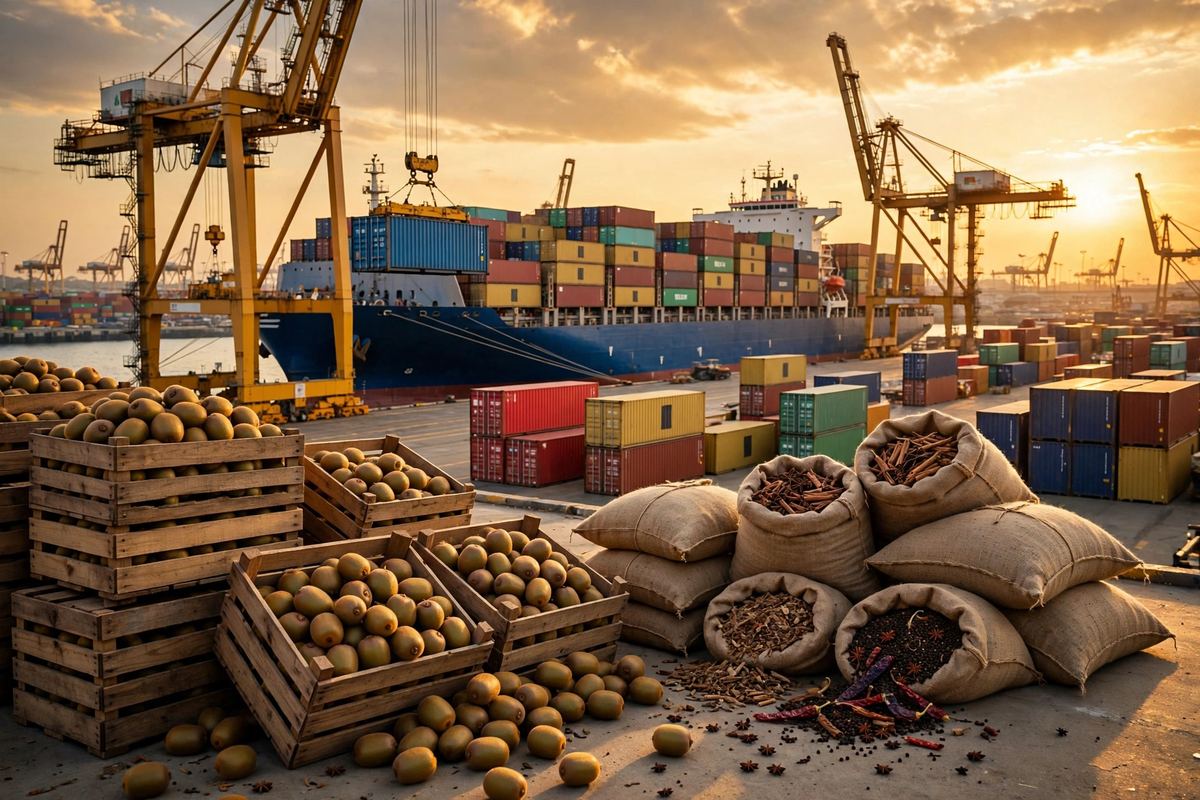
For New Zealand, the gains are substantial but phased. More than half of New Zealand's exports to India become tariff-free immediately, with coverage rising to roughly 82 percent over the implementation period. Tariffs are eliminated on key products including sheep meat, wool and coal — sectors where New Zealand is globally competitive. For the most sensitive Indian agricultural sectors, the deal uses preferential quotas rather than full liberalisation: New Zealand gains quota-based access for apples, kiwifruit and milk albumins, allowing meaningful trade to flow without, in India's view, threatening the livelihoods of its hundreds of millions of small farmers.
The parliamentary arithmetic in Wellington tells its own story. The deal passed 93 to 26 with bipartisan backing — a level of consensus that is rare in a polarised pre-election environment, and a signal that the agreement is likely to survive regardless of who forms the next government after the November 7 election.
Beyond tariffs, the pact aims to facilitate $20 billion in investment into India — a target that covers both directions of capital flow but is framed around India's infrastructure, manufacturing and services needs. It also includes provisions on youth mobility and professional pathways, an area of growing importance as both countries compete for skilled talent and as Indian students and workers form an ever-larger part of New Zealand's migration intake.
Why it matters
For Indian exporters, the deal removes one of the last tariff walls in a major developed market. Textiles, leather and engineering goods — labour-intensive sectors that employ millions — now compete in New Zealand on equal terms with every other supplier. The pharmaceutical industry, already one of India's strongest export stories, gains a new high-income market with a well-regulated health system that values affordable generics.
For New Zealand's farmers and exporters, the agreement is about optionality. Sheep meat, wool, apples and kiwifruit producers gain preferential access to a market of 1.4 billion people whose middle class is expanding rapidly. Even quota-limited access matters: New Zealand's export model is built on selling premium food to affluent consumers, and India's growing urban middle class fits that model precisely. The coal tariff elimination, meanwhile, reflects the pragmatic reality that India's energy transition will take decades and that New Zealand's exporters want a share of the trade that exists today.
For consumers in both countries, the effects will be gradual but real. New Zealand shoppers should eventually see a wider range of competitively priced Indian textiles, leather goods and processed foods; Indian consumers should see more New Zealand fruit, dairy-derived products and premium food brands on shelves — subject, in the sensitive categories, to the agreed quotas.
Geopolitically, the deal is another data point in the redrawing of Indo-Pacific trade maps. India's network of FTAs is steadily reducing its exporters' dependence on any single market, while New Zealand's diversification push is reducing its exposure to China. Both countries are, in different ways, buying insurance against a more fragmented and weaponised global trading system.
Key facts
- Effective date: October 20, 2026 (Vijay Dashami), confirmed by Commerce Minister Piyush Goyal on September 21.
- India's access: 100% of Indian exports to New Zealand duty-free from day one — including textiles, leather, engineering goods, pharmaceuticals and processed food.
- New Zealand's access: Over half of NZ exports to India tariff-free immediately, rising to about 82% over time; tariffs removed on sheep meat, wool and coal; preferential quotas for apples, kiwifruit and milk albumins.
- Parliamentary passage: Passed New Zealand's Parliament 93–26 with bipartisan support.
- Investment target: The pact aims to facilitate $20 billion in investment into India, with youth mobility and professional pathways included.
- Same-day announcements: Trade Minister Todd McClay announced New Zealand will deepen trade ties with Brazil (a new Trade and Investment Dialogue after Brazil's October 25 runoff) and Canada (an annual senior-officials dialogue plus trade-minister meetings), toward a goal of doubling exports by 2034.
- Political context: New Zealand's closely fought general election is on November 7, 2026.
What happens next
Entry into force is the beginning, not the end, of the work. Both governments will now stand up the agreement's implementation machinery — committees on goods, services, investment and rules of origin, and the monitoring systems that track whether the $20 billion investment facilitation target is actually being met. Exporters on both sides will need practical support: guidance on rules of origin, certification, and the quota administration systems for apples, kiwifruit and milk albumins.
The Brazil and Canada tracks announced by McClay will move on their own timelines. The Brazil Trade and Investment Dialogue follows that country's October 25 runoff election, meaning its shape will depend on who wins. The Canada track — an annual senior-officials dialogue plus regular trade-minister meetings — is a slower institutional build, but it fits the same diversification logic.
The November 7 New Zealand election adds a near-term variable. The deal's bipartisan passage suggests it will survive a change of government, but the pace and enthusiasm of implementation — particularly on the investment facilitation and mobility provisions — could differ depending on the coalition that emerges. For now, though, exporters in Mumbai and Auckland alike have something concrete: from today, the tariff wall between the two countries is coming down.
Not every negotiation is smooth: India's talks with the EU have hit a fight over the bloc's carbon border tax, which New Delhi calls a disaster in waiting.