
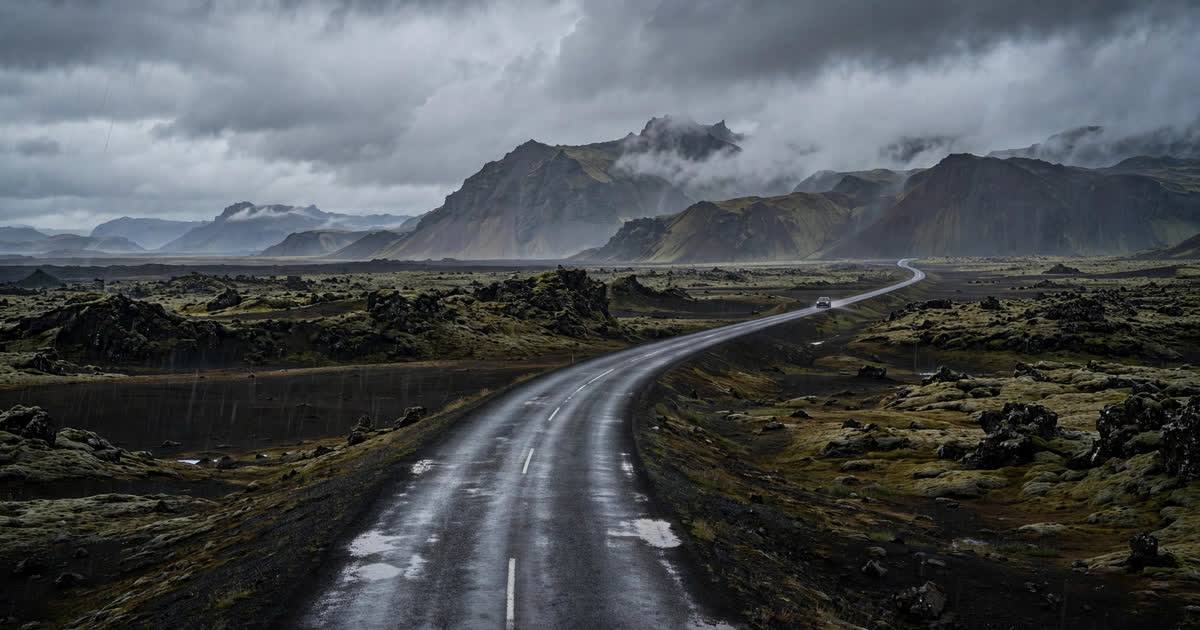
The Three Sources for Iceland Weather and Road Conditions
Iceland weather and road conditions are checked through three official sources, and experienced travellers use all three together. Vedur.is, the Icelandic Met Office, gives the weather forecast, warnings and wind forecasts. Road.is, run by the Icelandic Road Administration, shows live road conditions, closures and webcams on a colour-coded map. SafeTravel.is, run by the Icelandic Association for Search and Rescue, publishes travel alerts and lets you register your route so rescuers know where to look if something goes wrong.
Each source answers a different question. Vedur tells you what the sky will do. Road.is tells you what the road is like now. SafeTravel tells you what to watch out for and where you are going. Checking only one is a common beginner mistake: perfect weather on Vedur can still mean a closed road on road.is, and an open road can still be dangerous in a wind warning. Make checking Iceland weather and road conditions on all three sites a morning habit on every driving day.
Reading Vedur: Wind, Warnings and Metres per Second
Wind is the headline of Icelandic weather. Vedur forecasts wind in metres per second, not miles per hour or kilometres per hour, and that unit catches visitors out. Roughly, 10 metres per second is a fresh, noticeable wind. Around 15, driving becomes unpleasant and the wind pulls at the car. Around 20, seriously reconsider the journey. Above that, do not travel. Convert roughly by multiplying metres per second by 3.6 for kilometres per hour, but learn the feel of the numbers rather than converting every time.
Vedur's warning map is colour-coded by region, from yellow through orange to red. Yellow means be aware. Orange means be prepared and reconsider travel. Red means do not travel, and it is issued rarely and meant literally. The text forecast takes precedence over the map if they differ, so read both. Iceland weather and road conditions change within hours, especially wind, so a morning forecast is not a guarantee for the afternoon. Re-check Vedur during the day on any driving day, and take warnings seriously even when the sky looks calm where you stand.
Reading Road.is: Surfaces, Closures and the Ring Road
Road.is shows every main road colour-coded by surface condition, from clear through slippery, snow-covered and icy to impassable or closed. The map also shows webcams, so you can see conditions with your own eyes before driving a pass. The single most important rule is that closed means closed: it is a legal closure, not advice, and driving past a barrier can void insurance and put volunteer rescuers at risk.
The Ring Road, Route 1, circles the island and is the route most visitors drive, but even it can close in winter storms, especially in the east and north. Mountain roads, the F-roads of the interior, open only in summer, require 4x4 vehicles by law, involve unbridged river crossings, and close with little notice. Gravel sections, single-lane bridges and blind rises need slower speeds than paved highways. Check Iceland weather and road conditions on road.is the morning you travel, because the picture at 8pm is not the picture at 8am. For trip budgeting, our guide to travelling on a budget covers Icelandic transport costs.
Driving Safely in Iceland: Wind, Gravel and Winter
Safe driving in Iceland starts with vehicle choice. A 4x4 is strongly advisable for F-roads and winter driving, while a standard car suits summer Ring Road travel. Studded winter tyres are standard on rentals in winter, and snow chains are generally not used or needed. Slow down on gravel, where loose surfaces and flying stones damage cars and windscreens, and slow further at single-lane bridges, where the vehicle closest to the bridge usually has priority and courtesy prevents collisions.
Wind brings a specific Icelandic hazard: car doors. Above about 15 metres per second, opening a door into the wind can tear it from its hinges, an expensive accident that most rental insurance excludes. Hold doors with both hands, open facing away from the wind, and never let a child open one in strong wind. In winter, add short daylight, icy patches and sudden whiteouts to the hazards, and keep fuel topped up, since stations are sparse in remote areas. Iceland weather and road conditions reward cautious, flexible drivers and punish rigid schedules.
Planning an Iceland Road Trip Around Weather
Plan Iceland road trips with weather as a co-author, not an afterthought. Build buffer days into the itinerary so a storm day becomes a museum, pool or rest day rather than a missed flight. Book accommodation with flexible cancellation where possible, and avoid fixing every night in advance in winter, when closures may force a route change. Register your travel plan on SafeTravel, download offline maps, and carry the 112 Iceland app, which sends your GPS location to emergency services.
Season matters enormously. Summer offers long daylight, open F-roads and the easiest driving, but still brings wind and rain. Winter offers northern lights and snowy landscapes but short days, icy roads and frequent closures. Shoulder seasons mix both. Whatever the season, check Iceland weather and road conditions daily, tell someone your route, and be willing to turn back. For insurance questions, travel insurance explained sets out what weather and road disruption usually covers.
A Practical Iceland Weather and Road Conditions Checklist
Use this checklist every driving morning in Iceland. First, check Vedur for your route's forecast and warnings, noting wind in metres per second. Second, check road.is for closures and surface conditions on every road you will drive. Third, check SafeTravel for alerts and register your route if travelling remotely. Fourth, check webcams for passes and exposed sections.
Fifth, fuel up, pack food, water and warm layers, and charge your phone. Sixth, brief all passengers on wind-door safety and the turn-back plan. Over days of driving, you will learn to read Icelandic skies, wind and roads together, and the habit will become second nature. Iceland weather and road conditions are not a reason to avoid driving in Iceland; they are the reason Icelandic driving, done properly, feels like a real adventure. Before your first Icelandic drive, spend an evening learning the three official sites so that checking Iceland weather and road conditions feels automatic rather than a chore. Iceland weather and road conditions pages are designed for quick daily use, and Iceland weather and road conditions checks take only a few minutes once the habit forms. That small investment of time is the single best safety step any visitor to Iceland can take.