
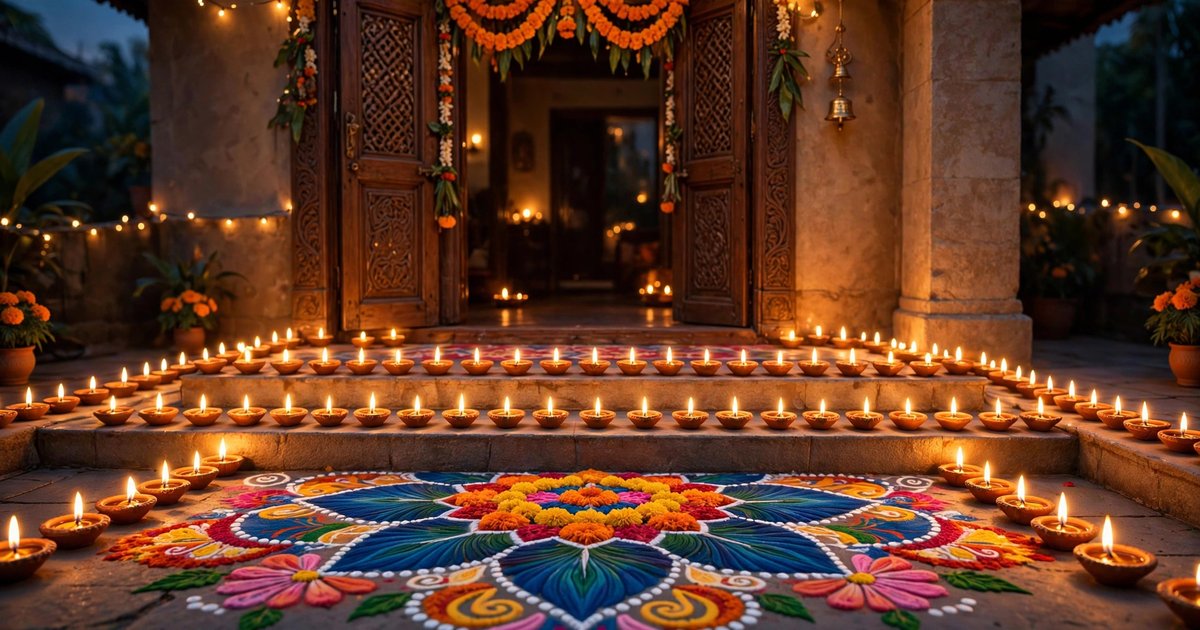
Diwali 2026 falls on Sunday, 8 November 2026. That is the main day of the festival — the day of Lakshmi Puja, when homes across India and the diaspora light diyas, draw rangoli, and welcome the goddess of wealth and prosperity. The festival runs for five days, from Friday, 6 November to Tuesday, 10 November, though the last two days shift by a day in some regions (explained below).
If you have seen some calendars say 9 November, you are not imagining things — and neither calendar is "wrong". The reason is explained in the section on the date confusion below. The short version: Diwali is fixed by the position of the new-moon tithi (Amavasya) during the evening worship window, and that window falls differently by location.
Why Some Calendars Say 8 November and Others Say 9 November
Diwali's main day is the Amavasya tithi of the month of Kartik, and the key rule is that it must be present during Pradosh Kaal — the early-evening period after sunset when Lakshmi Puja is performed. In 2026, the Amavasya tithi spans the evening of 8 November in India, which is why the major Indian panchangs (including Drik Panchang) and listings such as timeanddate place the main day on Sunday, 8 November.
In some regions — notably parts of the United States — local tithi timings push the observance to 9 November. This is the same festival, calculated for a different longitude. If your family follows a temple or community calendar in your city, follow that one; the dates in this guide follow the Indian panchangs, with regional differences flagged wherever they occur.
The Five Days of Diwali 2026
| Day | Date (2026) | What it is |
|---|---|---|
| Day 1 — Dhanteras | Friday, 6 November | Worship of Dhanvantari; buying gold, silver, or utensils is considered auspicious |
| Day 2 — Naraka Chaturdashi (Choti Diwali) | Saturday, 7 November (8 November in some regions) | The defeat of Narakasura; homes are cleaned and decorated, and diyas are lit in the evening |
| Day 3 — Diwali / Lakshmi Puja | Sunday, 8 November | The main day: Lakshmi Puja in the evening, diyas, rangoli, sweets, and fireworks |
| Day 4 — Govardhan Puja | Monday, 9 November (10 November in some regions) | Krishna's lifting of Govardhan hill; in Gujarat, the start of the New Year (Bestu Varas) |
| Day 5 — Bhai Dooj | Tuesday, 10 November (11 November in some regions) | Brothers and sisters celebrate their bond, with sisters applying tilak and brothers giving gifts |
The last two days are where regional calendars diverge most: Delhi calendars generally show Govardhan Puja on 9 November and Bhai Dooj on 10 November, while some US calendars show 10 and 11 November. Check your local temple calendar for the final word in your city.
Lakshmi Puja Muhurat 2026
Lakshmi Puja is performed during Pradosh Kaal in the evening of 8 November. Published Delhi timings differ slightly by panchang source, so treat the window as a range rather than a single minute:
- Delhi, Pradosh Kaal range: roughly 5:45–7:50 PM, combining the published windows (approximately 5:45–7:15 PM per Bhaktiras; approximately 5:54–7:50 PM per Tirth).
- Amavasya tithi: present through the evening of 8 November in India.
Muhurat timings shift by city — sometimes by more than an hour between, say, Delhi and Mumbai or Chennai — because sunset times differ. If you are outside India, your local temple's published muhurat takes precedence over any Delhi figure. Never treat one city's timing as universal.
How Diwali Differs Across Regions
Diwali is a national festival with distinctly regional characters:
- North India: the classic five-day sequence above, centred on Lakshmi Puja and the return of Rama to Ayodhya in the popular telling.
- East India (West Bengal, Odisha, Assam): the same night is Kali Puja, dedicated to Goddess Kali, with pandals and all-night worship.
- West India (Maharashtra, Gujarat): the festival includes Vasu Baras and, in Gujarat, the New Year (Bestu Varas) the day after Diwali.
- South India: Deepavali is often observed at dawn rather than in the evening, with oil baths before sunrise, and in Tamil Nadu the Narakasura story takes centre stage.
- Diaspora (US, UK, Canada, Australia, UAE): community celebrations, temple events, and public displays often fall on the nearest weekend, and local calendars may shift a day as explained above.
The name itself varies: Diwali in the north, Deepavali in the south — same festival, same spirit, different regional customs.
Rituals in Order: How the Main Day Unfolds
- Cleaning and decorating: homes are cleaned in the days before, then decorated with rangoli at the door, torans (door hangings), and lights.
- The evening puja: families gather for Lakshmi Puja, offering flowers, sweets, and coins, and lighting diyas around the home.
- Diyas and lights: rows of small oil lamps are placed at windows, doors, and courtyards — the "festival of lights" in its literal form.
- Sweets and sharing: ladoos, barfi, and other sweets are exchanged with family, friends, and neighbours.
- Fireworks: firecrackers remain part of the celebration in many places, though many cities now restrict them for air quality and safety — check your local rules, keep children supervised, and prefer community displays over individual bursting.
Fireworks Safety in Brief
If you celebrate with fireworks: buy only licensed products, light them outdoors away from homes and dry leaves, keep a bucket of water nearby, never relight a "dud", and keep pets indoors in a quiet room. Sparklers burn hot enough to cause serious burns — they are not toys for small children.
Sources: Drik Panchang via Vedantu; Bhaktiras Diwali guide; Tirth Diwali guide; Old Farmer's Almanac Diwali page; timeanddate Diwali 2026 listing. Muhurat shown as a range, with a local-panchang pointer.
Related reading: NPCI Defers UPI Merchant Discount Rate Until After Diwali 2026 · Halloween 2026 Trends Guide