
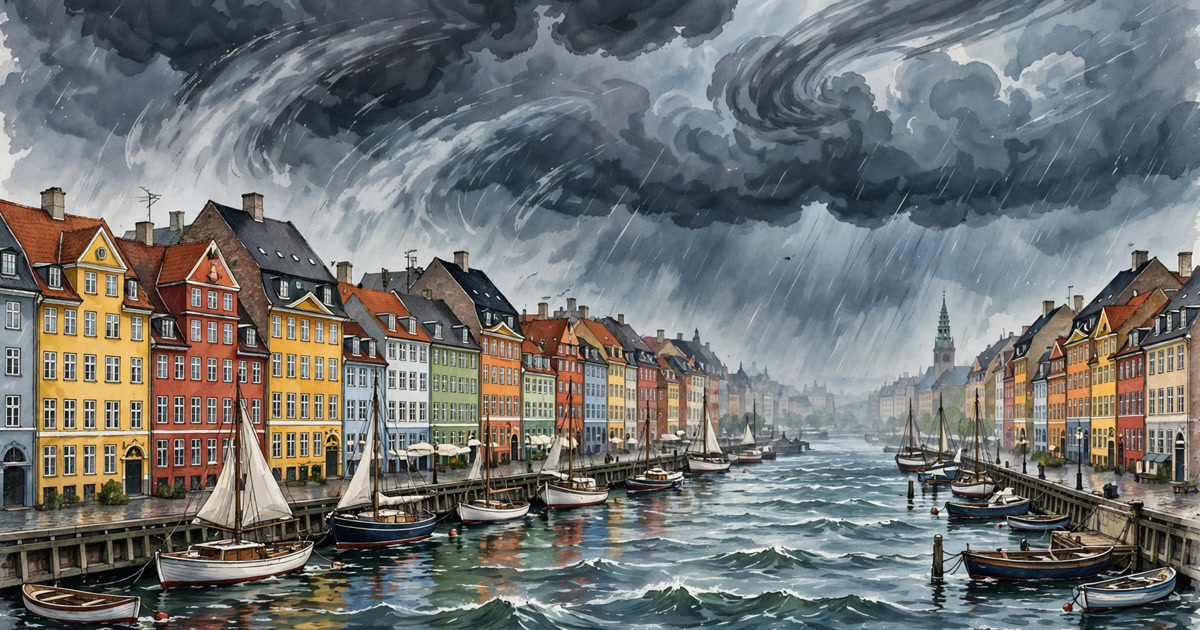
How the Denmark Weather Forecast Works
The Denmark weather forecast is produced by the Danish Meteorological Institute, DMI, which covers a flat, coastal country where weather arrives quickly from the North Sea and Baltic and where wind, rain and storm surges matter more than mountains or altitude. Denmark's geography, a peninsula plus many islands, means coastal and inland forecasts can differ, and island weather can change with wind direction, so local forecasts for your town or island matter more than a single national outlook.
Start with your location and the hourly view: rain timing, wind speed and gusts, and temperature together decide whether a day is damp or disruptive. Denmark weather forecast pages from DMI, plus major apps drawing on European models, give hourly detail, radar, and warnings. Check the evening before for planning, then re-check in the morning, since Atlantic systems can speed up or slow down overnight, and a forecast for Copenhagen may not match one for western Jutland.
DMI Warnings, Storms and Storm Surges
DMI issues warnings for wind, rain, thunderstorms, snow, ice, heat and storm surges, with categories indicating severity and likelihood, and the Denmark weather forecast warning text explains which phenomenon is expected, where, and for how long. Storms in Denmark are usually Atlantic depressions bringing strong winds, heavy rain and, critically for a low-lying coastal country, storm surges that raise sea levels along coasts and fjords.
During storm warnings, secure outdoor items, avoid coastal areas exposed to waves and surges, and check transport before travelling, since ferries, bridges and trains can be disrupted or closed in high winds. The Great Belt and Oresund bridges have wind restrictions, and ferry cancellations are common in storms, so island travel needs extra planning. For flooding, follow municipal and DMI surge warnings alongside weather warnings, and never drive through flooded roads or walk along exposed coasts during a surge.
Regional Differences and the Danish Islands
Denmark's regions create real forecast differences despite the country's small size and flat terrain. Western Jutland, facing the North Sea, is windier and wetter, with North Sea storms arriving first. Eastern Denmark, including Copenhagen and Zealand, is more sheltered but can be colder in winter with easterly winds, and hotter during summer heatwaves. Funen and the smaller islands sit between, with local wind and sea effects shaping daily weather.
Island weather deserves special attention: Bornholm in the Baltic has its own microclimate, sunnier than much of Denmark, while smaller islands depend on ferries that storms disrupt. If you live on one island and work on another, or commute by ferry, check marine forecasts as well as land forecasts, since wind and wave conditions decide ferry operation. For a weekend trip, compare forecasts for home and destination islands side by side, and our guide to travelling on a budget can help you plan island travel.
Seasons in Denmark: Wind, Light and Temperature
Danish seasons are defined as much by light as by temperature: long summer days with late sunsets, and short winter days with early darkness, shape how weather feels. Summer brings mild temperatures, occasional heatwaves, and thunderstorms, with long evenings for outdoor life. Autumn brings Atlantic storms, shortening days, and the first frosts, while winter brings wind, rain, occasional snow, and icy roads, especially inland.
Spring brings changeable weather, with warm days, cold snaps, and increasing light that transforms outdoor life after winter. Wind is a year-round factor: average wind speeds are high by European standards, and gusts cause most disruption, for cycling, Denmark's national transport mode, as well as for transport and outdoor events. Dress in layers, keep waterproofs accessible year-round, and check wind forecasts before cycling long distances, since a headwind can double journey time.
Planning Around the Denmark Weather Forecast
Make the Denmark weather forecast part of a daily routine: check tomorrow's hourly forecast in the evening, re-check in the morning, and allow extra time for ferries, bridges and trains when storm warnings are in force. Cyclists should check wind direction as well as speed, and drivers should check frost, fog and ice warnings for early starts, keeping winter tyres or appropriate equipment during cold months.
For outdoor events, build a fallback: a covered alternative, a later start, or a venue change if storms are forecast, and monitor warning updates, not just the morning forecast. Gardeners and farmers should watch soil conditions after heavy rain, and coastal residents should know their municipality's surge procedures. Used this way, the forecast is a planning tool, and checking what travel insurance covers is sensible before any weather-exposed trip.
Denmark weather forecast: What to Remember
When you put this guide into practice, start with the official sources named above and check them again before acting, since Denmark weather forecast rules, schedules and services change over time. In Denmark, the details that matter most are usually the ones tied to your own situation, your location, your eligibility, and your timing, so compare the general advice here with your specific case before making a decision about weather: forecasts and storms.
Keep the key documents, links and dates from this guide in one place, revisit Denmark weather forecast whenever your plans change, and ask an official adviser or service when a detail is unclear. With that habit, Denmark weather forecast becomes a routine you can manage confidently, rather than a topic you have to relearn from scratch each time you need it.
A final practical point is worth repeating: the most reliable information about Denmark weather forecast always comes from the official source for your country, region or institution, not from a summary alone, however careful. Summaries help you understand the shape of a topic, but applications, deadlines and eligibility are decided by official rules, so verify the specific rule that applies to you before you act, and keep a copy of what you were told.
Finally, share what you learn where it helps others: a friend, colleague or family member facing the same question about weather: forecasts and storms in Denmark will benefit from the same official links and the same habit of checking early. Good information, passed on accurately, is part of what makes Denmark weather forecast easier for everyone, and returning to this guide whenever you need a refresher will keep your understanding current as rules and services evolve.