
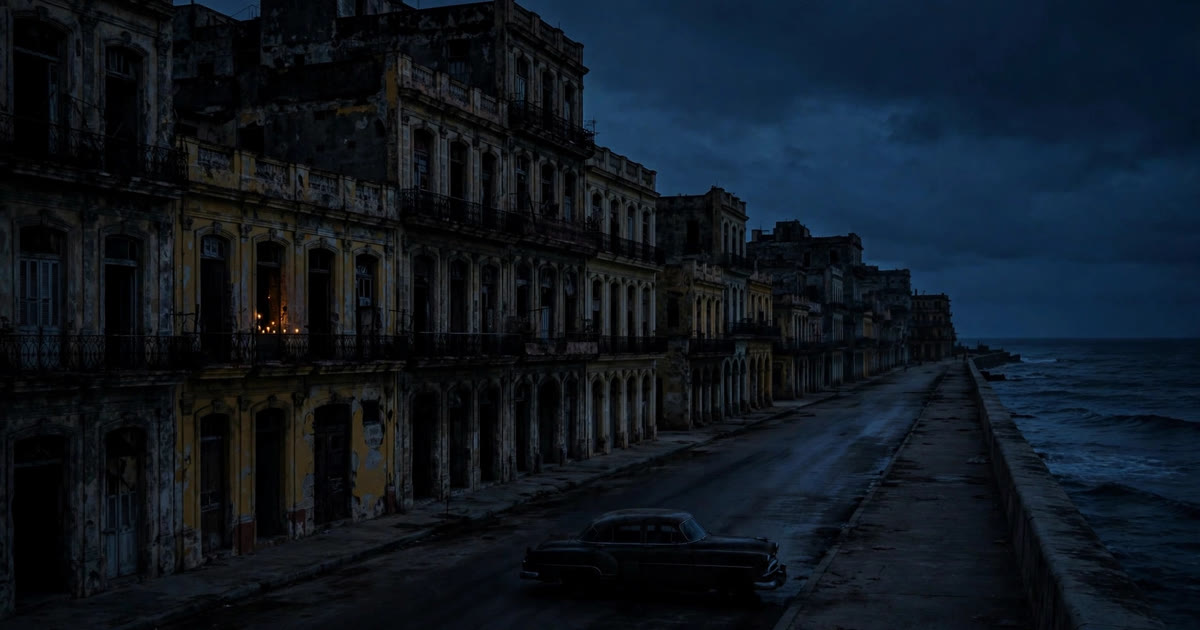
Cuba is living through one of the most severe energy emergencies in its modern history. On Monday, 19 October 2026, China organised a rare supplementary flight out of Havana to rescue passengers left stranded by cascading cancellations, a vivid illustration of how far the island's fuel crisis has gone. The story is trending per news coverage.
The roots of the crisis are geopolitical, not technical. Since early January 2026, the United States has run an aggressive campaign to starve Cuba of imported fuel: a de facto oil blockade, extraterritorial sanctions, and tanker interceptions that have cut the island off from nearly every source of petroleum. The result is a humanitarian squeeze that UN experts have condemned — and a travel sector in near-total collapse.
How Cuba ran out of fuel
Cuba needs roughly 100,000 barrels of oil a day but produces only about 40 percent of its needs domestically. For years, Venezuela supplied the lifeline of cheap crude. That ended in January 2026, when American forces removed Nicolás Maduro from power in Caracas. Trump then urged Havana to "make a deal before it was too late," and within weeks Mexico — which had become the island's principal remaining supplier — halted its shipments.
On 29 January, Trump signed an executive order declaring a national emergency and authorising tariffs on imports from any country that directly or indirectly supplies oil to Cuba. In February, US forces began intercepting tankers bound for the island. The UN human rights office warned that food, water and hospitals were at risk, and UN rights experts called the order a serious violation of international law. In May, a further executive order — EO 14404 — imposed blocking sanctions reaching foreign banks and Cuba's energy, financial, mining and security sectors; in October the US designated BICSA, the bank that handles most of Cuba's foreign business.
Traditional suppliers through lawful channels simply stopped supplying fuel under the pressure, as Cuba's own foreign-trade ministry has acknowledged. Russia sent at least one large shipment in March and China sent aid such as rice, but the deliveries were rare and risky. By mid-May, Cuba's energy minister, Vicente de la O Levy, acknowledged the country had exhausted its oil and diesel reserves.
Blackouts, closed schools and a collapsing grid
The energy shortfall has wrecked the power system. Total blackouts hit eastern provinces in February; on 16 March the entire national grid collapsed. The International Crisis Group says the lack of oil imports has produced blackouts, fuel rationing, transport shutdowns, reduced work and school weeks, and disrupted essential medical services — with pressure on ambulances, medical flights, dialysis and cancer treatment. By August, Cuba's electricity generation shortfall peaked at 2,411 megawatts, causing outages exceeding 20 hours a day in some areas. More than 1,400 megawatts of generating capacity sat offline for lack of fuel.
Schools and universities closed, buses stopped running in many areas, and hospitals rationed care. Analysts describe the emergency as the island's most severe since the 1990s "Special Period" — and the political transformation Washington hoped the pressure would deliver has not arrived. Cuba's government has condemned the measures as "unilateral coercive measures" and "collective punishment on the Cuban people."
Airlines abandon the island
Aviation has been one of the hardest-hit sectors. After Cuba told airlines aircraft could no longer refuel on the island, carriers began suspending services. At least 11 international airlines have cancelled operations with Cuba this year, scrapping more than 1,700 flights. World2Fly, Air France, Turkish Airlines and Iberia all suspended flights; Iberia extended its suspension until June 2027. Ten Cuban airports are under an official fuel-shortage notice until November.
This week the crisis crossed a new threshold for North American travellers. Canada's three largest carriers — Air Canada, WestJet and Air Transat — indefinitely suspended flights to Cuba, citing worsening shortages of food, fuel and electricity and the widening US sanctions. The airlines had planned to resume Cuba service in the autumn after pausing it in February, but have now reversed course; WestJet's Sunwing Vacations division and Air Transat will redeploy planes elsewhere for winter.
A few carriers keep flying by carrying enough fuel for both legs of the journey — including American Airlines, Southwest and Delta from the US, plus Copa, Aeroméxico, Viva Aerobus, Conviasa and Wingo. Air Europa has monopolised the Spain–Cuba route by flying via a technical refuelling stop in the Dominican Republic, charging fares of around €1,000 to €1,400. China's supplementary flight on 19 October — a "replacement" for the frequently cancelled Air China CA866 — showed how even the remaining scheduled services are fraying.
Tourism collapses and the economic toll
The fallout for tourism — a major source of foreign currency — is brutal. Cuba received just 419,000 international visitors between January and July 2026, down 62 percent from the same period in 2025, according to figures cited by the Associated Press. It was already a weak year after 2025's 1.81 million arrivals, the lowest annual figure since 2002. Hotels shut, grid failures cut power to resorts, and dollarisation surged as prices for everything from fuel to food exploded. The Foreign Affairs Forum notes that fuel through private channels costs about $2 a litre — cheap beside black-market prices of around $10, but ruinous beside pre-crisis levels.
Yet the blockade has also unexpectedly pushed Cuba's private sector into a larger role. Havana's February decision to let private firms import fuel, combined with Washington's licensing of oil sales to eligible private entities, opened a narrow channel through which the island's roughly 10,000 small and medium enterprises have begun acting as an alternative energy and logistics system. The private sector already accounts for an estimated 15 percent of GDP and nearly a third of employment — a structural shift neither Washington nor Havana intended.
What happens next
Pressure is still rising. The US recently sanctioned GAESA, the military-controlled conglomerate at the centre of Cuba's economy, and its executive president — prompting Canada's Sherritt International to suspend direct participation in its Cuban joint venture. Secretary of State Marco Rubio says Washington "will not stand by while Cuba's communist regime threatens our national security in our hemisphere" and will keep acting until the regime makes political and economic reforms. Trump has repeatedly threatened military action to topple the government, and Cuba's president remains defiant.
Three UN special rapporteurs recently condemned the "unlawful blockade," warning of what they call "energy starvation" — "a condition in which the lack of fuel cripples the functioning of essential services required for a dignified life." Cuba has confirmed talks with US officials and wants the energy blockade ended. The region's energy security fears are also being felt thousands of miles away, while Washington's military posture in the wider region remains volatile — and US security alerts show how far the pressure campaign stretches. For Cubans, the coming winter — with fewer flights, darker nights and an empty fuel tank — will test endurance again.
Old wounds are being reopened too: Florida has issued an arrest warrant for former leader Raúl Castro over the 1996 plane shootdown.