
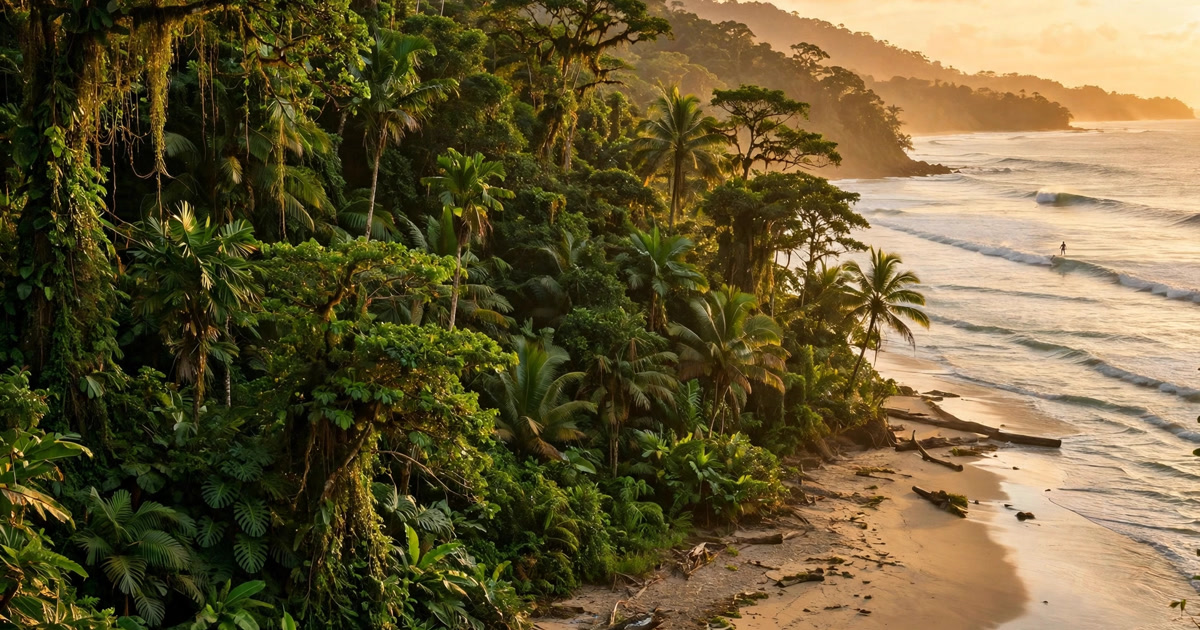
Costa Rica ecotourism has become a model for the world because the country protects an extraordinary share of its land and invites visitors to experience it responsibly. In a small Central American country you can walk through rainforest in the morning, watch monkeys and toucans from a trail, and reach a surf beach by afternoon. This guide to Costa Rica ecotourism explains the national parks, beaches and surfing that define the experience, and how to travel in a way that supports conservation and local communities.
The appeal of Costa Rica ecotourism lies in its variety. More than a quarter of the country's territory is protected in national parks, reserves and wildlife refuges, and its biodiversity includes sloths, monkeys, scarlet macaws, sea turtles, jaguars and thousands of plant species. Costa Rica ecotourism is therefore not a single activity: it is hiking, birdwatching, rafting, surfing, snorkelling, hot springs and community tourism, all shaped by the principle that nature is worth more alive than exploited.
Costa Rica ecotourism in national parks and cloud forests
The heart of Costa Rica ecotourism is its national parks. Manuel Antonio, on the Pacific coast, combines rainforest trails with white-sand beaches and is one of the best places to see white-faced capuchin monkeys and sloths. Corcovado, on the remote Osa Peninsula, is wilder and more demanding, famous for tapirs, scarlet macaws and, with luck, jaguars, and it requires advance planning and often a guide. Tortuguero, on the Caribbean coast, is accessible mainly by boat and famous for sea-turtle nesting and canal wildlife.
Monteverde Cloud Forest Reserve offers a different side of Costa Rica ecotourism. Its misty, moss-covered forest is home to the resplendent quetzal, hundreds of bird species and hanging bridges above the canopy. Arenal Volcano National Park combines volcanic landscapes, lava fields, hot springs and waterfalls, while Rincón de la Vieja offers volcanic mud pots, waterfalls and dry forest in the north-west. Each park has its own entry rules, capacity limits and best seasons, so check official park information before visiting.
Responsible Costa Rica ecotourism means staying on trails, keeping distance from wildlife, never feeding animals, and choosing certified guides and lodges that employ local people and protect habitat. Park fees fund conservation, and visiting lesser-known parks as well as famous ones spreads benefits and reduces pressure on crowded trails. Hiring a local guide often transforms a walk: guides spot camouflaged wildlife, explain ecology, and share knowledge that independent visitors would miss entirely.
Costa Rica ecotourism: beaches and surfing
Beaches are central to Costa Rica ecotourism, and the Pacific coast offers the best surfing. Tamarindo, in Guanacaste, is lively and beginner-friendly, with surf schools, consistent waves and a wide range of places to stay. Santa Teresa, on the Nicoya Peninsula, is more laid-back and beautiful, with strong waves for intermediate surfers and stunning sunsets. Jacó, closer to San José, is convenient for a short trip and has a long surf beach, while Nosara and Playa Guiones attract surfers seeking quieter breaks.
The Caribbean coast offers a different beach experience within Costa Rica ecotourism. Puerto Viejo and Cahuita have a relaxed Afro-Caribbean culture, coral reefs for snorkelling, and waves that suit experienced surfers at certain times of year. Cahuita National Park protects both forest and reef, so a single visit can combine a beach day with snorkelling and wildlife spotting. Wherever you surf, respect local etiquette, understand rip currents, and take a lesson if you are new: Costa Rica's waves are enjoyable but demand respect.
Surfing and Costa Rica ecotourism go together because many surf towns have embraced sustainability, from beach clean-ups to turtle protection and community projects. Travellers can support that work by choosing locally owned lodges, eating in local restaurants, and avoiding single-use plastics on the beach. Practical trip planning, including budgets and cover for adventure activities, is easier with our guide on how to travel on a budget and our explainer on what travel insurance covers.
Wildlife, seasons and sustainable Costa Rica ecotourism
Wildlife viewing is a highlight of ecotourism here in every season, but timing shapes what you see. Sea turtles nest at different beaches at different times: leatherbacks at Playa Grande, olive ridleys at Ostional, and green turtles at Tortuguero, each with its own season and viewing rules. Whale watching, bird migration and frog activity also follow seasonal patterns, so research the wildlife calendar for your destination before booking, and always view nesting turtles only with authorised guides and without flash photography.
Costa Rica has a green season, roughly from May to November, and a dry season, roughly from December to April, although patterns vary between the Pacific and Caribbean coasts. Green-season ecotourism here brings lush landscapes, fewer crowds and lower prices, with afternoon rain that rarely ruins a whole day. Dry-season travel brings sunnier beach weather and easier road conditions, but also higher prices and busier parks. There is no single best month: the right season depends on whether you prioritise surfing, wildlife, hiking or beach weather.
Sustainable ecotourism here also means thinking about transport and impact. Domestic flights, shared shuttles and rental cars each have trade-offs, and many lodges now offer carbon-conscious practices, water conservation and support for local schools and conservation projects. Choosing fewer destinations and staying longer in each place usually gives a deeper, lower-impact trip than rushing between many parks in a few days, and it leaves more money in the communities that protect the nature visitors come to see.
Planning your Costa Rica ecotourism trip
A good first ecotourism here itinerary balances parks, beaches and rest. A week might combine Arenal and Monteverde for volcanoes and cloud forest, then a Pacific beach such as Tamarindo or Santa Teresa for surfing and relaxation. A longer trip can add Manuel Antonio or Corcovado for rainforest wildlife, or Tortuguero and Puerto Viejo for the Caribbean side. Build in buffer days for rain, road delays and spontaneous wildlife encounters, because Costa Rica rewards unhurried travel.
Packing for ecotourism here is practical: lightweight, quick-drying clothing, sturdy walking shoes, sandals, rain jacket, sun protection, insect repellent, binoculars and a reusable water bottle. In cloud forest, bring a warm layer for cool, misty mornings; on the beach, bring reef-safe sunscreen and respect reef protection rules. Cash is useful in rural areas, although cards are widely accepted in towns and tourist areas.
Finally, ecotourism here works best when visitors arrive curious and patient. Rainforest wildlife does not perform on schedule, surf conditions change daily, and the most memorable moments often come from a guide's quiet observation or a turtle's slow return to the sea. Plan well, travel responsibly, and Costa Rica's parks, beaches and waves will repay the effort many times over.