
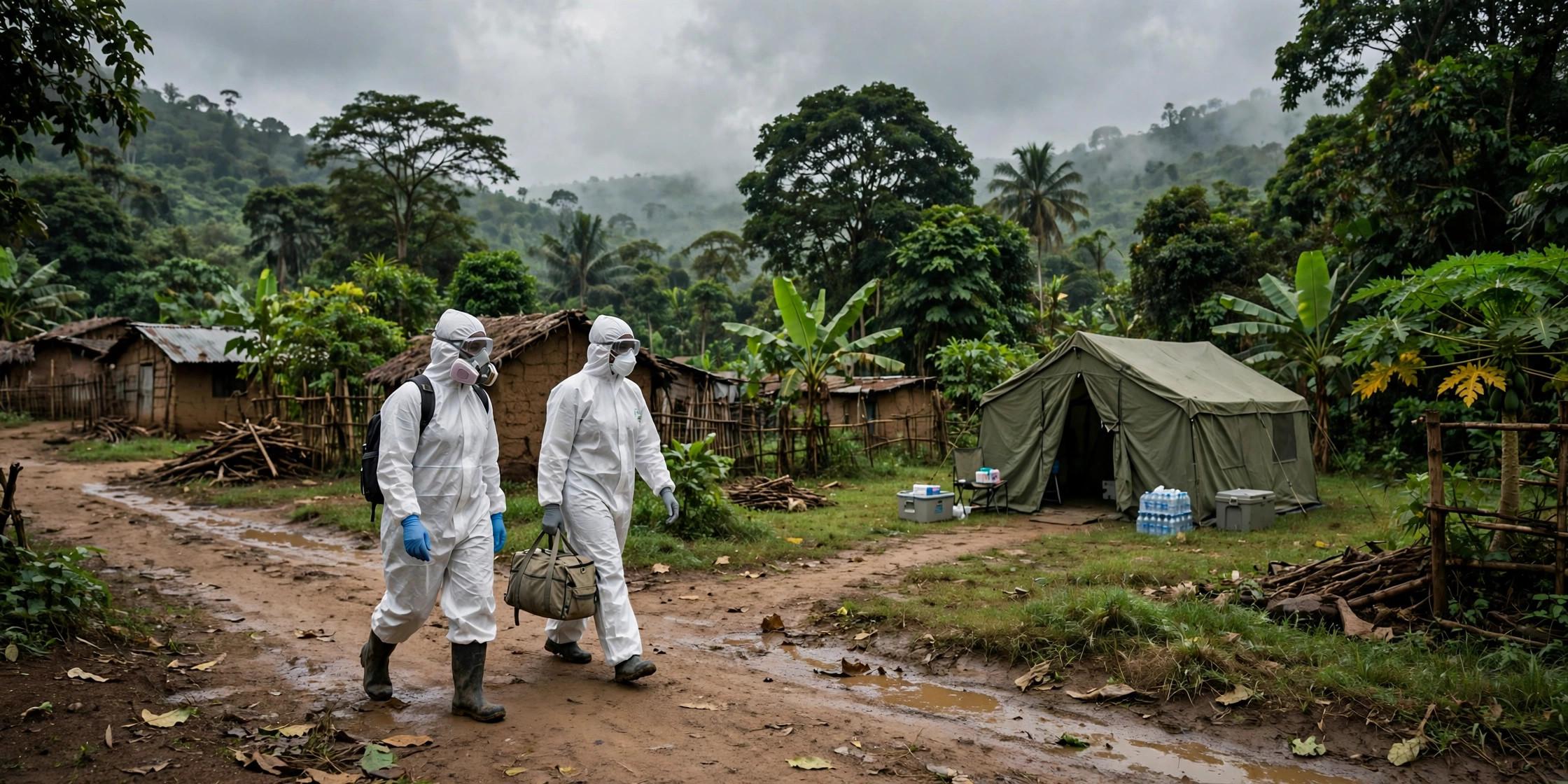
The Congo Ebola attack in Bafwasende has killed a nurse and left a fellow health worker severely injured, the World Health Organization said on Sunday, in the latest assault on the people trying to contain the deadliest Ebola outbreak in the Democratic Republic of Congo's history. The two workers were responding to an Ebola alert in the town in eastern Tshopo province on Saturday, 24 October 2026, when they were attacked. The injured worker remains in hospital.
WHO Director-General Tedros Adhanom Ghebreyesus disclosed the Congo Ebola attack in a post on X on Sunday, 25 October 2026, a day after it happened. "Everyone working to protect communities from this deadly disease must be able to work in dignity and safety. Healthcare must always be protected," he wrote. The WHO regional director for Africa, Dr Mohamed Yakub Janabi, also condemned the attack, warning that "misinformation and fear must never fuel violence."
The United Nations said the nurse was killed by protesters in Bafwasende, a rural town in Tshopo province. Julien Harneis, the UN Senior Ebola Response Coordinator, issued a statement extending condolences to the nurse's family and colleagues. "I strongly condemn this attack and call for a thorough investigation," he said. "I urge communities to protect health workers and allow them to carry out their work safely."
Local authorities had not publicly identified suspects or commented on a possible motive at the time of reporting, and the WHO did not name either health worker. The lack of detail has not stopped the condemnation: for responders on the ground, the killing is a reminder that the outbreak is being fought on two fronts at once — against the virus, and against the fear and distrust that surround it.
What happened in the Congo Ebola attack at Bafwasende?
Bafwasende lies in the north-east of Congo, on the border with Ituri province, which provincial officials described in August as the centre of the outbreak. The town has been on the front line of the response since the early weeks of the epidemic in Tshopo: the province's first seven Ebola cases were all brought in from Ituri through a checkpoint at Avakubi inside the Bafwasende area, and the province's first locally caught case was recorded in the same area in early August. Its health workers have therefore been responding to the disease since at least early August.
On Saturday, the two workers were answering an alert about a possible Ebola case — the routine, dangerous work of outbreak response: travelling to a community, assessing a suspected infection, supporting the patient and their family, and helping to break chains of transmission. Instead, they were attacked. One nurse was killed. A colleague was severely injured and remains in hospital. The WHO has not said whether the attackers have been detained, and local authorities have not yet commented publicly.
The incident is the latest in a series of attacks on health workers and responders that authorities say is hampering efforts to slow what has been described as the fastest-growing Ebola outbreak in the world. When responders cannot safely reach an area, investigations stall, suspected cases go unassessed and public-health measures are delayed — giving the virus more time to spread.
Why the Congo Ebola attack matters for the outbreak response
The killing comes amid an outbreak of extraordinary scale. The DRC health ministry's most recent data indicates more than 9,800 cases, including more than 4,700 deaths, recorded since the outbreak began in May 2026, making it the deadliest Ebola outbreak in the country's history. Recent WHO figures cited by the UN put the toll at more than 9,760 cases and some 4,727 deaths since the outbreak was declared on 15 May 2026.
The disease is caused by the Bundibugyo virus, for which there is currently no approved vaccine. That fact shapes everything about the response: without a vaccine to fall back on, containment depends on finding cases early, tracing contacts, isolating patients and persuading communities to follow measures such as social distancing and handwashing. Every one of those steps requires health workers to be present, trusted and safe in the communities they serve.
The outbreak, first reported in the volatile eastern region, has now reached eight provinces: Bas-Uélé, Haut-Uélé, Ituri, North Kivu, South Kivu, Sud-Ubangi, Tshopo and Nord-Ubangi. It has also spilled across borders in the region. Uganda confronted a smaller Ebola outbreak which was declared defeated in August, while France, Kenya and Nigeria have reported cases linked to the regional spread.
Violence against responders is not new in this outbreak. Last month, a Congolese politician was beaten to death in North Kivu after publicly defending the government's response to Ebola; he had been calling on the public to obey response measures, particularly social distancing and handwashing, on a radio show. Earlier, in May, two tents at health centres were set alight in separate attacks within one week as residents reacted angrily to the response. Responders have also reported being held against their will or threatened in areas designated for health work.
Responders have faced scepticism from communities who dismiss Ebola as a hoax, while distrust of the government has been fuelled by its handling of previous outbreaks and chronic corruption. The difficulties are most acute in remote areas and emerging hotspots, where medical supplies and healthcare workers are already in short supply. Each attack deepens that problem: it frightens staff, empties clinics and tells communities that the people sent to help them are targets.
Uganda tightens its defences as neighbours watch the Congo Ebola attack fallout
Neighbouring Uganda moved on Sunday to tighten its defences, imposing a 21-day quarantine on citizens returning from Congo and stepping up traveller screening at Entebbe International Airport and land border crossings. All travellers intending to enter Uganda by air, land or water must now complete a passenger locator form, health minister Dr Chris Baryomunsi said.
Uganda shares a border with Congo and has battled Ebola outbreaks of its own. Its health ministry said all 60 contacts linked to a Kenyan Ebola case had completed their 21-day monitoring period and been discharged. Genomic analysis of Nigeria's only confirmed Ebola case showed the virus was closely related to the strain detected in Kenya's index case, though Nigerian authorities said there was no evidence that the Kenya case had travelled to Nigeria or had a direct connection.
The regional picture matters because the Bafwasende attack does not stay local. When an outbreak zone becomes too dangerous for responders to work in, cases go undetected for longer, and undetected cases travel. Uganda's quarantine and screening measures are a direct response to that risk — an attempt to buy time while the response inside Congo regains its footing.
What happens next after the Congo Ebola attack?
The immediate questions are practical. Will local authorities identify and prosecute the attackers, as the UN's Harneis has demanded? Will the injured health worker recover? And will the response in Tshopo province continue at full strength, or will teams pull back from the areas where they feel least safe?
The WHO's message is unambiguous: health workers must be protected, and communities must be persuaded — not coerced — to let them work. That persuasion is slow work, built on local leaders, clear information and the visible presence of responders who keep coming back. The Bafwasende killing is a setback to exactly that trust.
For now, the outbreak continues to grow, and the workers containing it do so knowing that the danger comes not only from the virus. The nurse killed in Bafwasende was answering an alert — doing the job that keeps an outbreak from becoming a catastrophe. The condemnation from Geneva and Kinshasa will only matter if it is followed by protection on the ground.
Read more on the outbreak: Congo's Ebola outbreak passes 9,000 cases as containment falters, the TUMAINI trial testing the first Bundibugyo shots, Nigeria's first Ebola case in Abuja and Kenya's imported Ebola case explained.
Sources: Associated Press, UN News, WHO statements on X, Reuters reporting via regional outlets, 26 October 2026.