
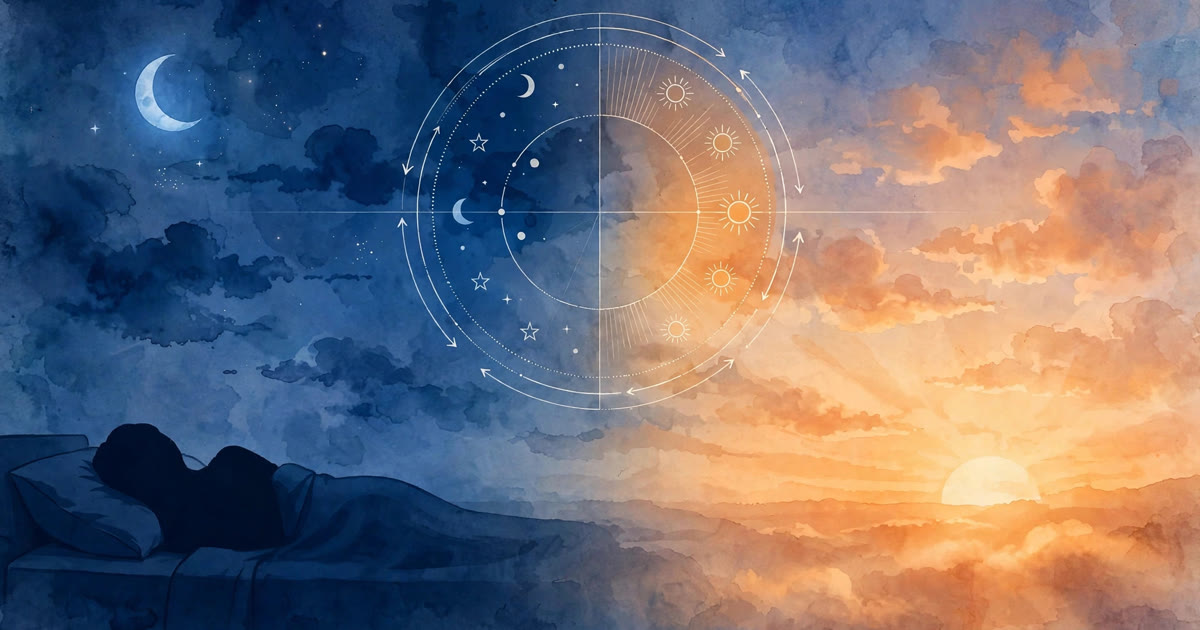
For millions of people with depression, the cruelest part of the illness is that the standard treatments simply don't work. They try one antidepressant, then another, then therapy — and nothing lifts the fog. Now, research published this week in the British Journal of Psychiatry offers a possible explanation: roughly one in four people with severe, recurrent or persistent depression may have a distinct subtype — "circadian depression" — rooted in the body's 24-hour internal clock rather than in serotonin.
The study, led by researchers at the University of Sydney's Brain and Mind Centre, analysed clinical and genetic data from more than 10,000 Australians through the nationwide Australian Genetics of Depression Study. It is one of the largest investigations of its kind, and the findings are already trending per news coverage across Australia, the UK and beyond — because they reframe what doctors have long called "treatment-resistant" depression.
What the researchers found
The team identified the new subtype by looking for a cluster of six features: a seasonal pattern of illness, delayed sleep timing, sleeping longer when depressed, waking feeling very tired, being a night owl, and "social jetlag" — the mismatch between weekday sleep schedules and weekend or free-day schedules. Participants who showed at least three of the six were classified as having circadian depression.
About 23 percent of the study's participants — 2,604 people — fell into this category. The subtype was not merely a redescription of insomnia: the researchers say it is a biologically valid and clinically useful phenotype, strengthened by genetic evidence that ties it to the molecular machinery of the body's clock.
First author Dr Emiliana Tonini of the Brain and Mind Centre said: "Our research has identified circadian depression as a new subtype, affecting around a quarter of people in our study into those with severe, recurrent or persistent depression. Depression is not a uniform illness and understanding the characteristics of different subtypes mean that we can give people earlier access to treatments that will be most effective for them."
Why antidepressants fail these patients
Here is the finding that could change practice. People with circadian depression were found to be more resistant to common serotonin-based antidepressants — the SSRIs that are the first-line prescription for most depression worldwide — but more responsive to treatments that target the body clock's unique brain circuits.
Those treatments include melatonin, melatonin-targeted antidepressants, light therapy, behavioural activation and careful monitoring of sleep-wake cycles. Co-author Professor Ian Hickie, the Brain and Mind Centre's policy co-director, said the finding had been a relief for patients who had been told their depression was untreatable: "This has actually been empowering and enlightening [for patients] to get out of that category otherwise called treatment resistant depression."
The mechanism is the circadian system — the network of internal clocks, orchestrated by the suprachiasmatic nucleus in the brain, that coordinates sleep, mood, metabolism and concentration across the 24-hour cycle. "The co-ordination of those clocks underpins your mood, your metabolism, your concentration, your sleep-wake cycle, and many other key factors," Professor Hickie said. When those clocks fall out of sync — through night-owl habits, shift work, or the artificial light of offices and screens late at night — mood can follow them down. Building the basics of a healthier sleep routine is one of the practical levers clinicians already recommend.
A more severe illness — and an earlier onset
Circadian depression is not the milder kind. According to Dr Tonini, people with the subtype had more severe mental health symptoms than those with non-circadian depression: a younger age of onset, more episodes, more complex trajectories, more suicidality, and more hypomanic and psychotic-like symptoms.
That severity is exactly why the discovery matters. These are the patients most likely to cycle through medications without relief — and, under the new framing, the patients most likely to benefit from treatments the mental-health system rarely reaches for first.
What treatment could look like
For clinicians, the subtype suggests a different playbook. Instead of escalating to ever-stronger serotonin drugs, doctors could:
- Track sleep-wake rhythms — even with a smartwatch — and work to make them regular;
- Use timed light exposure to reset the clock, especially in the morning;
- Consider melatonin or melatonin-targeted antidepressants, which act on the clock's receptors;
- Stabilise daily routines — regular meal times, daytime activity, and darkness at night.
A major trial of melatonin as a treatment is already under way, researchers said. And Professor Hickie offered a lifestyle observation that the study's genetics support: rigid light-dark cycles reduce these phenomena. "If we all go out and live what we call the camping lifestyle, or we live in a really rigid light-dark cycle, you see less of these phenomena," he said. "We really should be out in the light and being active and eating during the day, not at night."
The advice echoes what sleep scientists have said for years — but the genetics give it new weight. This isn't just wellness advice; it's a biologically grounded treatment target.
Why it is making headlines
Depression affects hundreds of millions of people globally, and roughly a third of patients do not respond to first-line treatments. A subtype that explains a large share of those failures — with distinct biomarkers, a distinct genetic signature, and distinct treatments — is the kind of discovery that reorganises a field.
Experts commenting on the study said they hope it will lead to more targeted behavioural and medical treatments, particularly for young people in the early stages of these disorders, when interventions have the best chance of changing the course of the illness.
There are caveats, and the researchers are honest about them. The study population was Australian; the classification was based on clinical and genetic correlations, not a blood test; and whether the subtype holds across other populations will need replication. But the sample — more than 10,000 people with deep clinical and genetic data — makes this one of the most robust circadian-psychiatry findings to date.
The broader lesson may be the simplest one in the whole study. Depression has been treated as a single illness with a single first-line drug for decades. The body, it turns out, keeps time — and for one in four patients, getting that clock back in sync may be the treatment that finally works. For anyone who wakes up tired every day despite full nights in bed, the reminder stands: check on your sleep first — it may be doing more to your mood than any pill. Stress and mood are closely linked, and mindfulness — the practice of paying deliberate attention to the present moment — is one widely used way of managing both.
Policy is shifting alongside the science: in Washington, the Trump administration has created a new NIH division and task force dedicated to women's health research.
Sources: University of Sydney (original research announcement); British Journal of Psychiatry (study); MedicalXpress; Scimex expert briefing; AAP News.