
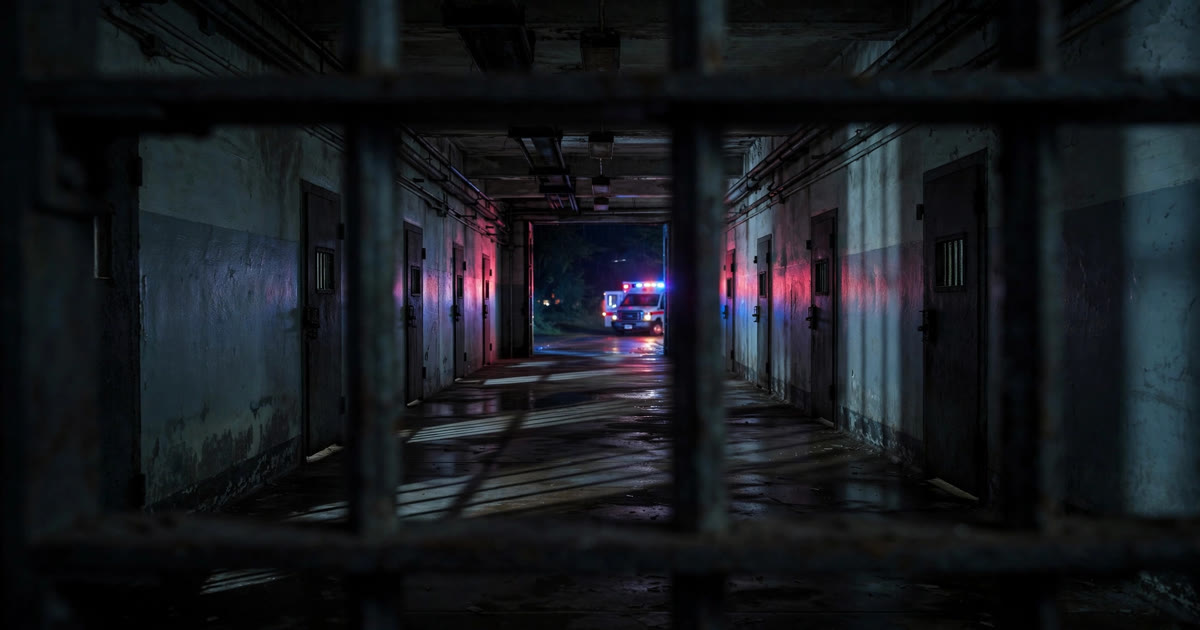
Newly released 911 dispatch recordings have pulled back the curtain on one of the most extraordinary moments in recent American criminal justice history: after Tennessee inmate Christa Pike survived a lethal injection on September 30, 2026, emergency medical crews were held at the prison gates for roughly 30 minutes because officials could not agree that the call for help was real. The recordings, obtained and reviewed by the Associated Press, are now trending per news coverage worldwide, renewing debate about execution protocols in the United States.
What happened on the night of September 30
Christa Pike, 50, was strapped to a gurney at the Riverbend Maximum Security Institution in Nashville for her scheduled lethal injection. Execution staff administered two doses of the barbiturate pentobarbital — but she survived both injections, a result not previously seen in modern U.S. executions.
According to her attorney Randy Spivey, medical staff used at least seven needles trying to establish intravenous lines, and one needle reportedly bent as it was removed from her arm. Pike remained strapped to the gurney for roughly an hour while personnel attempted to carry out the execution.
When it became clear Pike was still alive, someone inside the execution chamber placed a 911 call at about 8:40 p.m. — roughly an hour after the drugs were first administered. That call set off a chain of confusion that would delay medical care by more than half an hour.
The 911 confusion, minute by minute
The recordings reveal a remarkable breakdown in communication between prison officials and emergency responders:
- 8:40 p.m.: The first 911 call comes in from the execution chamber. The caller says they tried to execute Pike but she is still alive and needs an ambulance. When the dispatcher asks for a verification code that would grant emergency services expedited access to the prison, the caller cannot provide one.
- Around 9:00 p.m.: A follow-up call to the Tennessee Department of Corrections (TDOC) Central Control produces an apparent contradiction — a TDOC employee states that no call for an ambulance was made from their facility, even as others insist help is urgently needed.
- 9:03 p.m.: A dispatcher relays a message from supervisors: "We have been informed it is a false call. There is no medical assistance needed at Riverbend Prison."
- Around 9:07 p.m.: A responder reports that someone at the prison gate — described as a state official — is demanding that crews be allowed in, insisting the emergency is real. Responders remain staged at the gates, unable to proceed without the clearance code.
- 9:11 p.m.: About 31 minutes after the original call, prison officials finally confirm the emergency is legitimate, and emergency crews are cleared to enter Riverbend.
First responders had reportedly been told to bring 10 grams of pentobarbital — two full doses under Tennessee's execution protocol — yet nearly an hour after administration, Pike was still alive.
Her condition after the failed execution
Following the botched procedure, Pike was taken to Vanderbilt University Medical Center, where she was unconscious and placed on a ventilator. Her legal team initially feared she had suffered irreversible brain damage.
Instead, Pike regained consciousness, began walking with assistance, and received medical clearance. Her attorneys confirmed that she was released from the hospital on Saturday, October 10, and returned to the Debra K. Johnson Rehabilitation Center — still behind bars, but still receiving medical attention.
Her lawyers say she has suffered major psychological trauma from the ordeal — strapped to a gurney for hours, surviving the procedure meant to kill her, and then waiting more than 30 minutes while officials argued over whether to send help.
Who is Christa Pike?
Christa Pike's case has been one of the most closely watched death-penalty cases in the United States for three decades. She was convicted of the 1995 torture and murder of her 19-year-old classmate, Colleen Slemmer, while both attended a job-training program in Knoxville. Pike became the first woman sentenced to death in Tennessee in the modern era, and her case has wound through courts and appeals for nearly 30 years.
On September 30, the state finally moved to carry out the sentence. Instead, Pike made history again — she became the first person in modern U.S. history to survive a lethal injection execution.
The official response
The fallout has been swift. Tennessee's governor suspended all executions for the remainder of the year in response to the botched execution and the newly public recordings, prompting formal reviews of both prison procedures and emergency communication protocols.
The recordings have also reignited legal and ethical scrutiny of the death penalty itself — focused on execution drug protocols, the adequacy of emergency contingency planning, and whether medical personnel should be on standby inside execution chambers rather than stuck at the gates without a code.
Death-penalty opponents argue the case demonstrates the inherent fallibility of capital punishment; supporters of the penalty counter that the incident was a procedural failure, not a reason to abandon the punishment for an inmate convicted of an exceptionally brutal murder. Both sides now await the outcome of the official reviews.
What happens next for Christa Pike?
There is no word on whether the state will set a new execution date — or whether it can. Surviving a lethal injection puts Pike in nearly unprecedented legal territory. Her attorneys are expected to challenge any attempt to carry out a second execution, and the governor's suspension of executions gives the state time to review what went wrong.
Meanwhile, questions about the 911 response are unlikely to fade. Why did an emergency call from inside an execution chamber lack a pre-arranged verification code? Why did TDOC's central control deny that a call had been made while responders were being flagged down at the gate? And how did "false call" become the official determination for a genuine medical emergency?
The official reviews now underway will have to answer those questions — under the scrutiny of a story that has seized the world's attention. For a broader look at how capital-punishment debates are unfolding in the United States right now, see our explainers on Nidal Hasan's scheduled execution by firing squad and the federal investigation swirling around Rep. Ilhan Omar.
Frequently asked questions
Who is Christa Pike?
Christa Pike, 50, is a Tennessee death row inmate convicted of the 1995 torture and murder of her classmate Colleen Slemmer. She was the first woman sentenced to death in Tennessee in the modern era.
What happened during Christa Pike's execution?
On September 30, 2026, Pike survived two doses of pentobarbital during her scheduled lethal injection at Riverbend Maximum Security Institution in Nashville, becoming the first person in modern U.S. history to survive a lethal injection. She was strapped to the gurney for roughly an hour while staff used at least seven needles.
Why was emergency care delayed for 30 minutes?
911 dispatch recordings reviewed by the AP show the first call from the execution chamber came at 8:40 p.m., but dispatchers and prison officials could not confirm whether the request was legitimate — the caller lacked a verification code, and at one point the call was deemed false. Responders were only cleared to enter at 9:11 p.m., about 31 minutes later.
Is Christa Pike still alive?
Yes. She was hospitalized at Vanderbilt University Medical Center on a ventilator, regained consciousness, walked with assistance, and was released back to the Debra K. Johnson Rehabilitation Center on October 10, 2026, where she remains in custody.
Will Tennessee execute Christa Pike again?
Unknown. The governor suspended all executions for the rest of 2026 pending reviews of prison and emergency procedures. Her lawyers are expected to challenge any new execution date, and surviving a lethal injection puts the case in nearly unprecedented legal territory.