
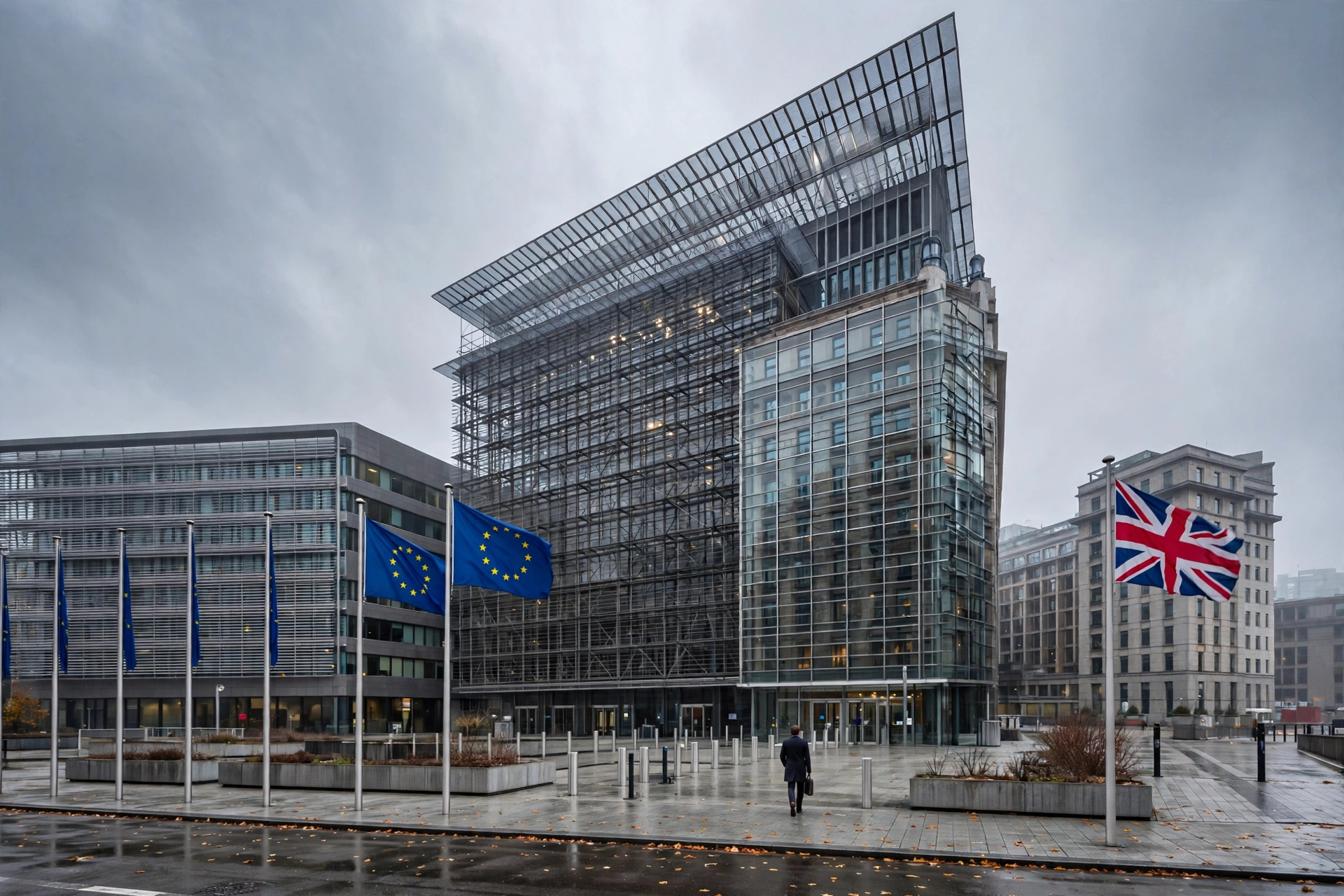
The Burnham Brexit EU deal took centre stage on 14 November 2026, when Prime Minister Andy Burnham told the Welsh Labour conference in Llandudno that Britain has "lost more than we've gained" since leaving the European Union. Six days before a UK-EU summit in Brussels, Burnham presented the deal as a practical answer to food prices and struggling exporters, not a step back towards EU membership. He meets European Commission President Ursula von der Leyen and European Council President António Costa on 20 November, with agreements on food and drink, carbon emissions and youth mobility on the table.
What Burnham Actually Said in Llandudno
Burnham was speaking at his first Welsh Labour conference as prime minister, four months into the job. The Burnham Brexit EU deal was the centrepiece of the speech, not a passing mention. The full text of the speech, published by LabourList, records his words exactly: "I think we've lost more than we've gained over the last 10 years. And, actually, I think the Conservatives gave Britain a harsher and harder Brexit than people thought they were getting when they voted in 2016, because they burned all of our bridges in the aftermath with the EU." He added: "We need to be willing to take difficult decisions to get the cost of living down."
The speech tied the Burnham Brexit EU deal to Wales. Burnham said he would "head to the next UK EU summit" and work "to get to a new deal on food and farming between the UK and the EU", adding that the deal would "get food prices down" and put more money in the pockets of British exporters. He named the people he wants it to help: "Welsh farmers, exporters of Welsh shellfish and Welsh lamb." He also used the speech to say the party needs to "listen" and "take stock" after its defeat in May's Senedd election, a context reported by the Voice of Freedom. Wales itself voted to leave the EU in the 2016 referendum, with 854,572 voters (52.5 per cent) choosing Leave against 772,347 (47.5 per cent) for Remain.
What the Burnham Brexit EU Deal Would Cover
Three agreements make up the Burnham Brexit EU deal on the table for the 20 November summit. The first, and the centrepiece, is a food and farming deal, known as a sanitary and phytosanitary (SPS) agreement, under which Britain would follow EU rules on food and drink in return for far fewer border checks. The second links the UK and EU emissions trading systems. The third is a youth mobility scheme letting young people live, work and study on either side. Draft texts for all three have been circulated among EU member states, according to reports by Zot News and Demokratis, and the food deal is described as a draft agreement already reached in outline.
The government says the Burnham Brexit EU deal could raise GDP by 0.4 per cent, about £17 billion. The food deal alone is forecast to add £5.1 billion a year to trade, according to reporting by Journalarta and Zot News. It would cut paperwork for exporters, remove most food checks across the Channel and the Irish Sea, and end "not for EU" labels on food sold in Britain. The first changes would arrive in 2028 at the earliest, Journalarta reported, so shoppers should not expect lower prices the week after the summit. Burnham has called the package a "win-win" deal and said it could be "more like the Brexit that people thought they were voting for in 2016", speaking after talks with European leaders in Dublin on 12 November 2026. The i Paper, cited by EuropeSays, described the deal as "95 per cent there", while Burnham himself warned that "the deal is not done, and there'll be some long nights ahead in the next seven days."
Why the Burnham Brexit EU Deal Matters for Food Prices
Food prices are the heart of Burnham's pitch. Since Brexit took practical effect on 31 December 2020, food and farm goods crossing the Channel have faced checks, certificates and delays that add cost at every step. Welsh lamb and shellfish exporters, the groups Burnham named in Llandudno, sell perishable goods into European markets where a delayed lorry can mean a lost sale. Removing most of those checks would cut costs for exporters and, Burnham argues, feed through into lower prices in British shops. That is the practical case Burnham makes for the Burnham Brexit EU deal: fewer checks, lower costs for exporters, and, he argues, lower food prices. The same logic sits behind the government's wider cost-of-living case: households are still feeling price rises, and the government has been under pressure to show it can bring them down, as seen in the autumn Budget — see UK Budget 2026: 7 changes for households.
The price of the old system is on the record. A National Audit Office report published in May 2024 found that £4.7 billion was being spent on 13 major programmes to manage the passage of goods across the border after EU exit. Portsmouth International Port spent £23 million on a border control post that its boss now says could be left useless if the food deal scraps the checks it was built for, according to Apex News. The Burnham Brexit EU deal would make much of that spending redundant, which is why port operators are asking whether they will be compensated. The Burnham Brexit EU deal therefore has a compensation question attached to it before it is even signed.
The Northern Ireland Poll in Numbers
The summit debate gained a new talking point days before Burnham's speech. A Queen's University Belfast poll, carried out by LucidTalk between 23 and 26 October 2026, found that 52 per cent of voters in Northern Ireland say the UK ought to rejoin the EU, with 38 per cent opposed. The same poll found that 77 per cent say there is a clear need for serious dialogue on the long-term relationship with the EU. The figures were reported by Zot News and the Guardian.
The numbers matter, but their limits matter too. The poll covers Northern Ireland only, not the UK as a whole, and it asks about rejoining, which is not what the 20 November summit is about. Burnham has committed to Labour's 2024 manifesto red lines, which rule out a return to the single market, the customs union or freedom of movement during this parliament. In Llandudno he repeated that working with the EU would mean "respecting the red lines in our manifesto and respecting the referendum result". The poll shows the direction of opinion in one part of the UK, but the Burnham Brexit EU deal does not answer the rejoining question, and the poll does not change what the government says it will sign.
The Sticking Points Before 20 November
One obstacle could still hold up the whole package: university tuition fees for European students. The EU has said the food and emissions deals may not enter into force without an agreement for European students to pay domestic rates in Britain. The Guardian reported earlier this month that the UK was prepared to spend up to £450 million a year to give EU students discounted tuition fees, if Brussels allowed Britain access to the Made in Europe industrial programme. That trade-off sits at the centre of the Burnham Brexit EU deal, and it is the kind of detail that has kept negotiators working into the final week.
The politics are just as tight. The Conservatives oppose any change to the Brexit settlement, a position Burnham attacked directly in Llandudno. Reform UK leader Nigel Farage has accused Burnham of being "determined to sell out the British people and our national interest in favour of the European Union". Reform UK, citing the House of Lords European Affairs Committee, says the food deal could require Britain to adopt at least 780 pieces of EU farming legislation a year under "dynamic alignment", following new EU rules as Brussels introduces them. That is the price of the Burnham Brexit EU deal: fewer checks in return for following rules Britain no longer helps to write. The debate over exit from the EU is not unique to Britain — Poland has had its own argument about leaving the bloc: Poland EU exit talks. And Britain is not the only country holding a summit with the EU this autumn — Canada did the same: Canada-EU summit.
What Happens Next
Burnham meets von der Leyen and Costa in Brussels on 20 November 2026. If the three agreements are signed, the Burnham Brexit EU deal moves from promise to paperwork, and the food deal would be expected to come into force in spring 2028, according to reporting by Breaking Brexit News, with further negotiations planned for 2027. Burnham has promised to use the time around the summit to set out "the different options" for the longer-term relationship, and he said in Dublin that after the summit "we'll take a decision as a Cabinet on what, if anything, comes next." The Burnham Brexit EU deal is therefore a test of two things at once: whether the summit produces signed agreements on Friday, and whether a prime minister who says Britain lost more than it gained can turn that argument into a deal voters can feel in food prices.