
What happened
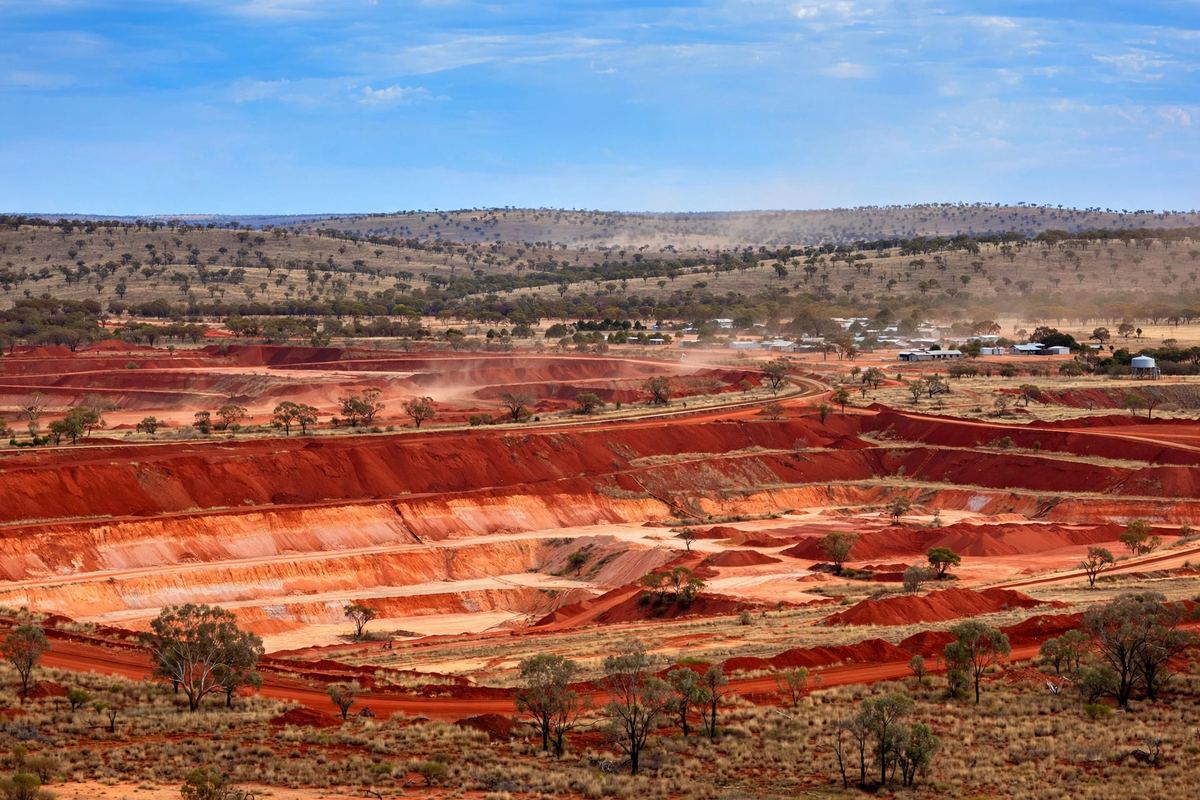
Australian parliamentarians are travelling the country asking a question that sounds simple and turns out to be hard: when a mine opens in a regional town, who actually benefits? The House of Representatives Standing Committee on Primary Industries is holding public hearings as part of its inquiry into the factors shaping social licence and economic development outcomes for critical minerals projects across Australia. On Friday, October 16, 2026, the committee heard in Canberra from environmental scientist Dr Dora Pearce, the Victorian-based Alliance for Responsible Mining Regulation, the Centre for Social Responsibility in Mining, Regional Development Australia Gippsland and the Quantum Sunlands Project, which focuses on graphite mining and processing. Further hearings are scheduled for Melbourne and Horsham on October 19 and 21, and the committee will travel to other regions in the coming months.
The inquiry's premise is that Australia's critical minerals boom is strategically vital but socially complicated. Critical minerals, including lithium, cobalt, nickel, rare earths and graphite, are the building blocks of batteries, electric vehicles, wind turbines and electronics. Australia holds large reserves of many of them, and the world wants them: the clean-energy transition cannot happen without them. But the mines that produce them sit in regional and remote communities, and the people who live near those mines do not automatically share in the wealth they create. The committee's job is to find out why that gap exists and what policy can do about it.
Committee chair Meryl Swanson framed the inquiry in terms of both opportunity and challenge. "The inquiry has highlighted both the tremendous opportunities and real challenges presented by critical minerals projects," she said. "Some questions have been raised in regional Australia about the benefits to them. Governments must be prepared to shape policy to ensure that grasping the opportunities provides direct benefits to affected communities, at minimal cost, as well as broader benefits to the nation. That will ensure social licence for industries and governments alike." The phrase "social licence" is the inquiry's central concept, and it is worth unpacking, because it is often misunderstood.
What 'social licence' really means
Social licence is not a permit, a licence or a legal document. It is the ongoing acceptance and support of a project by the community that hosts it. A mine can hold every legal approval and still lack social licence if local people believe it is harming them, ignoring them or taking more than it gives. Conversely, a project with strong social licence can survive setbacks because the community trusts the operator and believes the benefits are fairly shared. Social licence is earned slowly and lost quickly, and it depends on things that do not appear on a balance sheet: whether local people were consulted honestly, whether jobs went to locals, whether housing and services kept up, and whether the community is better off after the mine closes than it was before it opened.
The submissions to the inquiry paint a consistent picture of where social licence breaks down. The Centre for Social Responsibility in Mining observes that "critical minerals development is disproportionately occurring in places already shaped by socio-economic disadvantage and uneven development. This has consequences for how governments should think about economic benefit, workforce participation, infrastructure, cumulative pressure, and the distribution of risk and benefit." In plain terms: the places that host mines are often the places that can least afford to absorb their costs, and the benefits flow disproportionately to cities, shareholders and overseas buyers.
The Regional Australia Institute's submission makes a similar argument in policy language. It says social licence should be treated as an outcome of long-term regional development processes, rather than solely a project-level approval or risk-management exercise. Effective social licence, it argues, depends on meaningful and sustained community engagement, equitable benefit-sharing arrangements, and alignment of minerals development with regional priorities and capacity. Three constraints are identified as particularly important: infrastructure, housing and service capacity in regional and remote communities; workforce availability and capability, especially for processing and refining; and local government capacity to manage impacts, plan infrastructure and support post-mining transitions. Those three constraints are the practical test of whether a mining boom helps a region or hollows it out.
What the hearings are revealing
The Canberra hearing brought together voices that rarely share a platform: an environmental scientist, a community alliance, a university research centre, a regional development body and a graphite project. That mix is itself a statement about the inquiry's approach: it is not just hearing from mining companies, but from the people who live with the consequences. The Melbourne hearing on October 19 will hear from mining and mineral processing companies, academics, engagement professionals and the Federation of Victorian Traditional Owner Corporations, about social licence requirements and economic potential. The Horsham hearing on October 21 will meet representatives of local communities and local governments in a region shaped economically and socially by agriculture, to explore the challenges created by potential land-use conflict.
Land-use conflict is one of the most sensitive issues in the inquiry. In regions such as Horsham, farming is the economic and cultural backbone, and a mine that competes for land, water and workers can feel like an existential threat even if it brings jobs. The committee has said it understands that for some parts of Australia, critical minerals present significant challenges as well as important opportunities, and that through the Melbourne and Horsham hearings it will explore both the challenges and the opportunities presented by the integration of critical minerals with existing industries in established farming regions. That framing matters: it treats farming and mining not as enemies but as neighbours who must find a way to coexist.
First Nations perspectives are also central. The National Native Title Council's submission, made with the Mabo Centre, examines the impact of critical minerals mining on the rights of Australian First Nations communities, and supports recommendations highlighting the urgent need for adequate implementation of free, prior and informed consent and protections for cultural heritage. Free, prior and informed consent means that Indigenous communities should be able to say yes or no to projects on their land on the basis of full information, before the project proceeds. It is a standard Australia has endorsed in principle but struggled to implement in practice, and the inquiry is one venue in which that gap is being tested. The Canada-Australia critical minerals pact shows how the same minerals are shaping international partnerships as well.
Why it matters beyond Australia
Australia's critical minerals debate is a local version of a global question: who pays for, and who profits from, the clean-energy transition? The world needs vastly more lithium, graphite, rare earths and nickel to build the batteries and turbines that will replace fossil fuels. The climate crisis makes that transition urgent. But if the transition is built on mines that leave host communities worse off, it will face resistance, delays and legal challenges that slow it down. Social licence is not a luxury or a public-relations exercise; it is a practical precondition for getting mines built on time and on budget.
There is also a geopolitical dimension. Australia is positioning itself as a reliable supplier of critical minerals to partners who want to reduce their dependence on China, which dominates processing of many critical minerals. The Canada-Australia pact is one example of that strategy. But reliability is not just about geology; it is about whether projects can be delivered without community conflict. A country that can demonstrate that its mines have genuine community support has a competitive advantage over suppliers whose projects are mired in disputes. In that sense, the inquiry is not just about fairness; it is about Australia's export strategy.
What happens next
The committee will continue its hearings across the country and will eventually report its findings and recommendations to parliament. Practical proposals already on the table include Social Licence and Regional Value Statements for major projects receiving strategic Commonwealth support: statements that set out a project's most material regional commitments, how they will be monitored, and how the project has taken account of local and First Nations perspectives. Whether the government adopts such measures, and whether they have teeth, will be the test of whether the inquiry changes anything. For regional Australians watching the hearings, the question is simpler: will the next mine that opens near their town leave them better off than the last one did?