Economics
Articles, guides and definitions about Economics — part of Finance on Worldlession.
General financial education: personal finance, banking, economics, investing and markets. Educational content only — not financial advice.
Articles, guides and definitions about Economics — part of Finance on Worldlession.
Bank of America reported a 17% drop in Q3 2026 profit after the U.S. Treasury imposed more than $1.21 billion in penalties over anti-money-laundering and sanctions failures. Shares fell sharply as the bank booked a $1.2 billion charge.
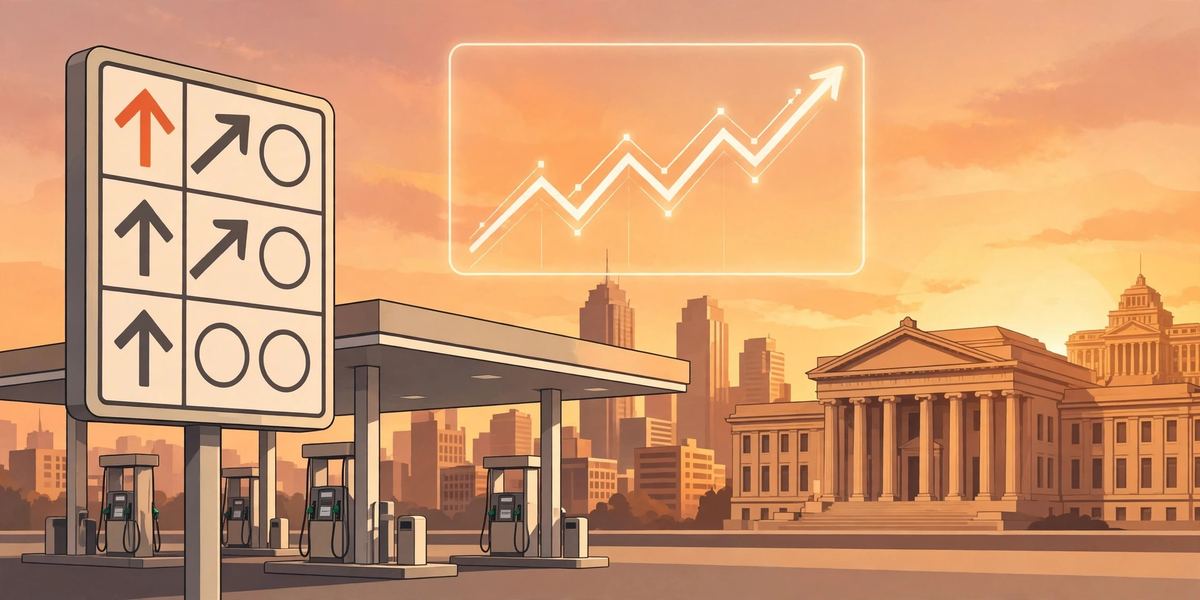
US inflation accelerated to 3.7% in September 2026, up from 3.4% in August, as gasoline prices surged 9.1% in the month. The hotter-than-expected CPI report, released by the Bureau of Labor Statistics on October 14, revived bets on a Federal Reserve rate hike at the October 27-28 meeting, sent bond yields jumping, and pushed the dollar to an 18-month high.
DPIIT data shows Japan invested $5.71 billion in India in April-June 2026, about 29% of all FDI equity inflows and more than its total for all of FY2025-26. Singapore was second at $5.22 billion, while US inflows fell 76% to $1.34 billion.
Robert E. Hall and Michael Woodford have won the 2026 Nobel Prize in Economics for the microeconomic foundations of macroeconomic stabilisation — research that gave central banks tools like forward guidance.
All ten analysts polled by Reuters expect the Monetary Authority of Singapore to tighten policy at its October 14 review, as strong growth and inflation risks reshape the city-state's unique currency-based monetary policy.
Japan's PM Sanae Takaichi told parliament the economy no longer needs reflationary policies and pledged to watch the weak yen "carefully" — a striking reversal for a former easing advocate. This explainer covers what she said, the yen at 160, 2% inflation, and why it matters for global markets.
The US Supreme Court struck down President Trump's tariffs, prompting a new 10% global tariff and a court battle over refunds. Here is what happened, why it matters, and what comes next.
The RBI raised the repo rate by 25 basis points to 5.5%, a move likely to make home, car, and personal loans costlier for borrowers.
Bitcoin has neared $88,000 as crowded short positions fueled a sharp squeeze. This explainer covers how short squeezes work, what Bitcoin's market cycles look like, and why analysts are debating whether $93,000 comes next.
On October 2, 2026, G7 leaders agreed to release 100 million barrels of diesel and crude oil from emergency reserves over four months. This explainer covers what strategic reserves are, why diesel was singled out, and what it means for fuel prices and inflation.
The 50/30/20 rule splits your take-home pay into needs (50%), wants (30%), and savings (20%). Learn how to apply it with real numbers, adjust it for expensive cities, and avoid common mistakes.
Compound interest earns interest on your interest, creating accelerating growth over time. This guide explains the formula, the Rule of 72, real-number examples, and why starting early matters most.
The U.S. Treasury imposed more than $1.21 billion in penalties after finding the bank failed to timely report over $5 billion in suspicious transactions, including more than $1 billion tied to national security or priority illicit-finance risks. As part of its FinCEN resolution, the bank admitted it willfully violated the Bank Secrecy Act and failed to maintain an adequate anti-money-laundering program.
Read more in: Bank of America Profit Falls 17% After $1.2B Money-Laundering Fine
The CPI is the U.S. Bureau of Labor Statistics' monthly measure of the average change in prices paid by consumers for a basket of goods and services, including food, energy, shelter, transport, medical care, and apparel. It is the most widely watched inflation gauge in the United States.
Read more in: US September CPI Jumps to 3.7% as Gasoline Surge Puts Fed Rate Hike Back on the Table
FDI equity inflows are foreign investments made by buying ownership stakes in Indian companies or setting up new operations in India, reported under India's foreign-exchange rules. They are narrower than "total FDI," which also includes reinvested earnings of existing foreign firms and other forms of capital.
Read more in: Japan Is India's Top FDI Source in Q1 FY2026-27: $5.71 Billion, Explained
economics circulatory system education test inflatoin health explainer