
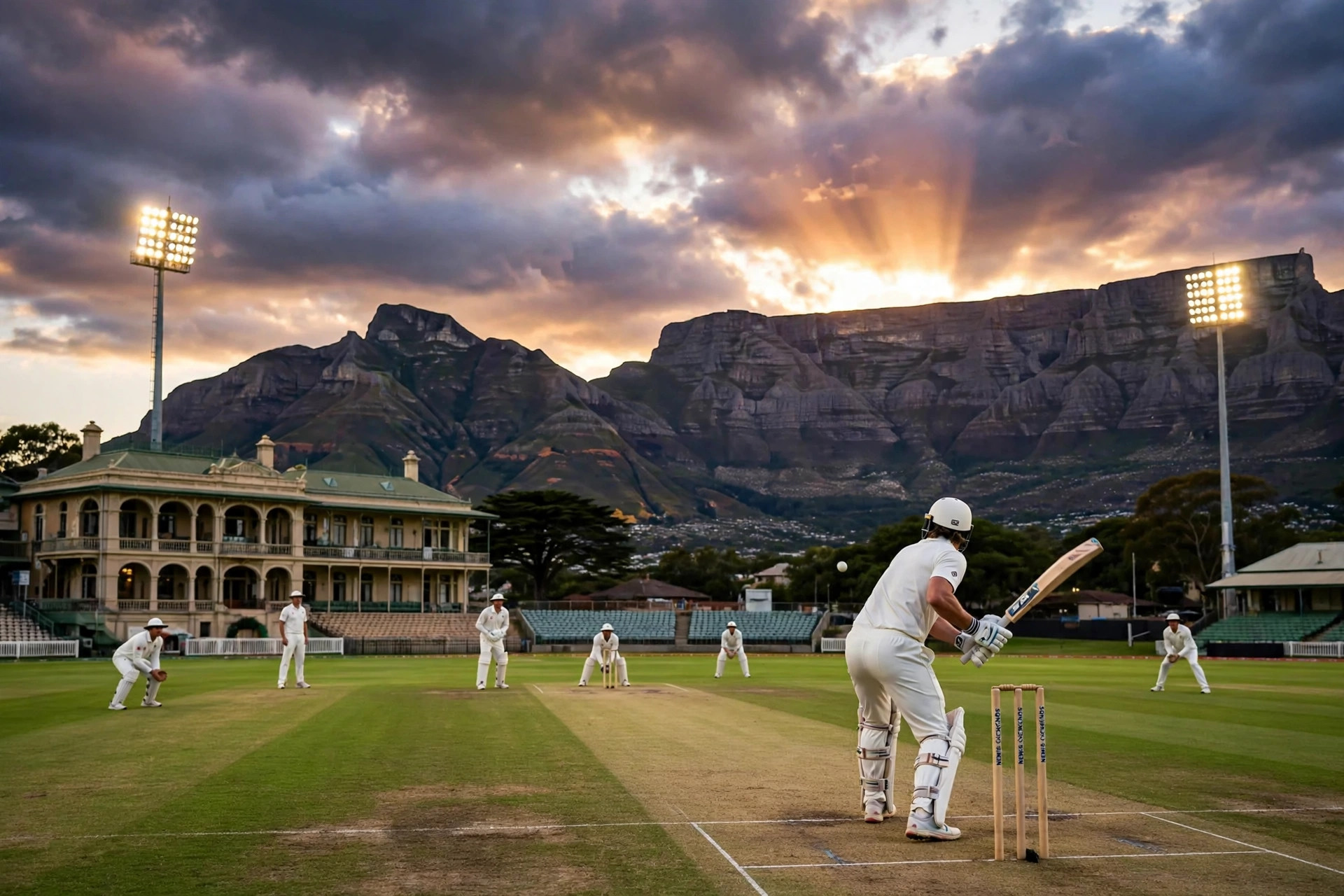
The WTC points table 2025-27 has a new leader, and New Zealand reached the top without playing a ball. South Africa's 176-run victory over Australia in the third Test at Newlands, Cape Town, on 31 October 2026, clinched the series 2-1 for the hosts and reshaped the World Test Championship standings at a stroke. New Zealand now lead the table with 72.22 percent of the available points, South Africa have climbed to second on 71.43 percent, and Australia, who began the match at the top, have slipped to third on 69.23 percent. India sit fourth on 51.52 percent. The result also carried a second prize for South Africa: the win took them past Australia to the top of the ICC Test team rankings, a separate table from the championship standings, for the first time since January 2016. One match in Cape Town therefore changed two tables, ended Australia's stay at the summit of both, and turned the race for the 2027 World Test Championship final into a three-way contest with more than a year still to run.
WTC points table 2025-27: the new top three after Newlands
The updated standings tell the story in numbers. New Zealand are first, having played six Tests, won four, lost one and drawn one, for 52 points and a points percentage of 72.22. South Africa are second, having played seven Tests, won five and lost two, for 60 points and 71.43 percent, up from 66.67 percent before the Newlands Test. Australia are third, having played 13 Tests, won nine and lost four, for 108 points and 69.23 percent, down from 75.00 percent before the match. India are fourth on 51.52 percent. The percentages, not the raw points totals, decide the table, because teams play different numbers of Tests in the championship cycle. That is why Australia can hold the most points, 108, and still sit third: their 12 points from a win are divided across more matches than New Zealand's or South Africa's. South Africa earned 12 championship points for the Newlands win, and Australia earned none from the match. At the end of the cycle, the top two teams in the table qualify for the World Test Championship final, which will be played at The Oval in 2027. With the top three separated by only three percentage points, and with each of them still holding series to play, the race is genuinely open: a single series win or loss can move any of them between first and third.
New Zealand's position is the most unusual part of the new table. They did not play in this match, and they did not need to. Their percentage was already high, and Australia's defeat pulled the previous leaders below them while South Africa's win lifted the hosts to just behind them. New Zealand now lead a championship race they have watched from the sidelines this week, and they will know that their own results in their remaining series will decide whether they stay there. South Africa, meanwhile, have turned a strong cycle into a genuine title challenge: five wins from seven Tests, and a series victory over the team that began the week as champions of both tables. Australia's drop is the sharpest of the three movements. A team that had won nine of 13 Tests and led the table at 75.00 percent now sits third, and must win its next series well to climb back.
How South Africa beat Australia by 176 runs at Newlands
The match itself was a story of a fightback. Australia won the toss and chose to field, then restricted South Africa to 329 in the first innings. Australia replied with 429, taking a first-innings lead of 100 runs, and at that point the match looked like theirs to control. Simon Harmer took four wickets for 104 in that innings, and Marco Jansen claimed three, including his 100th Test wicket when he dismissed Renshaw. South Africa's second innings turned the game. Ryan Rickelton and Wiaan Mulder made centuries in a 154-run sixth-wicket stand on the fourth day, Rickelton facing 219 balls for his 101 and Mulder occupying the crease for 221 deliveries to make 115, and South Africa were eventually all out for 387 in 134.4 overs, leaving Australia a target of 288 to win. A lead of 100 had become a target that required Australia to bat out the final day on a deteriorating Newlands pitch, and they could not do it.
The final day belonged to South Africa's bowlers. Kagiso Rabada wrecked the chase in the opening over, removing opener Matt Renshaw for nought and the struggling Marnus Labuschagne for four, then dismissing Travis Head to leave Australia 22 for three, and in doing so he claimed his 350th Test wicket. Rabada reached the mark in 13,808 balls, the fewest ever taken by a bowler to reach 350 Test wickets, fewer than Dale Steyn's 14,719 and Waqar Younis's 14,905. First-innings centurion Josh Inglis was run out for four attempting a quick single, and from there Simon Harmer took charge. The off-spinner took six wickets for 16 runs in 21.1 overs, sending down 14 maidens, and completed his first ten-wicket haul in Test cricket with match figures of 10 for 120. Harmer became the first South African spinner to take a ten-wicket haul in a Test at Newlands, and the first South African spinner to take ten wickets against Australia since Hugh Tayfield in 1952. Australia were dismissed for 111 in 57.1 overs, with Nathan Lyon top-scoring with 33 not out and captain Pat Cummins making 11 from 90 balls in a ninth-wicket stand that delayed the end. Harmer trapped Cummins leg before wicket and then bowled Josh Hazlewood to seal a 176-run win and a 2-1 series victory, and Harmer was named Player of the Match while Marco Jansen was named Player of the Series.
WTC points table 2025-27: what the numbers mean for the final race
The championship table rewards winning percentage, so every remaining series now carries weight for all three contenders. New Zealand's 72.22 percent is built on a small number of matches, which cuts both ways: a win lifts them sharply, but a defeat costs them more than it costs a team that has played 13 Tests. South Africa's 71.43 percent is built on five wins from seven, and their climb from 66.67 percent shows how much a single series win against a top side is worth. Australia's 69.23 percent, down from 75.00, shows the opposite: a heavy defeat in a deciding Test can cost several percentage points at once, and Australia collected no points at all from the Newlands match. India, fourth on 51.52 percent, remain in the race mathematically but need a strong run of results to close a gap of about 20 percentage points on the leaders. The structure of the championship means no team can afford to treat a series as a dead rubber: every Test contributes 12 points for a win, and every dropped point changes the percentage. With the final at The Oval in 2027 still more than a year away, the table will move again many times, but the Newlands result has set the terms of the race: three teams within three points of each other, and no margin for a bad series.
South Africa top of the Test rankings, and what it is not
It is important not to confuse the two tables that changed on 31 October. The World Test Championship standings are decided by points percentage across the 2025-27 cycle, and they decide who plays the final at The Oval. The ICC Test team rankings are a separate, rolling measure of team strength, and South Africa's win took them to the top of those rankings for the first time since January 2016, ending Australia's stay at the summit. A team can lead one table and not the other: New Zealand lead the championship table while South Africa lead the team rankings. Both matter, but they measure different things, and they will not always agree. For South Africa, the double achievement is the point. They won a series against the team that held both top spots, they did it from a first-innings deficit of 100 runs, and they did it with a spinner taking ten wickets in a match at Newlands, a ground where fast bowlers usually dominate. It was, by any measure, the most significant South African Test win in years.
What happens next in the WTC points table 2025-27 race
Australia do not have long to wait for a chance to respond. They next host New Zealand for four Tests from 9 December, starting in Perth, and that series now carries championship weight for both sides: a home win would lift Australia back towards the top, while an away win would strengthen New Zealand's grip on first place and open a gap over the chasing pack. South Africa's next championship assignment will be watched just as closely, because their position is strong but narrow, only 0.79 percentage points behind New Zealand and only 2.20 ahead of Australia. The calendar beyond December will keep reshuffling the table, and the teams that qualify for The Oval in 2027 are likely to be decided late in the cycle, as they have been in previous editions. For now, the picture is clear: New Zealand lead without playing, South Africa are the form team of the championship, and Australia must regroup quickly after a defeat that cost them two number-one positions in a single afternoon. For more sporting drama, see the race for the Rugby League World Cup 2026 semi-finals and Abhishek Sharma's 35-ball century that sealed India's series win.