
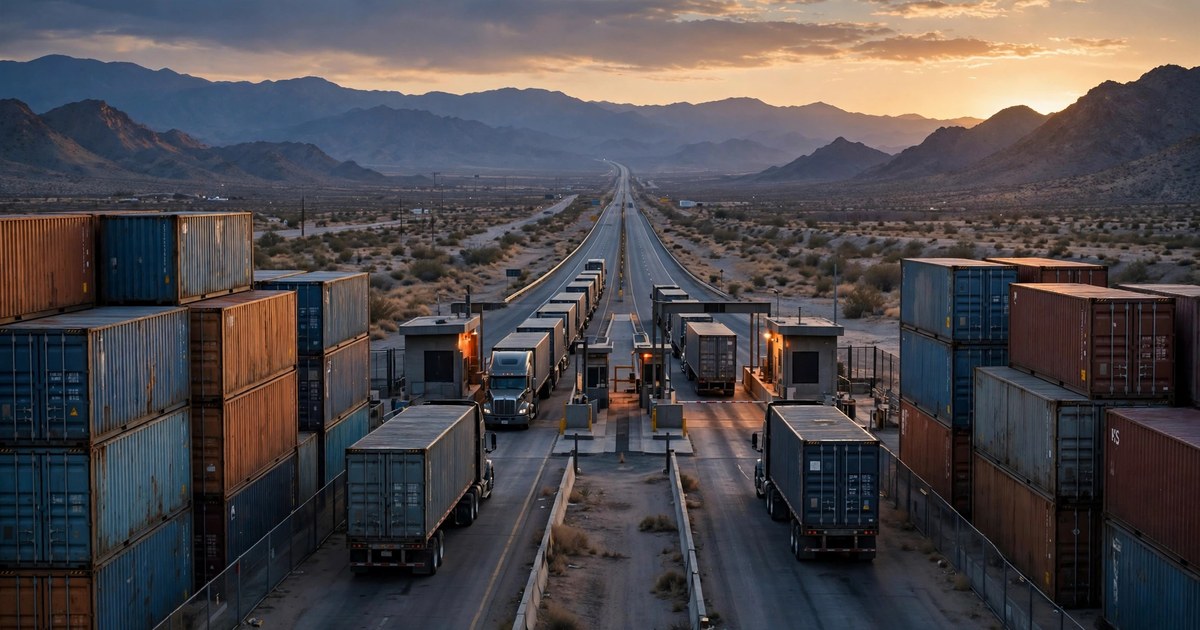
President Donald Trump threatened on Thursday 12 November 2026 to double tariffs on Mexico immediately unless Mexico stops migrant caravans heading for the United States, turning trade penalties into leverage over border enforcement days after the midterm elections. The Trump Mexico tariffs threat, posted on his Truth Social platform, named a caravan of about 1,500 people that set off from southern Mexico on Tuesday and warned the migrants "will not be accepted".
Trump gave no deadline and did not say which tariff rates would double, and Mexico had not publicly responded by Thursday morning. What he did say, in full capitals, was that the tariffs would be "IMMEDIATELY DOUBLED" — and that Mexico, the Texas governor, the Border Patrol and Immigration and Customs Enforcement had all been informed. The threat lands as the United States and Mexico negotiate a trade deal, and days after Democrats won Congress in the 3 November midterms.
What Trump Said About Doubling Mexico Tariffs
Trump posted the threat on Truth Social on Thursday morning, opening with "Here we go again!" and writing that large caravans were forming and beginning what he called an illegal march through Mexico. "They will not be accepted! MEXICO MUST STOP THEM, NOW, and if they do not do so, the Tariffs on Mexico will be IMMEDIATELY DOUBLED," he wrote, according to Reuters. "MEXICO, THE GOVERNOR OF TEXAS, THE VERY LIBERAL NEW GOVERNOR OF TEXAS, OUR GREAT BORDER PATROL, & ICE, HAVE BEEN SO INFORMED. There will be no leniency!"
The post came a day after Reuters reported that more than 1,000 migrants had begun walking north through Chiapas in southern Mexico, and it framed the movement as a consequence of the midterm elections. Trump argued that the caravans were forming because Democrats had won, and claimed countries were sending people they did not want to the United States — though he named no countries and offered no evidence for that claim. The one group that has been identified is the caravan of about 1,500 people that left Tapachula on Tuesday.
The threat follows a pattern: Trump has repeatedly used tariffs to press Mexico on migration, including a 25% tariff threat in early 2025 that was paused after Mexico agreed to send troops to the border. The difference this time is the scale of the threat — doubling, rather than adding a new rate — and the timing, days after an election in which his party lost control of Congress.
The Migrant Caravan Heading North from Tapachula
The caravan at the centre of the threat is an estimated 1,500 people, mostly from Central America, who set off on Tuesday 10 November from Tapachula, near Mexico's border with Guatemala, according to Reuters. The group, which has been dubbed "Dios con Nosotros" — God With Us — is heading north through Mexico, initially towards Mexico City, more than 1,000 kilometres from where it started.
Reuters reported that the migrants hope the Democrats' victory in the US midterm election could open pathways for them to live and work in the United States. The New York Post, citing the same movement, said some in the group confirmed they were motivated by the prospect of looser US immigration policy after the Democrats swept to power on Capitol Hill.
The caravan is the third to attempt to cross Mexico since September, according to the New York Post. The previous two were broken up by Mexican authorities, and their members were granted temporary stay permits. Whether this group gets further than the last two will depend on how Mexico responds — and the tariff threat is designed to make sure it responds quickly.
Which Trump Mexico Tariffs Would Double?
That is the question Trump did not answer. His post did not say which tariffs would be doubled, how soon Mexico must act, or what "doubled" would mean for the rates already in place. The White House has imposed 25% national security tariffs on Mexican-made cars and 50% rates on steel and aluminium products from Mexico, duties that also apply to Canada, according to the New York Post. A July trade notice added a further 10% tariff on some goods, while goods entering duty-free under the US-Mexico-Canada Agreement stayed exempt.
Doubling the 25% car tariff would mean 50%; doubling the 50% steel and aluminium rate would mean 100%. But neither figure has been confirmed by the White House, and no implementing order has been published. Until one appears, the threat is a warning rather than a policy, and businesses on both sides of the border are left guessing which goods would be hit.
The uncertainty matters because the United States and Mexico are in the middle of negotiating a trade deal. Reuters reported that the threat comes as the two countries negotiate, after Trump chose in July not to extend the US-Mexico-Canada trade pact. Trump lifted some tariffs on Canadian goods days before the midterms, a reminder that tariff rates have already moved in both directions this autumn.
Can Trump Double the Tariffs? The Supreme Court Question
Whether Trump can lawfully carry out the threat is an open question. Bloomberg reported that it is uncertain whether he can double the levies, given a Supreme Court ruling earlier this year that limited his tariff powers. The post set no deadline and did not name the rates, which leaves the legal basis unclear as well as the practical one.
Tariff authority is already being contested in court. US businesses sued the Trump administration over the 50% tariffs on Canadian goods, challenging whether the president has the power to impose them. A doubling of the Mexico rates would almost certainly face the same kind of challenge, and the Supreme Court's earlier ruling would be central to it.
For now, the threat works as pressure even without an order behind it. Mexico's government and its exporters have to weigh the cost of calling Trump's bluff against the cost of acting — and the history of these standoffs suggests the White House expects movement from Mexico City before any tariff is actually doubled.
What Happens Next: Sheinbaum, the Caravan and the Trade Talks
Mexico had not publicly responded to the threat by Thursday morning, according to Reuters, and President Claudia Sheinbaum was due to hold a news conference on Thursday morning. Her response will be the first test of whether the threat produces action or a standoff. Sheinbaum has said she had a "very good" phone call with Trump, Al Jazeera reported, and that she is looking for a reduction in tariffs as the two countries work towards a bilateral trade deal.
The caravan itself will keep moving in the meantime. It left Tapachula on Tuesday and is heading for Mexico City, more than 1,000 kilometres away — a journey of days, not hours. Mexican authorities broke up the two previous caravans since September, and whether they move against this one will show how seriously Mexico City is taking the threat.
The trade talks are the third moving part. The United States, Mexico and Canada began talks over the summer on revising the free trade agreement negotiated during Trump's first term, the New York Post reported. If the tariff threat hardens into policy, it would land in the middle of those negotiations — and if it is withdrawn after Mexico acts, it will have served its purpose as leverage.
Why It Matters: Mexico Tariffs, Trade and the Border
The stakes are concrete. If the tariffs on Mexican cars doubled from 25% to 50%, American buyers would pay more for vehicles built across the border, and Mexican car plants — which supply the US market — would lose orders. If steel and aluminium doubled from 50% to 100%, the cost would fall on US manufacturers that use Mexican metal. Those are conditional costs, not certain ones, but they explain why a Truth Social post moves markets and boardrooms even before it becomes policy.
There is a political edge too. The threat is Trump's first big tariff move since the midterms, and it ties trade directly to the border — the issue he has used most to pressure Mexico. Trump said his deportation policy was "too tough" after the midterm losses, yet the tariff threat shows the administration is not softening its border stance; it is changing the instrument. What to watch now is simple: Sheinbaum's answer, the caravan's progress, and whether a tariff order follows the post.
Sources: Reuters; New York Post; Bloomberg (via reporting); Al Jazeera.