
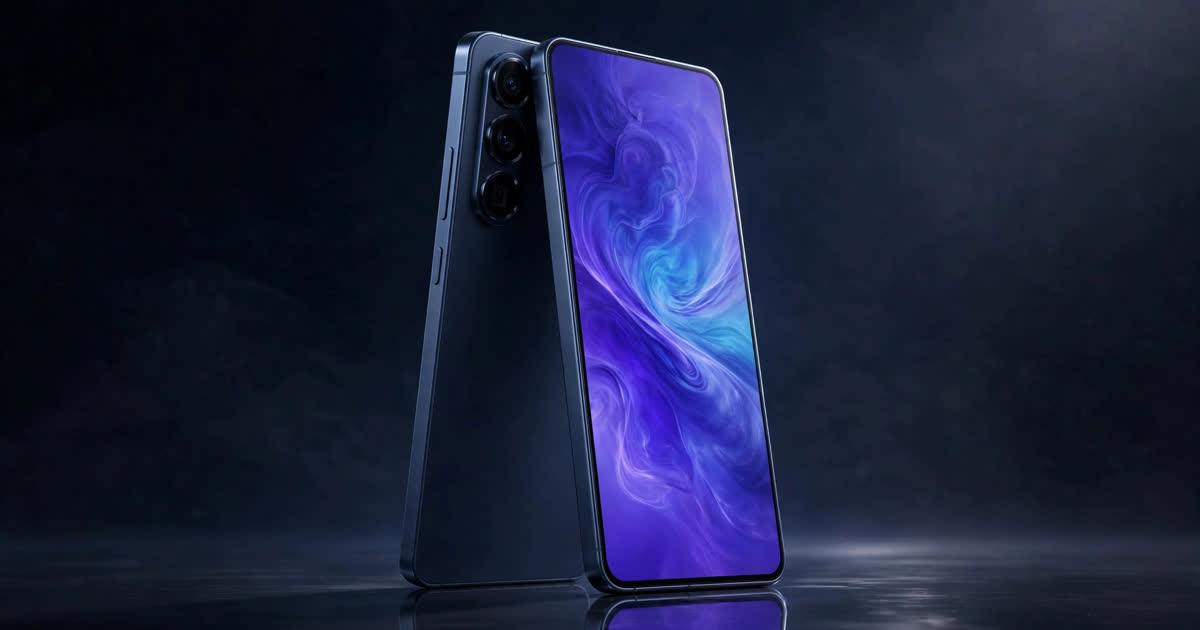
The latest Samsung Galaxy S26 leaks have given buyers their clearest picture yet of Samsung's next flagship family, and the picture is a mixed one. According to leaked marketing materials circulating ahead of launch, the Galaxy S26 Ultra keeps its headline 200MP camera and 5,000mAh battery, while the standard Galaxy S26 stays stuck at 25W wired charging for yet another generation. The leaks, trending per news coverage this week, point to a launch event on February 25, 2027, with sales expected to follow in early March.
None of this is confirmed by Samsung itself. The company has not announced the Galaxy S26 series, and every specification below comes from leaked promotional material and tipster reports rather than an official spec sheet. That caveat matters, because earlier rounds of Samsung Galaxy S26 leaks disagreed on details such as the Ultra's telephoto resolution and whether its battery would grow to 5,200mAh. The newest marketing leaks appear to settle both questions, but until Samsung takes the stage, they remain leaks.
What makes this round of leaks notable is the source material. Rather than a single anonymous tip, the details come from what appears to be Samsung's own promotional banners and marketing copy, including camera layouts, charging claims and feature callouts such as an upgraded Photo Assist tool and a new Privacy Display. If the materials are genuine, they represent the closest thing to a final spec sheet buyers will see before launch.
Samsung Galaxy S26 Leaks: The Ultra's Camera System, Explained
The Galaxy S26 Ultra's camera setup is the headline of the Samsung Galaxy S26 leaks. According to the leaked marketing material, the rear system is a quad-camera array: a 200MP main sensor, a 50MP ultrawide camera, a 10MP telephoto camera with 3x optical zoom, and a 50MP periscope telephoto camera with 5x optical zoom. A 12MP selfie camera with a wider field of view rounds out the package.
Two details here ended long-running arguments among leakers. First, the 3x telephoto stays at 10MP rather than jumping to 12MP as some earlier reports suggested. Second, the ultrawide jumps to 50MP, a major step up from the 12MP ultrawide on the Galaxy S25 Ultra, which should mean sharper wide shots and better macro and low-light performance. The 5x periscope unit also stays at 50MP, giving the Ultra two genuinely high-resolution zoom options.
Hardware is only half the story. The leaked banners also highlight an upgraded Photo Assist feature, an AI-powered editing tool that can transform a photo from a text prompt, shown in the marketing turning a dog photo into a birthday-themed image. The feature is linked to a new Creative Studio in One UI 8.5, Samsung's next software version. Galaxy AI branding appears throughout the leaked material, confirming that artificial intelligence remains central to Samsung's pitch, just as it was for the S25 series. For context on how AI features are reshaping flagship phones, see our coverage of Apple's first foldable, where software proved as important as hardware, while the UK is pouring £600 million into AI security.
On performance, the leaked Ultra material points to Qualcomm's Snapdragon 8 Elite Gen 5 for Galaxy chip, with claimed gains of 39% in AI (NPU) performance, 24% in graphics and 19% in CPU performance over the Galaxy S25 Ultra. The Ultra is also tipped to feature a 6.9-inch display with a new Privacy Display technology, rounded corners and a dedicated camera island, in colours including Cobalt Violet, Black Shadow, White Shadow and Galactic Blue.
Samsung Galaxy S26 Leaks Point to a February 25, 2027 Launch
Multiple reports tied to the Samsung Galaxy S26 leaks converge on February 25, 2027 as the unveiling date, consistent with Samsung's traditional late-February Unpacked window. Sales are expected to begin in early March, following the usual pattern of a short pre-order period after the announcement.
The standard Galaxy S26 and the larger Galaxy S26 Plus are expected to launch alongside the Ultra. The base model is tipped to grow slightly to a 6.3-inch display with 12GB of RAM and base storage doubling to 256GB, while the Plus is expected to offer a 6.7-inch display. Regional chip strategy continues: the Ultra is expected to use Snapdragon worldwide, while the standard and Plus models may use Samsung's Exynos 2600 chip in some regions.
Pricing remains the least settled part of the leaks. Some reports suggest Samsung may raise prices by $30 to $60 in markets such as South Korea while holding US prices steady, but nothing is confirmed. Buyers should treat any price figure circulating now as provisional until Samsung announces it.
Why Samsung Galaxy S26 Leaks Have Fans Divided on 25W Charging
If the Ultra's cameras are the good news, the standard model's charging is the controversy. According to the leaks, the base Galaxy S26 keeps 25W wired charging, unchanged for a seventh straight generation, paired with a slightly larger 4,300mAh battery (up from 4,000mAh on the S25). The Galaxy S26 Plus stays at 45W with a 4,900mAh battery, while the Ultra jumps to 60W wired charging with a 5,000mAh battery, up from 45W on the S25 Ultra, and is claimed to reach 75% charge in 30 minutes.
Wireless charging improves across the range, with the base and Plus models tipped for 20W wireless and the Ultra for 25W, alongside built-in magnets for accessory alignment. But wired charging is where the frustration concentrates: rival phones in 2026 offer 90W, 100W or even 120W charging, and even Apple's base iPhone 17 supports around 35W. Samsung's defenders note that wattage alone does not determine charge time, pointing to tests in which a 25W Galaxy S25 reached a full charge faster than a 35W iPhone 17, thanks to a smaller battery and efficient charging curves. The bigger 4,300mAh cell in the S26 should help endurance even if it does not speed up charging.
The battery story is equally mixed. The Ultra's 5,000mAh cell is unchanged on paper from the S25 Ultra, ending earlier speculation about a 5,200mAh upgrade. Leaked material claims 31 hours of video playback, the same as last year's model, suggesting any endurance gains will come from the more efficient chip and software rather than a bigger battery. That will disappoint buyers who hoped for a capacity jump, but efficiency gains are real gains if they materialise in daily use.
What the Samsung Galaxy S26 Leaks Mean for Buyers
For buyers, the Samsung Galaxy S26 leaks sketch a familiar Samsung strategy: push the Ultra hard, and keep the standard model deliberately restrained. The Ultra looks like a genuine upgrade for photography enthusiasts, with the 50MP ultrawide and 50MP 5x zoom giving it arguably the most versatile camera system on any mainstream phone, plus faster 60W charging and a big AI push. The standard S26, by contrast, looks like a refinement: a slightly bigger screen and battery, more base storage, and the same 25W charging that has frustrated fans for years.
That split matters for upgrade decisions. Owners of a Galaxy S25 Ultra will need to weigh whether the camera and charging upgrades justify a switch, while owners of older phones will find the Ultra an easy recommendation and the base S26 a harder one unless compact size and lighter weight matter most to them. As ever with leaks, the smart move is to wait for Samsung's official announcement on February 25, 2027, and for independent reviews that test battery life and charging speed rather than trusting marketing claims.
To sum up, the Samsung Galaxy S26 leaks paint a consistent picture: a camera-first Ultra, a cautious base model and a late-February launch. The Samsung Galaxy S26 leaks also suggest Samsung is betting that AI features and charging speed on the Ultra will matter more to buyers than a bigger battery. Readers following the Samsung Galaxy S26 leaks should remember that prices, colours and regional chips remain the least certain details. As new Samsung Galaxy S26 leaks emerge before launch, the details most likely to change are pricing and availability, while the core camera and battery figures in the Samsung Galaxy S26 leaks have now been repeated across multiple reports.
Sources: Gizbot; Notebookcheck; additional reporting from SammyGuru and Techlusive.