
23 October 2026 — The most anticipated smartphone launch of the year is finally here. Apple's first-ever foldable iPhone, the iPhone Duo, went on sale around the world today — and it took only minutes for demand to outstrip supply.
Pre-orders opened on 16 October in more than 70 countries and regions, including the United States and the United Kingdom, and every configuration in Apple's US online store was showing a shipping estimate of 25 January 2027 within half an hour, according to launch-day reporting from MacRumors and CBS News. Apple itself described preorder demand as "extraordinary," a word it typically reserves for record-breaking launches.
Launch day around the world
Because the Duo is going on sale across time zones, the first customers to hold one were in Australia and New Zealand, where it was already Friday when stores opened. First impressions and customer photos were circulating on the MacRumors forums, Instagram and Reddit within hours.
In Seoul, South Korea — where the phone is priced at 3.29 million won (about $2,380) — reports described queues outside the Apple Store in Myeong-dong before its 8:00 a.m. opening, with one customer reportedly waiting 17 hours to be among the first in line. In India, where the Duo costs between roughly Rs 3 lakh and Rs 4.5 lakh — about the price of a top-selling Maruti Suzuki hatchback — the entire first week's stock was pre-booked before launch day, with the Apple Stores in Mumbai's BKC and Delhi's Saket recording the highest bookings, according to sources quoted by PTI via YourStory.
Apple said retail stores in the United States, Australia, Austria, Belgium, Canada, Italy (select stores), Mexico, Macao (launch day only), Germany, the Netherlands, Singapore, Spain, Sweden, Switzerland, Türkiye and the UK would have a limited number of units for walk-in buyers, but warned they would sell out fast. No walk-in stock was planned for France, China, Hong Kong, India, Japan, Malaysia, South Korea, Taiwan, Thailand or the United Arab Emirates — customers there need a reservation for Apple Store pickup, with the next reservation window opening on 24 October.
Sold out in minutes — and resold for double
The scale of the demand has surprised even seasoned Apple watchers. Max Weinbach of the research firm Creativestrat wrote on X that the Duo sold out at every store near New York and Connecticut inside three minutes. In Malaysia, first-batch allocations at authorised retailers and telcos sold out within roughly an hour; new orders on Apple's Malaysian online store slipped to an estimated delivery of 22 January 2027.
To curb resale, Apple capped orders at two per customer — which did little to stop a thriving grey market. Yahoo Finance found eBay listings for the Duo, including unfulfilled pre-orders, priced above $4,000 — more than twice the $1,999 starting price of the 256GB model. In India, grey-market sellers were reportedly offering the device at a premium of up to Rs 50,000 over the official price, sourcing units from markets such as Dubai and Singapore, according to a Livemint report via Gizbot. Buyers were warned that grey-market purchases may lack an Indian bill and the same warranty and service support as official channels.
What the iPhone Duo actually is
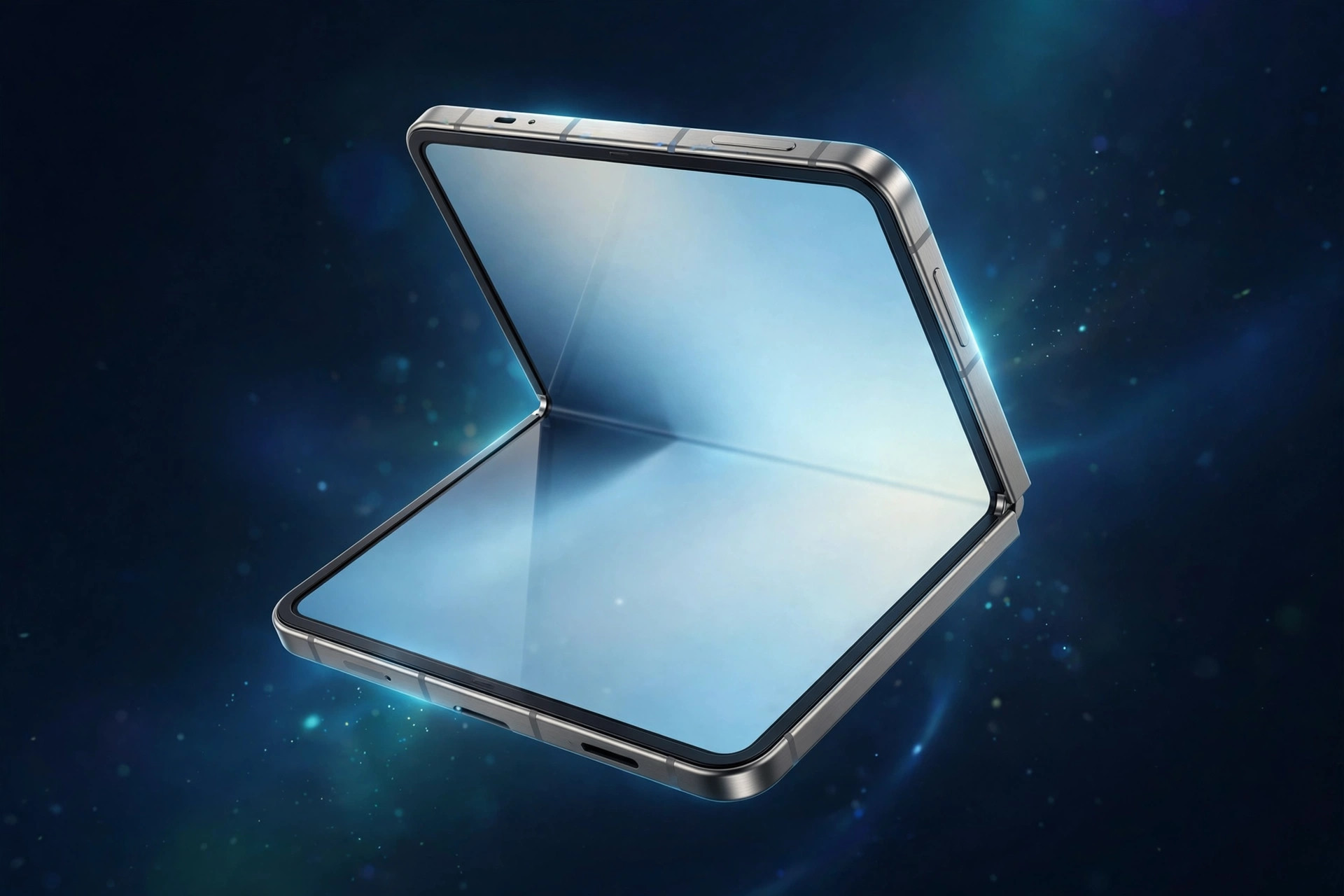
The Duo is a book-style foldable: closed, it is a 5.4-inch phone — with what Apple says is about 90 per cent of the screen area of the iPhone 18 Pro — and it opens to a 7.6-inch Super Retina XDR folding display that is 50 per cent larger than the display on the iPhone 18 Pro Max. The inner screen carries a nano-texture finish designed to reduce glare and the visibility of the crease.
The chassis is titanium with Ceramic Shield 2 on the front and back. Folded, the phone measures 3.31 by 4.64 inches and is 0.44 inch (11.3 mm) thick; unfolded it is just 0.21 inch (5.2 mm) thin. It weighs 8.96 ounces (254 grams) — heavy for a phone, but the price of foldable glass and a titanium hinge.
Power comes from Apple's A20 Pro chip with a 7-core GPU and Neural Accelerators — a nod to the AI-first era. AI compute is the industry's hottest currency right now, and Apple's silicon strategy leans straight into it. A dual-battery design delivers up to 44 hours of video playback on the outer display and 31 hours on the inner one. Both panels support ProMotion and high peak brightness.
There are deliberate compromises. Authentication is handled by Touch ID built into the side button rather than Face ID. The device is eSIM-only. On cameras, Apple settled for a dual 48-megapixel system (Main and Ultra Wide) with two-times optical-quality zoom, a Center Stage front camera and a FaceTime camera under the inner display — and it skips some of the latest camera hardware found on other flagships. It also ships without an Action Button and supports only the $79 USB-C Apple Pencil rather than the Pencil Pro; full Pencil support on both screens is scheduled to arrive later in 2026.
The software may matter more than the hardware. The Duo runs iOS 27 with a redesigned multitasking experience: Split View and seamless app switching on the inner display, an interface that adapts as the phone folds or reorients, and StandBy mode available on either the outer or inner display — even when it is not charging — turning the device into a photo frame, widget hub or clock. True multitasking on an iPhone is, for many users, the headline feature.
$1,999 — and the prices behind the price
Apple's official US pricing steps through four storage tiers: $1,999 for 256GB, $2,199 for 512GB, $2,599 for 1TB and $3,199 for 2TB, in two colours — Star White and Night Sky. The entry price works out at $83.29 a month over 24 months, and leasing through Apple Upgrade, provided by Klarna, starts at $57.99 a month. Carrier offers push monthly prices from $55 and up to $1,200 off with an eligible trade-in.
Outside the US, the numbers get steeper: in Australia the entry model is A$3,499 and the 2TB model A$5,899; in Malaysia the range runs RM9,499 to RM15,499; in Korea 3.29 million won. Twenty-eight more countries and regions follow from 30 October, after the initial wave of more than 70.
Why this launch matters
Apple is arriving roughly seven years after Samsung shipped the first folding phone — an eternity in smartphone terms, and a deliberate one. Apple's playbook has always been to let rivals define a category and then enter with a more polished, expensive version. The foldable market is still small, but Apple believes its brand, retail footprint and developer ecosystem can expand it — by value first, rather than volume, as Counterpoint Research's Tarun Pathak put it.
The launch is also a leadership moment. The Duo was unveiled on 9 September at Apple's "Surprise and Shine" keynote — the first led by chief executive John Ternus, who took the top job after Tim Cook stepped down earlier this year. Ternus, who oversaw hardware engineering for years and was directly involved in developing the foldable, called the Duo "the most transformational change to iPhone since the original."
The numbers analysts are forecasting suggest he may be right about its scale, if not its speed. JPMorgan expects Apple to sell 8 to 9 million Duos in 2026; Dan Ives of Yorkville Ives forecasts about 10 million units over the next few quarters, rising toward 25 million in 2027; Counterpoint estimates the Duo could capture around 24 per cent of the foldable market. China's Securities Times reported that supply would remain below 10 million units through the end of the year — and DigiTimes reported, via supply-chain sources, that Apple asked Foxconn and its component suppliers to raise the 12-month shipment target by 44 per cent, from 9.7 million to 14 million units, just before launch. Apple has not confirmed the production figures.
The launch comes as Big Tech is pouring money into hardware and AI alike — Meta's recent 2-for-1 stock split was explicitly designed to fund its AI spending spree — and as technology hardware faces growing security scrutiny from governments. Against that backdrop, a $1,999 consumer device selling out in minutes is a statement about where demand still runs hot.
What happens next
For anyone who did not pre-order, the options are limited: check back on 24 October for pickup reservations, try a walk-in on launch day in the countries where stock is available, or join the queue with a January 2027 delivery estimate. A second wave of 28 countries arrives on 30 October. The real test will be whether Apple can scale production fast enough — and whether the premium price holds once the novelty fades and Samsung, Google and Motorola respond with their next foldables.
Sources
9to5Mac (pre-order report, 16 Oct 2026); Tech Advisor (specs guide, 16 Oct 2026); Make Tech Easier (pricing and availability); MacRumors (launch-day delivery tracker, 22 Oct 2026); Hesper Herald (specs deep-dive); GenZ NewZ and Humanima (keynote coverage); TradingKey/CryptoCompass via DigiTimes (production increase report); YourStory via PTI (India pre-bookings, Counterpoint analysis); Gizbot via Livemint (India grey-market pricing); tech-insider.org (Seoul launch reports); CBS News (preorder sellout reporting); Yahoo Finance (eBay resale listings).