
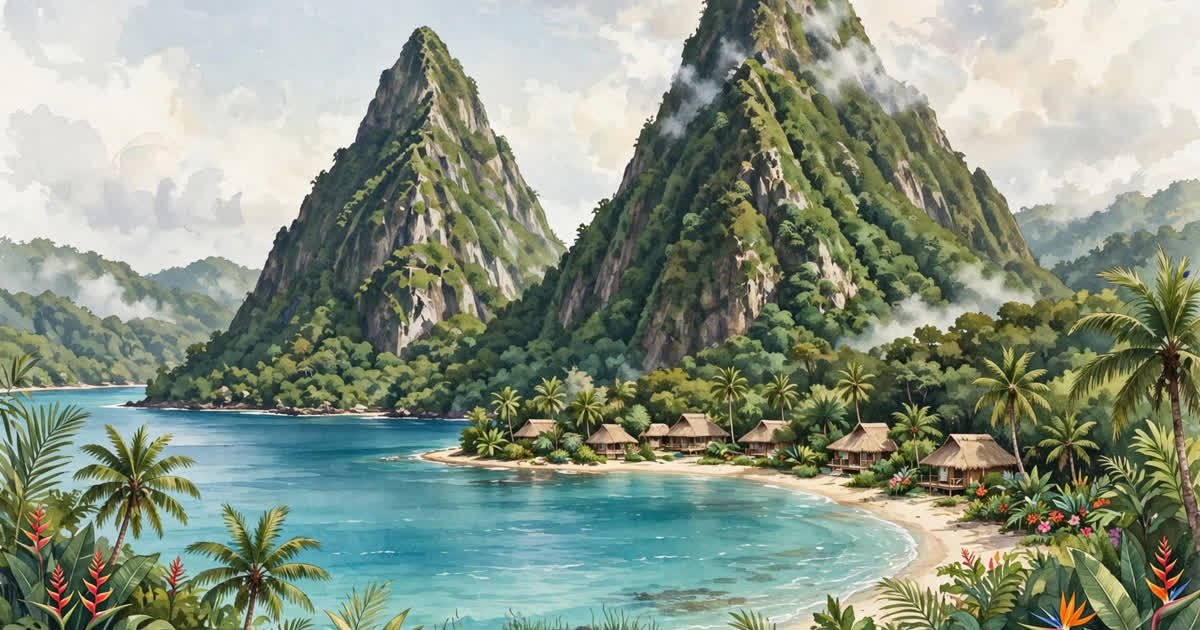
No Caribbean view is as instantly recognisable as the Pitons rising straight from the sea, and no island pairs that drama with resort luxury quite like Saint Lucia. Visitors searching for Saint Lucia Pitons and resorts usually want two things at once: to see Gros Piton and Petit Piton up close, and to choose a resort that makes the most of that view. This guide covers both, plus the volcano, waterfalls, beaches, and food that make the island around the Pitons worth exploring, not just photographing.
Saint Lucia Pitons and resorts: The Peaks Themselves
Gros Piton, at 798 metres, and Petit Piton, its steeper twin, form a UNESCO World Heritage site near the town of Soufriere on the southwest coast. Gros Piton can be hiked with a mandatory local guide from the Fond Gens Libre trailhead, a half-day climb that rewards walkers with panoramic views over the Caribbean and the island's interior. Petit Piton is a far more technical climb and is not a casual hiking option. Most visitors enjoy the Pitons in three ways: hiking Gros Piton, seeing both peaks from the water on a catamaran cruise, and watching sunset from a resort terrace or a Soufriere bay viewpoint. Each view is different, and together they explain why Saint Lucia Pitons and resorts dominate every Saint Lucia search.
Around the Pitons, the landscape is volcanic and lush. Sulphur Springs, near Soufriere, is often called the Caribbean's only drive-in volcano: visitors walk through steaming fumaroles and can bathe in warm mineral mud pools, followed by a waterfall rinse. Diamond Falls and Toraille Waterfall, both near Soufriere, offer easy, refreshing stops after a hike, while the Tet Paul Nature Trail provides a gentler 45-minute walk with a viewpoint framed between both Pitons. Snorkelling at the base of Petit Piton, inside the Soufriere Marine Management Area, reveals reefs and volcanic formations that mirror the drama above water.
Saint Lucia Pitons and Resorts Between and Beyond the Peaks
Resorts near Soufriere make the Pitons part of the room. Jade Mountain, with its open-wall sanctuaries and infinity pools facing the peaks, and Ladera Resort, with three-walled ridge suites, are the most famous romance options, while Sugar Beach, set on the white-sand beach between the Pitons, suits beach and spa lovers. Anse Chastanet, on a dark-sand cove north of Soufriere Bay, suits divers and eco-travellers with reefs straight from shore. Further north, around Rodney Bay, Gros Islet, and Cap Estate, resorts such as Sandals Grande St. Lucian, Windjammer Landing, and Cap Maison offer beaches, marinas, and family or wellness options, with the Pitons as a day-trip view rather than a bedroom view. When comparing Saint Lucia Pitons and resorts, decide first whether you want to wake up facing the peaks or to visit them by boat and return to a northern beach.
Resort styles vary as much as locations. Adults-only all-inclusive resorts bundle meals, drinks, and activities and suit couples who want simplicity. Boutique hillside resorts offer privacy, personal service, and extraordinary views but may involve steep paths and steps. Larger beach resorts offer pools, kids' clubs, and water sports for families and groups. Check what is included, how steep the property is, and how far Soufriere and its tours are by road, because the island's winding roads make transfers slower than the map suggests. For budgeting, see travelling on a budget, and for cover on boat and hiking days, see whether travel insurance is worth it.
Beyond Saint Lucia Pitons and Resorts: Food, Beaches, and Culture
Saint Lucia's food is a highlight in its own right. Try green figs and saltfish, the national dish, fresh grilled seafood, and roadside barbecue, and do not miss the Gros Islet Friday Night Street Party, with local food, rum punch, and live music. Cocoa plantation tours in the Soufriere valley, such as tree-to-bar experiences, explain the island's chocolate heritage, while fishing villages along the west coast, including Anse La Raye and Canaries, offer brightly painted buildings and rustic seaside restaurants. For beaches, Reduit Beach in Rodney Bay offers calm water and a lively strip, while Sugar Beach between the Pitons offers powdery sand and excellent snorkelling. Together, these experiences turn Saint Lucia Pitons and resorts from a photo opportunity into a full holiday.
Getting around Saint Lucia takes patience, and that patience is part of the experience. The island is mountainous, roads wind through rainforest and coastal cliffs, and a journey that looks short on the map can take an hour or more. Taxis are the most comfortable option for most visitors, while rental cars suit confident drivers who enjoy mountain roads and are comfortable driving on the left. Organised tours solve the transport question for Pitons hikes, Sulphur Springs visits, and catamaran cruises, because guides handle timing, tickets, and transfers. When comparing Saint Lucia Pitons and resorts, factor in transfer times from your resort to Soufriere, because a resort in the north may be ninety minutes from the Pitons by road, while a Soufriere resort puts the peaks, the volcano, and the waterfalls within a short drive. Saint Lucia Pitons and resorts are best chosen with that geography in mind, so that the view you paid for is matched by the time you actually spend among the peaks. A well-planned Saint Lucia Pitons and resorts trip therefore balances a northern beach base or a southern peaks base with at least one full day in Soufriere, giving you hiking, snorkelling, and sunset views without rushed driving.
The best time to visit is December to April for dry, sunny weather, with May and June as a quieter shoulder season. July to October brings warmer, wetter weather and lower prices, with Saint Lucia sitting far enough south to often escape the worst storms, though hurricane-season planning still applies. Book Pitons-view rooms and popular tours early in peak season, confirm hiking guides in advance, and pack sturdy shoes for Gros Piton, reef-safe sunscreen, and a light rain layer. With those preparations, Saint Lucia Pitons and resorts deliver what few destinations can: a world-famous natural wonder, world-class resorts, and an island culture that rewards slowing down and looking up.