
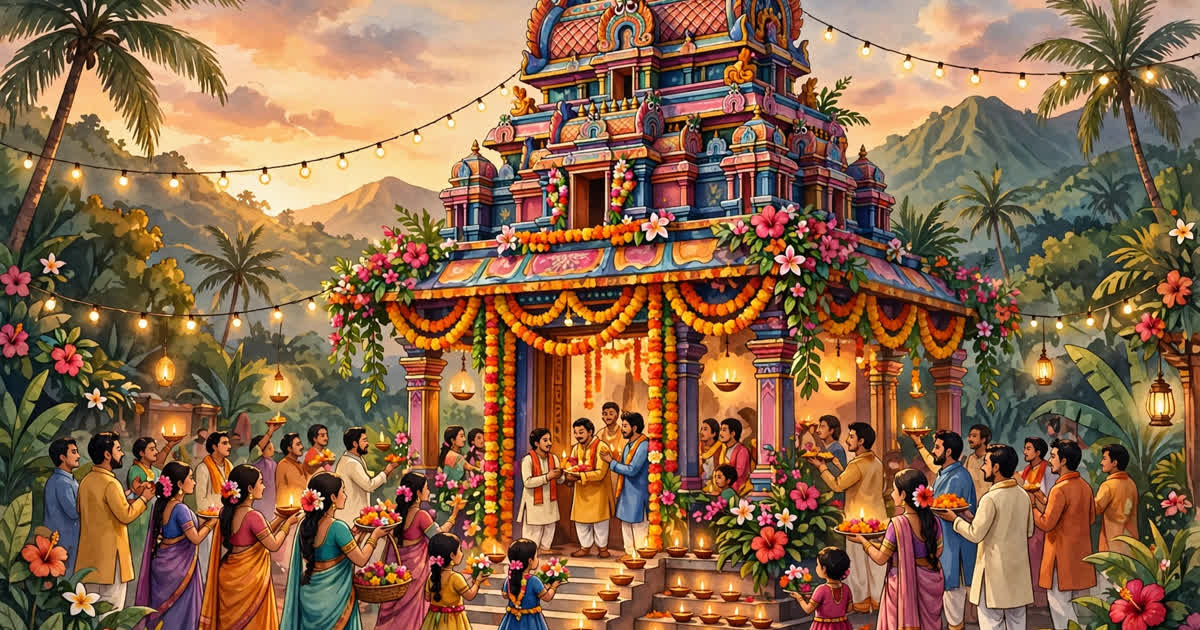
Mauritius Hindu festivals are the most visible part of an island where Hindu, Christian, Muslim and other communities live side by side and share public holidays. Mauritius Hindu festivals such as Maha Shivaratree, Diwali and Thaipusam fill temples, streets and homes with colour, music, food and devotion, while Christian Christmas and Easter, Muslim Eid celebrations, and Chinese Spring Festival add further layers to the calendar. This guide explains the main festivals, their meanings, and how visitors can observe respectfully.
Mauritius's religious diversity reflects its history: Indian indentured labourers brought Hinduism and Islam, French colonisation brought Catholicism, African and Malagasy heritage brought other traditions, and Chinese migration brought Buddhism and Chinese folk practices. That mix is not just demographic; it shapes food, music, architecture and public life, with festivals often celebrated across communities as cultural as well as religious events. Understanding Mauritius Hindu festivals therefore means understanding Mauritius itself.
Mauritius Hindu Festivals: Maha Shivaratree and Grand Bassin
Mauritius Hindu festivals centre on Maha Shivaratree, the great night of Shiva, when hundreds of thousands of pilgrims walk to Grand Bassin, known as Ganga Talao, a sacred crater lake in the island's centre. Pilgrims, many walking for days from across the island, carry kanwars, decorated structures, offer prayers, and bathe in the lake, which is considered linked to the Ganges. The festival, usually in February or March, transforms roads with pilgrim groups, food stalls, music and volunteer support, and is a public holiday in Mauritius.
Visitors to Grand Bassin during Maha Shivaratree should expect large crowds, road closures and a deeply devotional atmosphere. Dress modestly, remove shoes where required at temples, avoid photographing devotees without permission, and follow local guidance on access and safety. Outside the festival, Grand Bassin remains a major Hindu pilgrimage site, with temples, statues of Shiva and other deities, and monkeys in the surrounding forest, offering a quieter visit for those who prefer reflection to crowds.
Mauritius Hindu Festivals: Diwali, Thaipusam and Other Hindu Days
Mauritius Hindu festivals include Diwali, the festival of lights, when homes, temples and streets are decorated with lamps, rangoli patterns and lights, families share sweets and gifts, and fireworks light the night. Diwali, usually in October or November, is a public holiday and a time for cleaning homes, wearing new clothes, visiting family and temple prayers to Lakshmi, goddess of prosperity. Visitors can enjoy Diwali lights in towns and villages, try festive sweets, and attend public celebrations, while respecting private family observances.
Thaipusam, dedicated to Muruga, involves processions, body piercing with kavadi, and devotional music, with major celebrations at temples such as those in Port Louis and elsewhere. Other Hindu festivals include Ganesh Chaturthi, celebrating Ganesha with idols and prayers, Holi, the festival of colours, and Tamil and Telugu New Year celebrations, each with distinct foods, rituals and community gatherings. Dates follow lunar calendars, so check the current year's festival calendar before planning a visit around a specific Mauritius Hindu festivals event.
Mauritius Hindu Festivals: Christian Observances
Mauritius Hindu festivals coexist with Christian observances that are also public holidays and community celebrations. Christmas, on 25 December, is widely celebrated with church services, family meals, decorations and gift-giving, reflecting Mauritius's large Catholic population alongside Protestant and other Christian communities. Easter, with Good Friday and Easter Monday as holidays, includes church services, processions in some parishes, and family gatherings, with dates varying by year.
Other Christian festivals include Assumption on 15 August, All Saints' Day on 1 November, and parish feasts honouring patron saints, with church fairs, food and music. Visitors are welcome at many church services, with modest dress, quiet behaviour during services, and respect for communion practices that may be reserved for baptised Christians. Christian churches in Mauritius, from Port Louis Cathedral to village chapels, also offer architectural and historical interest, with colonial-era buildings and Creole influences that reflect the island's past.
Mauritius Hindu Festivals: Muslim Observances and Eid
Mauritius Hindu festivals calendar also includes Muslim observances, with Eid al-Fitr, marking the end of Ramadan, and Eid al-Adha, the festival of sacrifice, as major celebrations and public holidays in some years depending on official holiday lists. Ramadan itself is a month of fasting, prayer and charity, with evening iftar meals breaking the fast, night prayers, and community support for those in need. During Ramadan, visitors should be mindful of fasting neighbours, especially around food and drink in public during daylight, while restaurants and hotels continue to serve non-fasting guests.
Eid celebrations involve mosque prayers, family visits, new clothes, festive meals including biryani, sweets and traditional dishes, and charity to those in need. Other Muslim observances include Mawlid, celebrating the Prophet's birthday, and Muharram, with dates following the Islamic lunar calendar. Mosques in Port Louis, including the historic Jummah Mosque, are architectural landmarks, though non-Muslim visitors should check visiting rules, dress modestly, remove shoes, and avoid visiting during prayer times unless invited.
Mauritius Hindu Festivals: Chinese, Public Holidays and Shared Culture
Mauritius Hindu festivals are joined by Chinese Spring Festival, celebrating lunar new year with dragon dances, firecrackers, family reunions and red decorations, particularly in Port Louis Chinatown. Other public holidays include New Year, Labour Day, Independence Day on 12 March, and Arrival of Indentured Labourers on 2 November, commemorating the island's history. That holiday calendar, with festivals from multiple faiths and cultures as official holidays, is itself a statement about Mauritian identity: diversity is not just tolerated but recognised in public life.
Shared culture appears in food, music and everyday interaction, where Mauritians of different faiths attend each other's festivals, share festive foods, and work together in schools, businesses and government. Visitors can experience that sharing through public festivals, markets, food stalls and cultural centres, while remembering that festivals are religious observances first and tourist attractions second. Ask before photographing rituals, accept food and hospitality graciously where offered, and learn a few words of greeting in relevant languages as a sign of respect.
Mauritius Hindu Festivals: Visitor Etiquette and Calendar Tips
Mauritius Hindu festivals visitor etiquette starts with modest dress at temples, mosques and churches: cover shoulders and knees, remove shoes where required, and avoid revealing clothing. At temples, follow signs on photography, offerings and access to inner sanctums, which may be restricted. At mosques, women may need head coverings, and all visitors should avoid prayer times unless invited. At churches, remain quiet during services and follow ushers' guidance on seating and communion.
For planning, check the official public holiday and festival calendar for the year of travel, because lunar festival dates shift annually. Book accommodation early for major festivals such as Maha Shivaratree and Diwali if you want to attend, and expect road closures, crowds and transport changes during large processions. With respect and curiosity, Mauritius Hindu festivals offer one of the richest cultural experiences in the Indian Ocean. For related culture guidance, see how festivals shape cultural identity, what fast fashion means for trends, and Maldives resorts and atolls guide.