
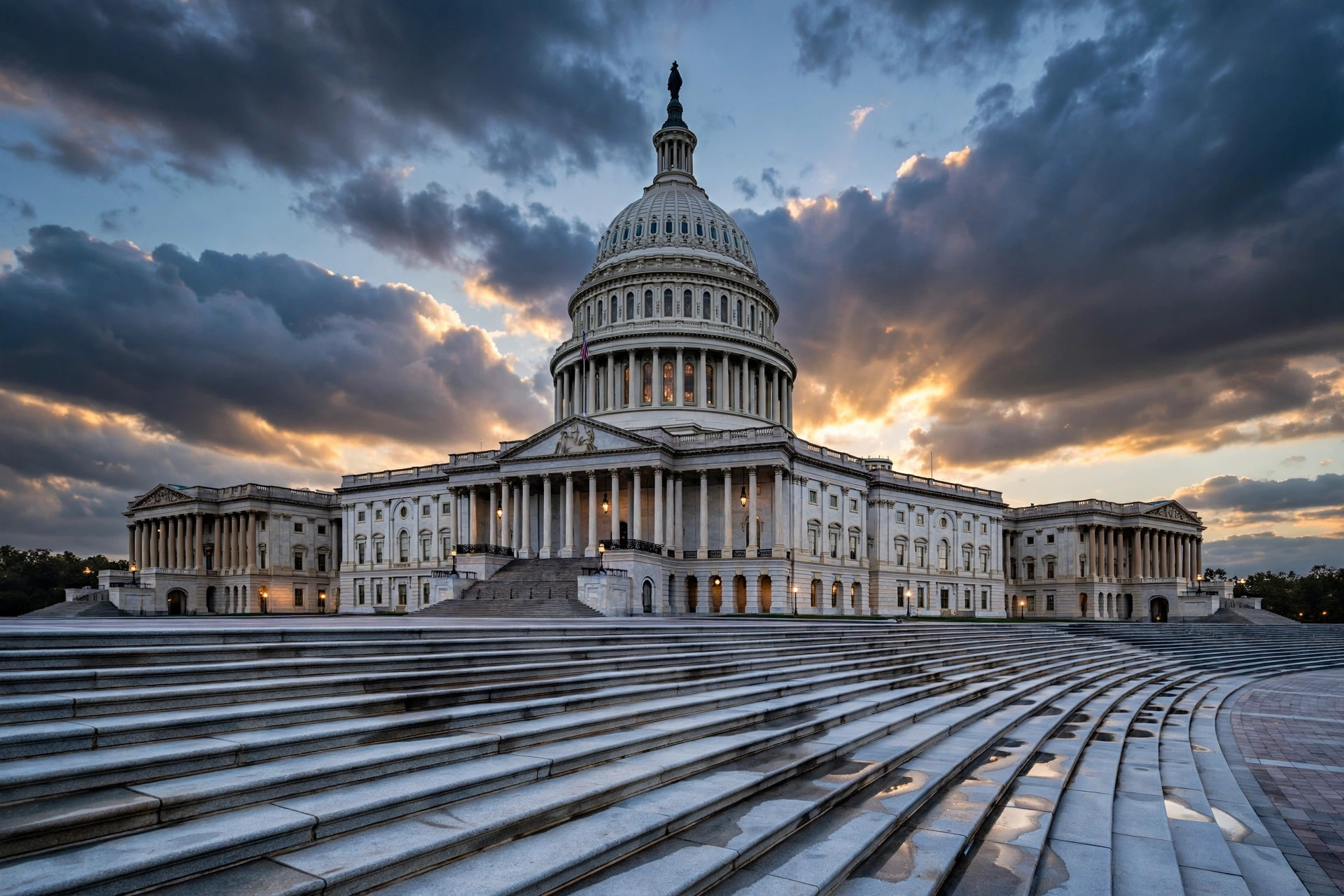
The Jensen Huang testimony before Congress is set for December 2026. The former Nvidia chief executive, who resigned on 12 November 2026 after reports of extramarital relationships including one with a woman US officials suspect of spying for China, has been asked to testify before the Senate Banking Committee on 3 December, with a warning that he faces a subpoena if he refuses. Three House committees have separately scheduled a closed-door interview for 1 December. Commerce Secretary Howard Lutnick, who oversees the export controls at the centre of the inquiry, has also been asked to testify and has agreed to appear.
The summonses arrived within hours of Huang's resignation, turning a corporate scandal into a congressional investigation of national security, chip exports and the judgment of one of the most powerful figures in the artificial intelligence boom. What lawmakers want to know is not only what Huang did in his private life, but whether sensitive American technology reached China, and who in government knew what, and when.
Jensen Huang Testimony: The December Dates
Senate Banking Committee chairman Tim Scott, a South Carolina Republican, sent letters on Thursday 12 November asking Huang to appear voluntarily at a public hearing on 3 December 2026, and Lutnick to appear on 10 December. Scott warned Huang in writing that if he failed to appear voluntarily, "the Committee is prepared to use all tools at our disposal, including subpoenas, to conduct this legitimate and necessary oversight." CNBC reported the letters the same day, and Scott posted them on X. No subpoena has been issued yet. The committee has jurisdiction over export controls, which is why it is leading the Senate side of the inquiry.
The House moved on a parallel track. The Republican chairs of the Foreign Affairs, Intelligence and China committees, Brian Mast, Rick Crawford and John Moolenaar, wrote to Huang and Nvidia general counsel Tim Teter on 12 November, requiring Huang to sit for a closed-door, transcribed interview on 1 December and Teter on 2 December, or face subpoenas. They gave Huang until 8 p.m. on Friday to confirm in writing. Jeffrey Kessler, the Commerce Department under secretary for industry and security, was invited to a hearing on 3 December, the same day Scott wants Huang before the Senate.
There may be an even earlier appearance. Mast said Huang had agreed to brief House lawmakers before Thanksgiving, with the date still being negotiated. Lutnick, for his part, has agreed to appear voluntarily before the Senate Banking Committee, his spokesperson told NBC News. Huang, by contrast, has not publicly accepted the 3 December date, which is why Scott's subpoena warning carries weight. The dates are requests for now, not compelled appearances, but the machinery for compelling them is already in place.
Three Separate Allegations, Kept Apart
Three different reported relationships sit at the centre of this story, and they must not be mixed up. The first, and the one with national security implications, involves Alice Huang, a former executive at Megaspeed, a Singapore-based Nvidia customer. The New York Times reported in late October that US intelligence officials suspected Alice Huang of acting as an intelligence asset for China, recruited by its Ministry of State Security. Huang admitted on Sunday 8 November that he had been unfaithful to his wife, and Nvidia's board opened an independent inquiry into whether he had been targeted by a foreign intelligence operation. Attorney General Todd Blanche said at a 12 November press conference that the Justice Department is investigating whether Alice Huang is a spy and has not reached a conclusion. China has denied the espionage allegation. Alice Huang and Jensen Huang are not related.
The second reported relationship involves Kimberly Powell, Nvidia's vice president of healthcare, who has worked at the company since 2008 and reports directly to Huang. The New York Times reported on 11 November, citing five people who had worked at the company, that Huang had an affair with Powell, and that the two were seen behaving affectionately at a hotel during Nvidia's GPU Technology Conference in San Jose in March 2026. The newspaper also reported that a bystander who filmed the encounter was taken aside by security staff and offered a non-disclosure agreement. Neither Huang nor Nvidia has publicly confirmed the alleged relationship with Powell, and no finding of a policy violation has been established. The Powell allegation is a workplace-conduct matter, not an espionage matter, and it is separate from the Alice Huang investigation.
The third involves an unnamed second Nvidia employee. Reuters reported on 12 November, citing two sources, that Huang had an intimate relationship with a second employee of the company. The employee has not been named, the two sources were not identified, and Reuters said the person could not be reached for comment. Nvidia declined to comment on that report. The Times of London, summarising the week's revelations, reported that Huang had stepped down after reports of three extramarital affairs. Each allegation rests on different reporting, different sources and different evidence, and none of them has been established as fact in a court or by an official finding.
Why the Jensen Huang Testimony Matters: Chips and China
The hearings are not about private conduct alone. The Senate Banking Committee oversees export controls, and the questions lawmakers are asking go to the heart of US technology policy: did advanced Nvidia chips reach China in ways the export rules were meant to prevent, and did anyone in government slow down efforts to tighten those rules? Scott's letter grounded the request in national security concerns arising from the reported relationship with a person the committee believes may have been a Chinese spy.
Lutnick is central to that second question. As Commerce Secretary he oversees the approval of Nvidia's exports to China, and reports have said he stalled efforts to tighten chip export restrictions. Senator Elizabeth Warren, a Massachusetts Democrat, said on 12 November that "Jensen Huang's decision to resign from Nvidia does not absolve him, other executives, or the company as a whole" of responsibility for putting US national security at risk or for any potential violations of the law. Senate Democratic Leader Chuck Schumer said he wants a "full accounting" of what Trump knew about the alleged spying and how Huang influenced the administration's national security decisions.
Nvidia has said it has no reason to believe national security or company secrets were compromised. The company has not confirmed the reported relationships, and the Justice Department has reached no conclusion on the espionage question. That gap, between suspicion and proof, is precisely what the Jensen Huang testimony is meant to close. Lawmakers want classified briefings, documents and sworn testimony, and the committees have signalled they will use subpoenas if voluntary cooperation stops.
The 550 Billion Dollar Market Shock
The scandal has already cost Nvidia's shareholders dearly. Reuters reported that Nvidia lost about 550 billion dollars in market value in five days as the affair and espionage reports dominated headlines, its steepest five-day drop since the stock's debut 27 years ago. Shares closed down 4.3 percent on Thursday 12 November, and the stock was roughly 31 percent below its recent peak, when its value had neared 6 trillion dollars. The Times later put the week's loss at 573 billion dollars by Friday, and the Wall Street Journal called it the largest weekly market-cap decline for any company on record. Nvidia was, until this month, the world's most valuable company.
The board acted fast. It met on Wednesday night 11 November, hours after the Powell report, to weigh Huang's future, and he was out the next morning. Nvidia named longtime chief financial officer Colette Kress as interim chief executive while it searches for a permanent successor. Huang, 63, co-founded Nvidia in 1993 and built it into the pillar of the artificial intelligence boom. He also faces investigations by the FBI and the Justice Department, and a shareholder lawsuit. The board's move to oust Huang and Huang's admission and the board inquiry are covered in our earlier reports.
What Happens Next for Jensen Huang and Congress
The calendar is now crowded. Nvidia reports third-quarter results on 17 November, two weeks before the first House interview, and Wall Street expects revenue of about 111 billion dollars. The House's closed-door interview is set for 1 December, Teter's for 2 December, the Senate hearing for 3 December and Lutnick's for 10 December. The Friday 8 p.m. deadline for Huang to confirm the House interview in writing will show whether he cooperates voluntarily or forces the committees to issue subpoenas.
What the Jensen Huang testimony establishes will matter beyond one executive. If the testimony shows export rules were bent or ignored, Congress could tighten the law. If it shows the espionage suspicion was unfounded, the episode becomes a cautionary tale about how fast a reputation can collapse on unproven claims. Either way, the man who ran the world's most valuable chip company for 33 years will spend December answering questions under oath, in public in the Senate and behind closed doors in the House, while the company he built tries to steady itself under an interim chief. The wider AI industry will be watching, because the rules written in the aftermath of this scandal will shape who can sell the world's most powerful chips, and to whom.