
What the court said
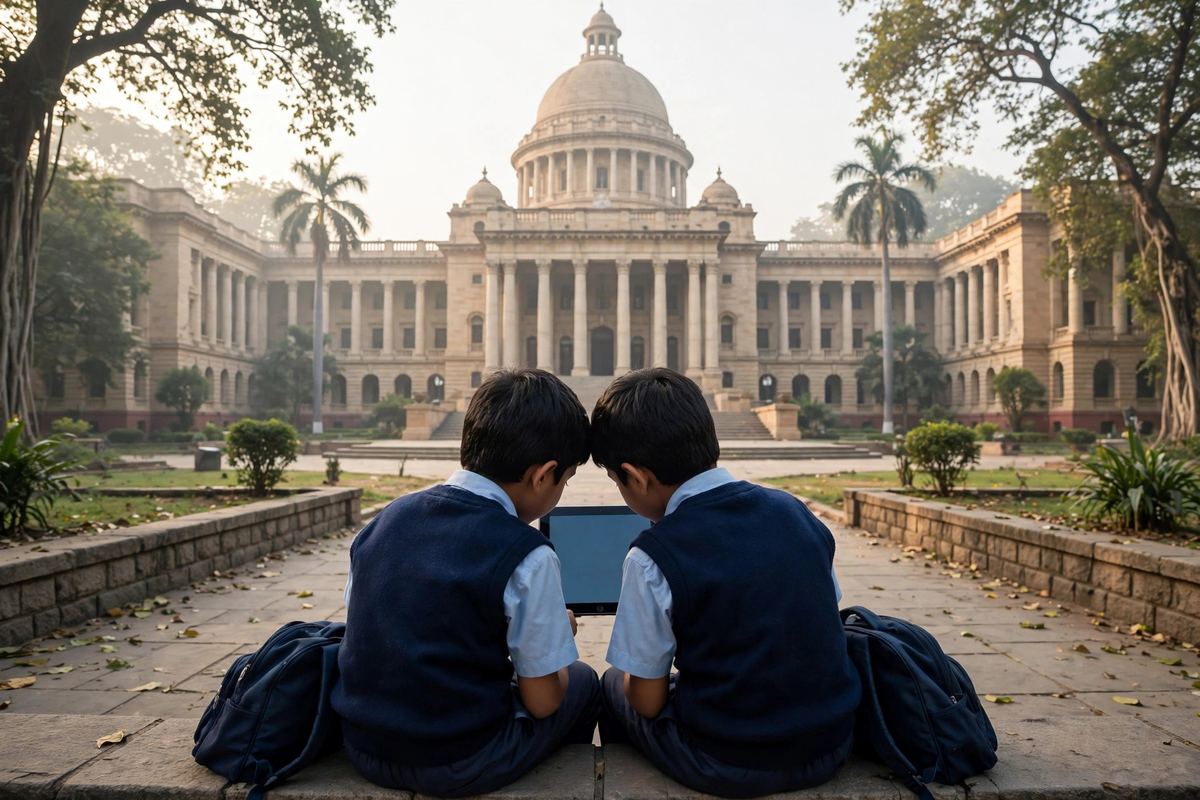
India's Supreme Court has said that children have a fundamental right to access and use the internet. The observation, reported on 17 October 2026, is one of the most significant statements yet by an Indian court about the place of the internet in children's lives. It treats internet access not as a luxury or a privilege, but as a right that flows from the constitutional guarantees of education, free expression and personal development. At the same time, the court suggested a "child mode" for social media — a safer, age-appropriate version of platforms designed to protect young users from harmful content while preserving their access to learning and communication.
The court's framing matters because it resolves a tension that has run through debates about children and technology. On one side, there is a real concern that social media can expose children to bullying, addictive design, inappropriate content and exploitation. On the other, there is the reality that the internet is now central to education, to homework, to staying in touch with family, and to developing the digital skills that modern life requires. By recognising a fundamental right of access while calling for a safer mode of use, the court has tried to hold both truths at once: children should not be cut off from the internet, and they should not be left unprotected on it.
Why internet access matters for children
For children in India, the internet is no longer an optional extra. School lessons, homework assignments, exam preparation, and even communication between schools and parents increasingly happen online. During the COVID-19 pandemic, when schools closed, millions of children depended on phones, tablets and internet connections to keep learning. That experience exposed a deep digital divide: children with good connectivity and devices kept learning, while children without them fell behind. The court's recognition of a right to internet access can be read as a response to that divide — a statement that access to the internet is now part of what it means to have a fair chance at education.
The internet also matters for children's development beyond school. It is where they learn about the world, develop interests, create content, and build friendships. It is where they learn to think critically about information, to distinguish reliable sources from unreliable ones, and to participate in public life. Cutting children off from the internet would not just deny them homework help; it would deny them a central part of modern childhood. The court's approach — protect, don't prohibit — reflects that reality.
What "child mode" could mean
The court's suggestion of a "child mode" for social media is not yet a detailed policy, but the idea is familiar from other countries and from existing parental-control tools. A child mode could include: age-appropriate content filters that block or limit exposure to violent, sexual or otherwise unsuitable material; limits on addictive features such as infinite scroll, autoplay and push notifications; stronger privacy defaults, so children's data is not collected or used for targeted advertising by default; clearer reporting and blocking tools; and transparency about what content is being shown and why. Some platforms already offer "teen" or "family" modes with some of these features. The court's suggestion could push platforms operating in India to make such modes standard, robust and easy to use.
There are difficult questions to answer. Who decides what is age-appropriate? How is a child's age verified without collecting more personal data? How do you protect children without cutting them off from content that is genuinely useful — for example, health information, or support for young people facing difficult situations? And how do you avoid a situation where "child mode" becomes a pretext for broader censorship? These questions will need to be worked through by the government, the courts, platforms and child-safety experts. The court's observation is a starting point, not a finished blueprint.
How this fits into India's wider digital policy
The court's observation comes at a time when India is actively shaping its digital policy. The government has been working on rules for data protection, online safety and platform accountability, and there have been debates about age verification, parental consent and the responsibilities of social media companies. The court's recognition of a fundamental right to internet access adds a constitutional dimension to those debates: any future regulation will need to respect that right, even as it seeks to protect children. That means blanket bans on internet access for children, or measures that make access impractical, would be constitutionally suspect. Measures that protect children while preserving access — such as child modes, better moderation and stronger privacy defaults — are more likely to survive legal scrutiny.
The observation also connects to other recent developments in India, from the expansion of digital infrastructure to the growth of online education. Readers can follow our earlier coverage of the India–US trade deal and India–Canada trade talks for more on India's place in the world, and our coverage of the cyberattacks on Indian financial institutions for more on the safety challenges of a digital economy.
What other countries are doing
India is not alone in wrestling with this question. Several countries have introduced or debated age-appropriate design codes, which require platforms to put children's safety first in how their services are designed. Some have debated minimum ages for social media, with mixed results. Others have focused on education — teaching children digital literacy, critical thinking and safe online behaviour — rather than on restriction. The evidence suggests that no single approach works on its own. Technical safeguards help, but they can be bypassed. Education helps, but it takes time. Parental involvement helps, but not all parents have the time or knowledge to monitor their children's online lives closely. The most effective approach is likely to combine all three: safer design, better education and informed parental engagement.
India's scale makes the challenge both harder and more important. With hundreds of millions of internet users, including a very large population of children and young people, decisions made in India will affect more young internet users than those made in almost any other country. If India gets child safety right — protecting children without cutting them off — it could become a model for other countries facing the same dilemma.
Why it matters for parents, schools and platforms
For parents, the court's observation is a reminder that internet access is now part of children's education, and that the goal should be to guide children's use rather than to ban it outright. That means talking to children about what they see online, setting reasonable limits, using parental controls where helpful, and modelling healthy digital habits. For schools, it means that digital literacy should be part of the curriculum, not an afterthought, and that schools need the connectivity and devices to make online learning a reality for all students, not just the privileged. For platforms, it means that child safety can no longer be treated as an optional feature. If the court treats internet access as a fundamental right, platforms operating in India will face growing pressure to show that their services are safe for young users by design.
What happens next
The court's observation will now feed into policy debates, and possibly into future cases that test its limits. Watch for the government to respond with proposals for child safety online, for platforms to announce new child-mode features in India, and for child-rights groups to push for stronger enforcement. The practical test will be whether children's experience of the internet actually improves: whether they can learn, create and connect safely, without being exposed to harm. That is the standard the court has set, and it is the right one.
Other countries are testing tougher enforcement too: Australia is preparing Federal Court cases against the major platforms over its under-16 social media ban.
Other countries are restricting rather than expanding access: Greece will ban social media for under-15s from January 2027.