
The India retail inflation October 2026 figure jumped to 6.09%, crossing the Reserve Bank of India's 6% upper tolerance limit for the first time in two years. The figure, released by the Ministry of Statistics and Programme Implementation on 12 November, was up from 5.54% in September and above the 5.93% economists had expected in a Reuters poll. Food did the damage: prices rose 8.94% over the year, with onions up 116.22%. The reading lands just weeks before the RBI's 2–4 December policy meeting, and economists now expect a second straight rate rise. This article explains what pushed prices up, who feels it most, and what the central bank is likely to do next.
What the India retail inflation October 2026 numbers actually say
The India retail inflation October 2026 number is the Consumer Price Index, which tracks what households pay for a basket of goods and services. It rose 6.09% in October compared with the same month a year earlier, according to provisional data from the Ministry of Statistics and Programme Implementation. September's figure of 5.54% is final. The 55-basis-point jump in a single month is the sharpest move in the series this year, and it puts inflation above the RBI's 4% medium-term target for the fifth month in a row. The last time inflation crossed 6% was October 2024, under the earlier CPI series.
The current series uses 2024 as its base year, which is why Reuters describes this as the first breach of 6% under the new series. The RBI's framework sets a target of 4% with a tolerance band of 2% to 6%, retained for 2026–31. At 6.09%, the India retail inflation October 2026 reading sits just 0.09 percentage points above the ceiling. That narrow margin matters: as analysts at PolicyEdge noted, one month above 6% does not by itself count as a failure of the inflation target. But the direction is uncomfortable for the central bank, which now expects inflation to average 6% in the October–December quarter and has raised its forecast for the current financial year to 5.2%, up from 5% earlier.
The India retail inflation October 2026 pressure is broad, not narrow. Eleven of the 12 CPI categories showed hardening inflation in October, according to The Hindu BusinessLine. Nineteen of 43 index sub-groups recorded inflation of 4% or higher, up from 14 in September, Reuters reported. Transport inflation accelerated to 5.84% from 5.01%. Core inflation, which strips out volatile food and fuel, rose to 4.5% in October from 4.3% in September, according to IDFC First Bank. When core inflation rises alongside food inflation, the central bank reads it as a sign that price pressure is spreading beyond a single shock.
Food prices did the damage in India retail inflation October 2026
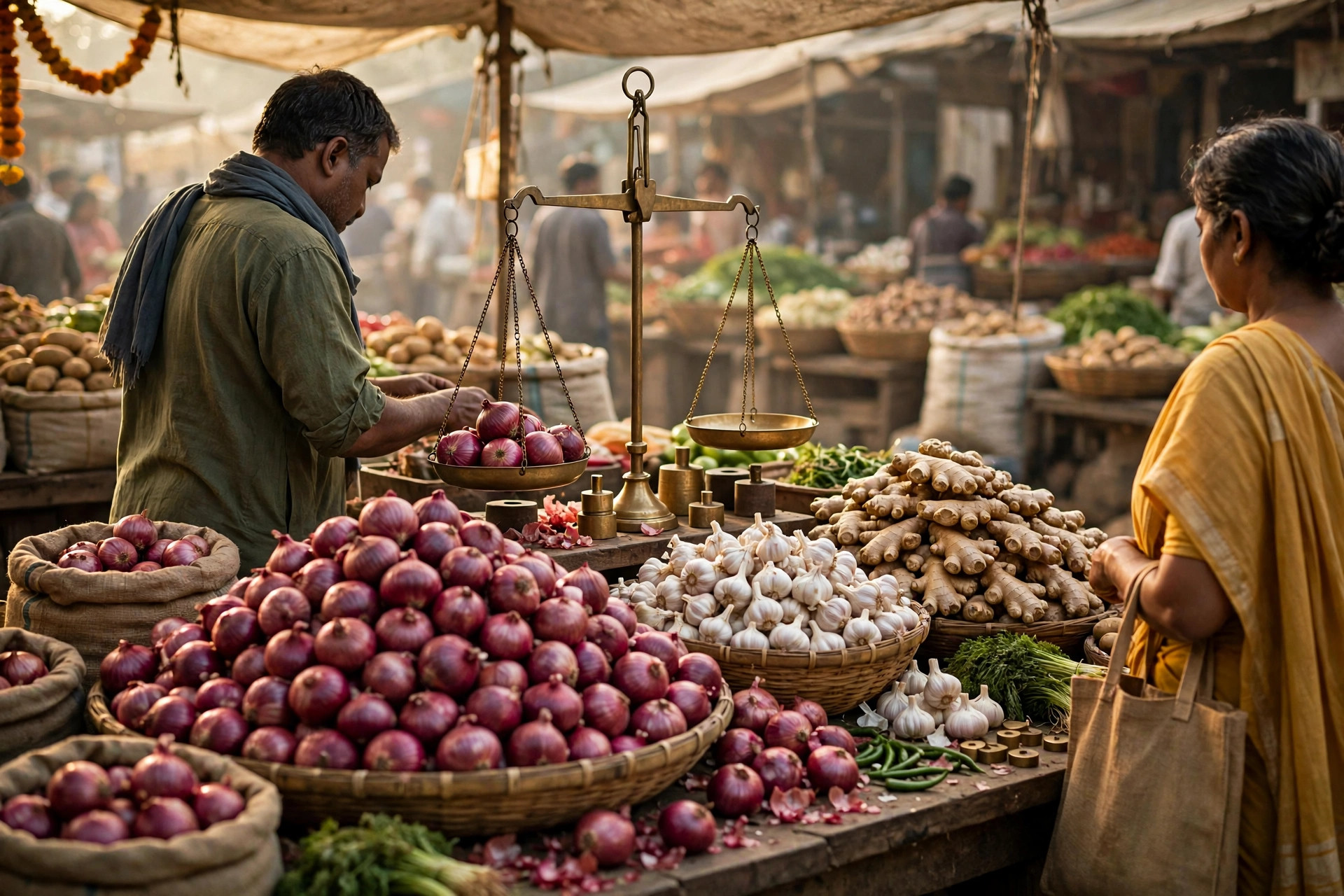
Food is the heart of the India retail inflation October 2026 story because it makes up nearly 40% of India's consumer price index, Reuters reported. Food inflation, measured by the Consumer Food Price Index, accelerated to 8.94% in October from 7.74% in September. The worst-hit items were everyday kitchen staples. Onion prices recorded inflation of 116.22% in October, meaning onions cost more than twice what they did a year earlier. Garlic rose 60.74%, ginger 48.32% and lemon 47.30%, according to The Hindu BusinessLine. Silver jewellery, at 52.39%, was the only non-food item in the top five.
Vegetable prices in India are notoriously volatile, and a bad spell of weather or a weak harvest can send a single item soaring within weeks. RBI Governor Sanjay Malhotra has warned that a weak monsoon and strong El Nino conditions pose risks to agriculture and rural demand, Reuters reported. That warning now looks prescient: the October data show food prices, not fuel or services, doing almost all of the pushing. Eating out got dearer too. Retail inflation in restaurant and accommodation services was 10.06%, food and beverages 8.51%, and personal care and miscellaneous goods and services 10.14%, The Hindu BusinessLine reported. For households, that means the weekly shop and the occasional meal out both cost noticeably more than a year ago.
Rural households felt it more than cities
The India retail inflation October 2026 national average hides a split. Rural inflation stood at 6.63% in October, while urban inflation was 5.41%, according to IANS. Rural households spend a larger share of their income on food, so a food-led spike hits them first and hardest. When onion prices more than double, a rural family that buys onions every week feels it in a way a city household with a wider budget may not. The gap also complicates the RBI's job: a single national interest rate has to serve two very different inflation experiences.
The squeeze comes at a sensitive moment for household budgets. The RBI raised the policy repo rate by 25 basis points to 5.50% at its October review, its first hike in nearly four years, and shifted its stance to calibrated tightening. Higher rates make home loans, car loans and personal loans dearer, so households face rising prices and rising borrowing costs at the same time. That combination is why the December meeting matters so much: another hike would add to the burden, while holding rates would risk letting inflation expectations take root.
What the RBI is likely to do in December
The next meeting of the RBI's Monetary Policy Committee is scheduled for 2–4 December 2026, and the India retail inflation October 2026 print is the key data point it will weigh. Economists told IANS that the numbers reinforce the expectation of a second successive repo rate hike in December. Radhika Rao, senior economist and executive director at DBS Bank, said headline inflation has yet to peak and, compounded by an unfavourable base effect, the central bank's quarterly projection is likely to be revised higher. The data, she said, reinforces the expectation of a second successive rate hike in December.
Markets agree. Reuters reported that the India retail inflation October 2026 reading bolstered bets on further rate hikes, and the central bank has already signalled that more tightening could follow, citing rising inflation, a weak rupee and high crude oil prices. The October hike to 5.50% was unanimous, and the shift to calibrated tightening was a clear signal that the committee is worried. The November CPI release, due on 14 December, will arrive after the December meeting, so the committee will decide on the basis of the October number and its own forecasts.
There are reasons for the RBI to move carefully. A single reading above 6% does not by itself breach the target framework, and food prices can fall as fast as they rise once a new harvest arrives. Raising rates too aggressively risks choking growth. But the breadth of the October increase, with 11 of 12 categories hardening and core inflation at 4.5%, gives the hawks on the committee a strong argument. The most likely outcome, on the evidence available today, is another 25-basis-point rise to 5.75% in December, though the committee could also choose to hold and wait for the November data.
Why it matters and what happens next
India retail inflation October 2026 matters because it changes the cost of everyday life and the cost of borrowing at the same time. For households, the immediate effect is a dearer food bill, led by onions, garlic and ginger. For the RBI, the 6.09% reading is the first time in two years its tolerance ceiling has been crossed, and it arrives just as the central bank has begun raising rates after nearly four years on hold. For businesses, higher rates mean dearer credit and a more cautious consumer.
What to watch next is the December 2–4 policy meeting, where the RBI will decide whether to raise the repo rate for a second month running, and the November CPI release on 14 December, which will show whether October was a food-driven spike or the start of a longer climb. If food prices ease with the winter harvest, the breach may prove brief. If they stay high and core inflation keeps creeping up, the RBI will have little choice but to keep tightening. Either way, the 6.09% figure has ended the debate about whether inflation is under control. For related reading, see our explainers on India's October GST collections, Japan's inflation hitting a three-year high and the US Federal Reserve holding rates in October.