
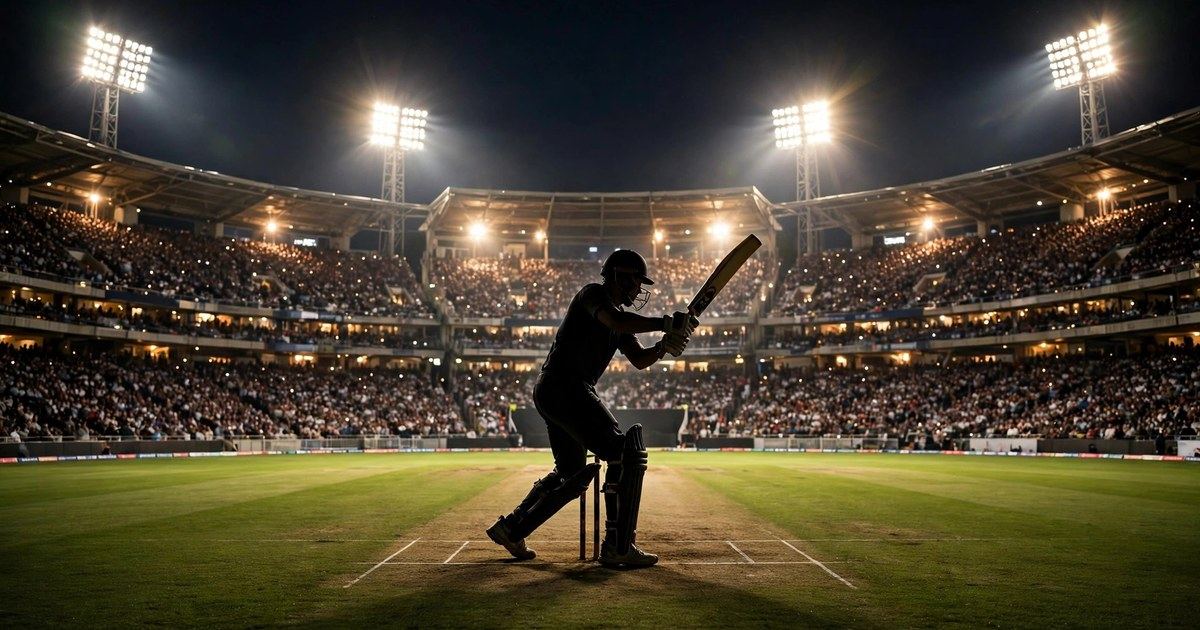
Setting the scene: Hagley Oval, Christchurch
On October 22, 2026, Hagley Oval in Christchurch hosted the first of five T20 Internationals between New Zealand and India, and it produced a match that rewrote the record books. India won by four wickets, chasing down 226 — the highest successful run chase in the country's T20I history — to take a 1-0 lead in the series. The match had everything: a record-breaking first innings, a wobbling chase, a Player of the Match innings from Sanju Samson, and a finish from Naman Dhir that will be replayed for years.
The series arrived with India in strong T20I form, and the Christchurch crowd was treated to a batting exhibition from both sides. But for a long stretch of the evening, the result looked anything but certain.
New Zealand's innings: 225/4, powered by Phillips
India chose to bowl first, and for the first few overs the decision looked reasonable. But New Zealand's batters soon took control. Glenn Phillips produced the defining innings of the match, smashing an unbeaten 82 off just 40 balls, a knock built on clean striking and fearless intent that never allowed India's bowlers to settle.
Phillips was not alone. Finn Allen gave the innings its early momentum with 45 off 24 balls, Tim Seifert provided the platform at the top of the order, and Bevon Jacobs added a valuable 31 to keep the scoring rate soaring through the middle overs. Together, they carried New Zealand to 225/4 — their joint-highest T20I total against India.
The target of 226 was daunting by any standard. In T20 internationals, totals above 220 are defended far more often than they are chased. India's task was, on paper, near-impossible — which is exactly what made what followed historic.
The chase begins: a blazing powerplay
India's reply started at full throttle. Abhishek Sharma announced his intent immediately, hitting a six off the very first ball he faced — a record seventh first-ball six of his career — on his way to 29 off 12 balls. At the other end, Sanju Samson was timing the ball beautifully, and together the pair put on a 93-run opening stand that kept India ahead of the required rate.
By the end of the powerplay, India had raced to 94/1 — a blistering start that suggested the chase might be on. The openers had done their job: the asking rate was under control, the boundary count was climbing, and the New Zealand bowlers were under pressure.
The wobble and Iyer's rescue act
As so often happens in big chases, the middle overs brought a wobble. New Zealand fought back with wickets at key moments, and the required rate began to climb. The match tilted back toward the hosts, and India's dugout would have been feeling the tension.
Enter Shreyas Iyer. With the chase threatening to slip away, Iyer produced a composed 42 off 28 balls, reviving the innings at precisely the moment it needed steadying. His knock was less about fireworks and more about game awareness — rotating strike, finding boundaries when the pressure mounted, and keeping the chase alive into the death overs. Without Iyer's intervention, the story of the night might have been very different.
Dhir's finish: 42 not out off 15
With the equation still demanding and the pressure at its peak, Naman Dhir produced one of the great T20I finishing acts. Unbeaten on 42 off just 15 balls, Dhir tore into the New Zealand attack in the closing overs, finding boundaries at will and dragging India across the line with two balls to spare.
India finished on 230/6 in 19.4 overs — a four-wicket victory and, at 226, the highest successful T20I chase in Indian cricket history. Shreyas Iyer paid tribute to the young finisher after the match, describing Dhir's "calm and composed nature" as "simply magnificent" — high praise for a player who held his nerve when the game was on the line.
Sanju Samson's 67 off 33 balls earned him the Player of the Match award, a fitting recognition for the innings that gave the chase its early shape and its backbone. Between Samson's powerplay assault, Iyer's revival, and Dhir's finish, India had three distinct heroes in a single chase.
The bowling oddities: a first in men's T20I history
While the batting stole the headlines, the bowling figures told their own remarkable story. All five Indian bowlers conceded 40 or more runs — the first time in men's T20I history that an entire five-man bowling attack has gone for 40-plus in the same match:
- Bhuvneshwar Kumar: 0/49, in his first T20I in four years — a comeback outing that the New Zealand batters made punishing.
- Axar Patel: 1/51, the most expensive of the attack.
- Arshdeep Singh: 1/45, in his 100th T20I — a landmark appearance on a difficult night.
- Mayank Yadav: 1/40.
- Nitish Kumar Reddy: 0/40.
India also conceded 17 extras and were penalised for a slow over rate — a sloppy all-round bowling performance that made the batters' achievement all the more extraordinary. That India won despite such figures underscores just how special the chase was: the batters had to be near-perfect, and they were.
Key facts at a glance
- Match: 1st T20I of the 5-match series, Hagley Oval, Christchurch, October 22, 2026.
- Result: India beat New Zealand by 4 wickets, chasing 226 — India's highest-ever successful T20I chase.
- Scores: New Zealand 225/4; India 230/6 in 19.4 overs. India lead the series 1-0.
- New Zealand: Glenn Phillips 82* (40), Finn Allen 45 (24), Bevon Jacobs 31; 225/4 was their joint-highest T20I total against India.
- India: Sanju Samson 67 (33, Player of the Match), Abhishek Sharma 29 (12) with a record seventh first-ball six, 93-run opening stand, 94/1 at the powerplay, Shreyas Iyer 42 (28), Naman Dhir 42* (15).
- Records: Highest successful T20I chase by India; first time in men's T20I history all five bowlers of a team conceded 40+ in a match; Arshdeep Singh's 100th T20I; Bhuvneshwar Kumar's first T20I in four years.
The Christchurch classic also sits in a busy season of T20 cricket for India. Fans following the format's recent drama can also read our explainer on India's rain-affected T20I decider against the West Indies in Bengaluru, while the women's game has its own trans-Tasman story — see our coverage of the Australia–New Zealand women's T20 series for the Rose Bowl.
India's 230/6 in 19.4 overs at Hagley Oval is the highest successful run chase in the country's T20I history — sealed by Naman Dhir's unbeaten 42 off 15 balls after Sanju Samson's Player of the Match 67.
Why it matters
Record chases are rare because they require everything to go right under maximum pressure. India's 226 chase matters for three reasons. First, it extends India's reputation as one of the most formidable chasing sides in T20 cricket — a skill that wins tournaments. Second, it showcased the depth of India's batting: three different players (Samson, Iyer, Dhir) played decisive roles at different stages of the same innings, which is exactly the kind of collective firepower teams need in World Cup conditions. Third, it exposed a genuine concern: the bowling attack's collective off-night, the 17 extras, and the slow over-rate penalty are issues the team management will want to address quickly.
For New Zealand, there is frustration but also encouragement. Posting 225/4 — their joint-highest against India — and still losing is a cruel outcome, but Phillips's form and the top order's intent are positives to carry into the rest of the series.
What happens next
The series moves swiftly on: the 2nd T20I is scheduled for Saturday at the same venue, Hagley Oval in Christchurch, giving New Zealand an immediate chance at revenge and India the opportunity to press home their advantage. With four matches remaining, the series is finely poised — New Zealand know they can post match-winning totals, and India know they can chase them down.
Key questions for Saturday include whether India's bowlers can bounce back after their record-setting expensive night, whether Bhuvneshwar Kumar retains his place after a difficult comeback, and whether New Zealand can find the extra 10–15 runs or the one decisive over that eluded them in the opener. If the first T20I is any indication, the rest of this series is appointment viewing.
Sources: Reuters, IANS, Livemint, October 2026.