
The SIR controversy and the Chief Election Commissioner
Over the past several weeks, India's opposition parties have escalated a confrontation with the Election Commission of India over the Special Intensive Revision (SIR) of electoral rolls. The SIR is a process through which electoral rolls are comprehensively reviewed and updated, and the opposition alleges that the ongoing exercise has been marked by irregularities, including the facilitation of deletions of eligible voters. At the center of the storm is Chief Election Commissioner Gyanesh Kumar, whose removal the opposition now formally demands.
The Indian National Developmental Inclusive Alliance (INDIA bloc), the umbrella opposition coalition, argues that the electoral machinery is being used unfairly. The Election Commission of India, for its part, maintains that it follows established procedures and has defended its role in conducting the roll revision. The dispute has now moved from parliamentary debate and correspondence to the streets of the national capital, with a protest programme that culminates in a large rally planned for November 1 at Ramlila Maidan in Delhi.
A timeline of the protest programme
The current phase of agitation was formally set in motion at an INDIA bloc meeting on September 29, where the alliance announced a protest programme under the banner of a "Save Democracy" campaign. The programme was designed as a sustained series of demonstrations aimed at pressuring the Election Commission and the government on the SIR issue.
Since then, the opposition has staged several high-visibility marches in New Delhi:
- March to the Election Commission: On October 6, INDIA bloc MPs led by Leader of Opposition Rahul Gandhi marched toward the ECI headquarters, Nirvachan Sadan, demanding a meeting with the Commission. Delhi Police stopped the march amid heavy barricading and detained several leaders, who were later released.
- March to the Supreme Court: Opposition leaders also marched toward the Supreme Court earlier in the protest programme, seeking judicial attention to their concerns about the electoral process.
- March to Rashtrapati Bhavan: The bloc marched to Rashtrapati Bhavan seeking a meeting with President Droupadi Murmu over the row with the Election Commission.
The October 6 detention of MPs became a flashpoint of its own, with the opposition describing the police action as an attempt to stifle legitimate democratic protest. Rahul Gandhi has framed the various protests as part of a single struggle, declaring that "all protests are one" — a formulation that has been used to invite students and civil society groups to join the November 1 rally alongside the political parties.
The November 1 rally at Ramlila Maidan
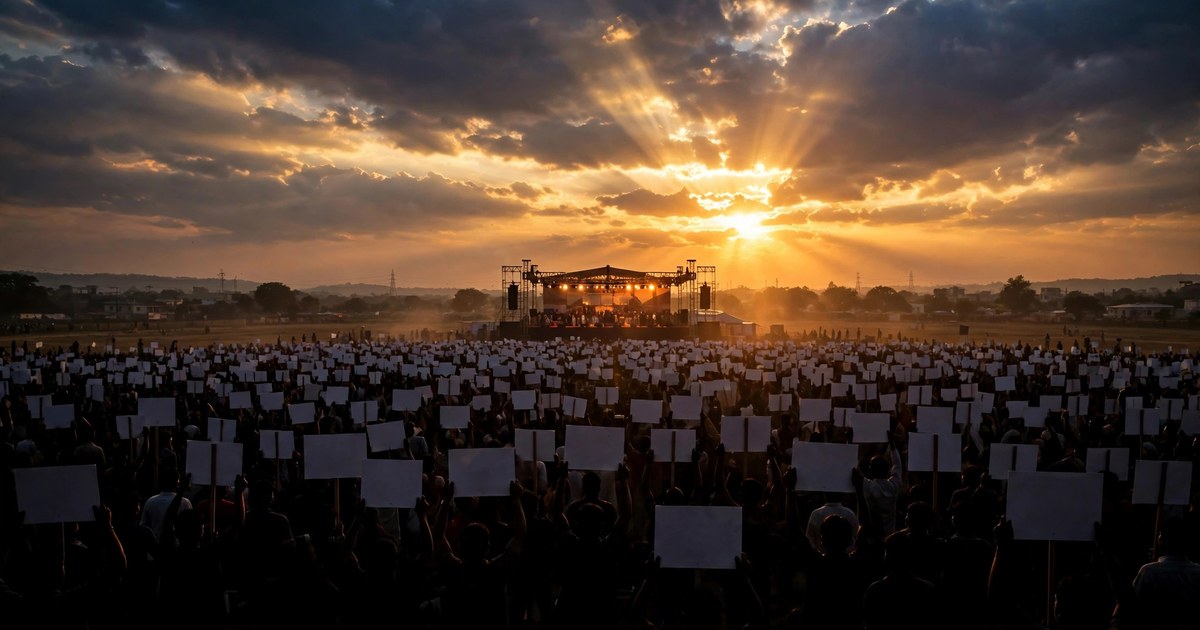
The centerpiece of the protest programme is now a rally scheduled for November 1 at Ramlila Maidan, Delhi's historic protest ground that has hosted some of the most significant political mobilisations in the country's modern history. The rally will demand the removal of Chief Election Commissioner Gyanesh Kumar over the alleged irregularities in the Special Intensive Revision of electoral rolls.
The logistical groundwork for the rally is already in place. Delhi Police has granted the Congress permission to hold the event, and the venue has been reserved for the period from October 25 to November 3, giving the organisers a window for preparation, the main rally, and related events. The inclusion of students and civil society groups is intended to broaden the mobilisation beyond party workers, echoing past large-scale civil demonstrations at the same ground.
The rally's demand is unusually direct: the resignation or removal of a sitting Chief Election Commissioner. The position of the CEC is constitutionally protected in India, which is precisely why the opposition's demand is politically significant — it frames the dispute not as a routine disagreement over process but as a question of institutional credibility. For a fuller explanation of how electoral institutions function in a democracy, see our guide to how voting works and how elections are administered.
The strategy meeting of October 22
The rally plan was consolidated at a virtual strategy meeting of INDIA bloc leaders held on the evening of October 22. The meeting was chaired by Congress president Mallikarjun Kharge and brought together the alliance's leadership to coordinate the protest programme and finalise the November 1 mobilisation.
Virtual coordination meetings have become the bloc's standard mechanism for aligning its constituent parties, many of which operate in different states with different political priorities. The October 22 meeting's focus on the CEC issue signals that the alliance intends to make the SIR row its central national campaign theme in the weeks ahead, keeping the pressure on the Election Commission through the rally and beyond.
The two sides: allegations and responses
The dispute has two sharply contrasting narratives, and understanding both is essential to making sense of the rally.
The opposition's case. The INDIA bloc alleges that the Special Intensive Revision has facilitated the deletion of eligible voters from the electoral rolls and points to what it describes as irregularities in how the exercise has been conducted. The bloc demands the resignation or removal of Chief Election Commissioner Gyanesh Kumar, arguing that his continuance in office undermines the credibility of the electoral process. The detention of MPs on October 6 has been folded into this narrative as evidence, in the opposition's telling, of an administration unwilling to hear dissent.
The ECI's position. The Election Commission of India says it follows established procedures in carrying out the Special Intensive Revision and has defended its institutional role. The Commission's position is that roll revision exercises are a routine and necessary part of electoral administration, conducted under legal frameworks and long-standing practice.
The government's response. Union Home Minister Amit Shah has countered the opposition's criticism of the SIR, pushing back against the bloc's framing of the issue. Meanwhile, the Janata Dal (United), a constituent of the ruling alliance, has questioned the unity of the INDIA bloc itself — suggesting that the opposition coalition's internal coherence remains a vulnerability even as it projects strength through joint protest action.
It is worth noting that electoral disputes have an international dimension as well: questions about voter eligibility, roll maintenance, and electoral integrity surface in democracies around the world. In a different context, American authorities have also been in the news over alleged voter fraud — see our explainer on the DOJ's voter-fraud charges in California — illustrating how debates over who belongs on the voter rolls recur across political systems.
The November 1 Ramlila Maidan rally is the most direct confrontation yet between the INDIA bloc and the Election Commission: a public demand for the removal of the sitting Chief Election Commissioner over the conduct of the Special Intensive Revision.
Why it matters
The significance of the November 1 rally lies less in any single demand and more in what the confrontation says about institutional trust. The Election Commission of India has historically enjoyed broad public confidence as the referee of the world's largest democratic exercise. A sustained opposition campaign questioning the Commission's neutrality — culminating in a demand for the CEC's removal — tests that confidence in ways that will resonate beyond the immediate news cycle.
There is also a political dimension. The INDIA bloc is attempting to convert a technical, process-oriented dispute about electoral rolls into a mass mobilisation issue, betting that the language of "Save Democracy" will resonate with voters ahead of future electoral contests. The ruling side, conversely, is betting that the public will view the SIR as routine administrative work and the protests as political theatre. Which narrative prevails will be shaped, in part, by the scale and conduct of the November 1 rally.
What happens next
Several developments will determine where this confrontation goes from here:
- The November 1 rally itself: Turnout, the participation of students and civil society groups, and the conduct of the event will determine whether the protest programme gains momentum or plateaus.
- The Election Commission's response: Whether the ECI engages with the opposition's concerns or holds its line will shape the next phase of the dispute.
- The SIR exercise: The progress and outcome of the Special Intensive Revision — and any documented findings about voter deletions or additions — will provide the factual backdrop against which the competing claims are judged.
- Bloc unity: The JD(U)'s questioning of the alliance's cohesion is a reminder that sustaining a multi-party protest campaign requires constant internal coordination, of the kind attempted at the October 22 strategy meeting.
As the November 1 date approaches, the rally at Ramlila Maidan is set to be one of the most closely watched political events of the season — a test of the opposition's mobilisation capacity, the government's response strategy, and public trust in the institutions that run India's elections.
Sources: ANI via Devdiscourse, fact.net.in, October 2026.