
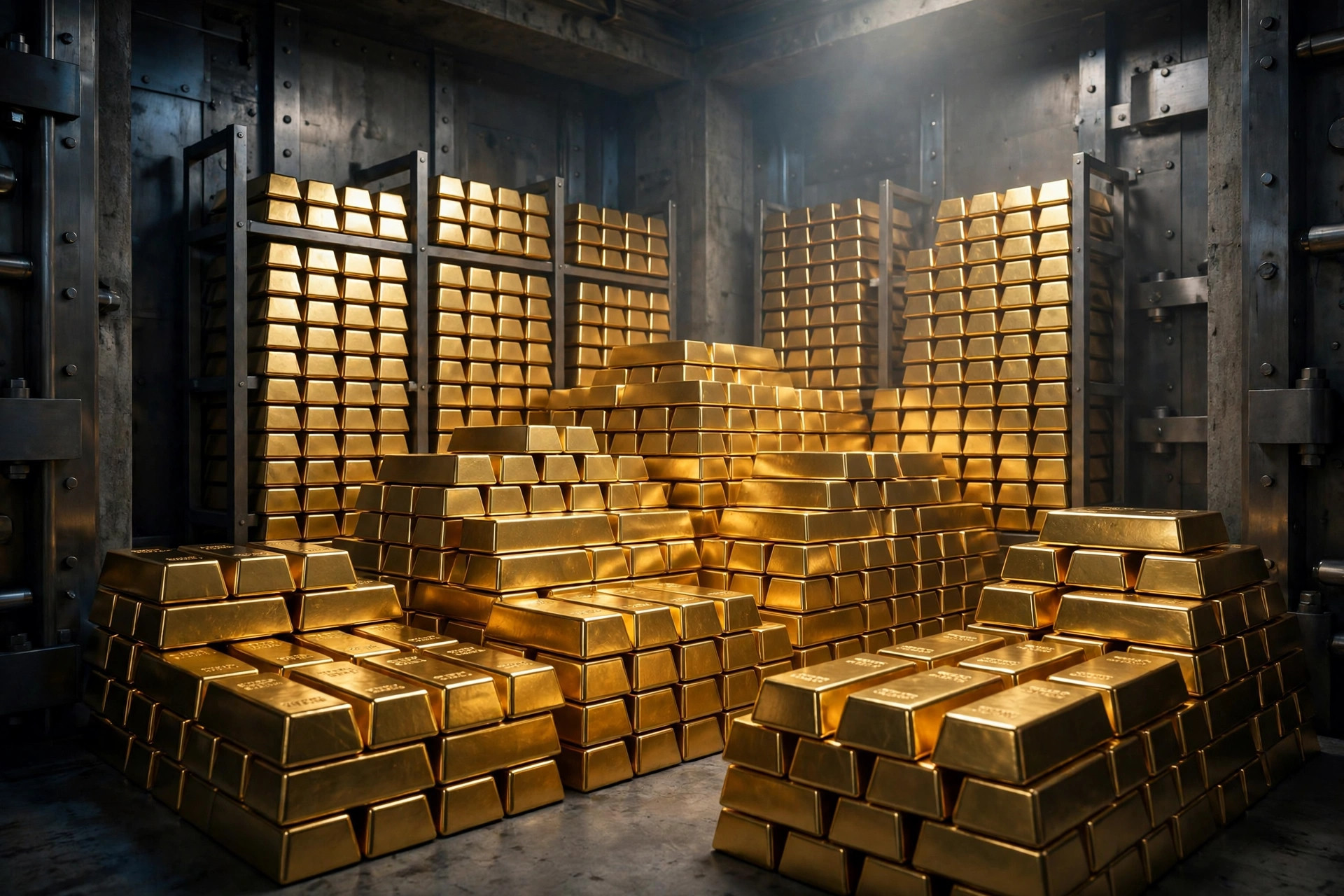
With the gold price above 4000 dollars again, the metal has staged one of its sharpest turnarounds of the year. Spot gold climbed back above the $4,000 an ounce mark on 4 November 2026, just days after sliding to a low near $3,870 on 30 October. Kitco quoted spot gold at $4,060.30 at 13:43 ET on 4 November, and the rally extended toward $4,150 on 5 November, a rebound of roughly 7% from the October low. The trigger was political as much as financial: Democrats won both chambers of Congress in the US midterm elections, the dollar weakened, Treasury yields fell, and buyers returned to bullion. Behind the price move sits a deeper story. The World Gold Council's Gold Demand Trends report for the third quarter of 2026, published on 3 November, shows central banks buying gold at the fastest pace in nearly two years. This article explains how gold got back above $4,000, what the central banks are doing, and what could push the price back down.
Why Gold Fell Below $4,000 in the First Place
Gold's slide below $4,000 did not come out of nowhere. The metal had spent much of 2026 in a historic surge, reaching a record of $5,589 an ounce on 28 January, according to the World Gold Council's figures. By late October that rally had run into a wall. A stronger dollar made gold more expensive for buyers using other currencies, expectations of higher US interest rates pushed Treasury yields up, and some investors took profits after a year of extraordinary gains. The result was a correction that carried spot gold down to about $3,870 on 30 October, its lowest level in weeks, and briefly below the psychologically important $4,000 line that traders watch as a marker of confidence. The fall was orderly rather than panicked, but it raised a real question: had the great gold rally of 2026 finally run out of steam, or was this simply a pause before the next leg up? The answer began to arrive within days, and it came from Washington rather than from the gold market itself.
Gold Price Above 4000: How the Rebound Happened
The rebound began on 4 November, the day after the US midterm elections delivered both chambers of Congress to the Democrats, an outcome that also sent US stocks surging. Spot gold reclaimed $4,000 that day, with Kitco recording $4,060.30 at 13:43 ET, and Reuters noted a 2.4% rise to $4,021.68 by 07:18 GMT. By 5 November the metal was pushing toward $4,150, roughly 7% above the $3,870 low of 30 October. Two forces drove the move. First, the dollar weakened and Treasury yields fell as markets reassessed the outlook for government spending and borrowing under a Democrat-controlled Congress. James Steel, chief precious metals analyst at HSBC Global Investment Research, told clients that Democratic control of Congress is gold-supportive, because Democrats tend to be associated with greater government spending and wider deficits, which can weigh on the dollar and lift gold, as our guide to dollar rates and gold prices explains. Second, the midterm result raised hopes of an end to the war in the Middle East, another factor Steel cited as supportive for bullion. Kitco's coverage on 6 November noted that gold had managed to hold above $4,000 even as strong US jobs data pointed the other way, with strategists at Saxo Bank and FOREX.com both calling $4,000 the critical level to watch. The metal was still about 6% below its third-quarter average price and about 27% below the January record of $5,589, so the rebound, while sharp, had not erased the correction.
What the Gold Price Above 4000 Means: Central Banks Bought 321 Tonnes
The most important number behind the rally is not a price at all. It is 321.2 tonnes: the amount of gold central banks bought, net, in the third quarter of 2026, according to the World Gold Council's Gold Demand Trends report published on 3 November. That is 42% more than a year earlier and the highest quarterly total since the fourth quarter of 2024. Only about 120 tonnes of that buying was formally reported by central banks; the remaining roughly 201 tonnes was estimated by the Council from unreported purchases, a reminder that official figures understate the true scale of state buying. Across the first nine months of 2026, central banks bought 675 tonnes, up 6% on the same period of 2025, and the Council expects full-year 2026 buying to at least match 2025's total of 848 tonnes. Investment demand told a similar story. Gold-backed exchange-traded funds added 211 tonnes in the third quarter, taking their holdings to a record 4,256 tonnes, and another 19 tonnes flowed in during October, lifting holdings to 4,275 tonnes by the end of the month. Total gold demand in the third quarter reached 1,369 tonnes, down 1% on a year earlier, because the strength in official and ETF buying was partly offset by weaker consumer demand: bar and coin buying fell 19% year on year as high prices deterred retail buyers. The third quarter's average LBMA gold price was $4,262 an ounce, 23% higher than a year earlier, which explains why demand measured in tonnes could fall while the value of the market kept rising.
Why It Matters and What Happens Next
A gold price above $4,000 matters because $4,000 has become the line that separates a healthy correction from a broken rally. Holding above it through a week that included a blockbuster US jobs report, as Kitco noted on 6 November, suggests buyers are willing to defend the level. For investors, the central-bank buying is the longer story: when the world's central banks buy 321 tonnes in a single quarter, they are diversifying away from the dollar and treating gold as a reserve asset, not a speculation, and that buying has provided a floor under the price all year. For ordinary savers, the message is more mixed. Gold's rebound has been fast, but the risks are visible. Louise Street, senior markets analyst at the World Gold Council, warned that higher interest rates could weigh on gold through the end of the year, and Kitco's strategists flagged the $4,150 to $4,170 zone as the resistance gold must clear to confirm that bullish momentum has returned. The next tests arrive quickly: the US October jobs report has already landed strong, and the October consumer price report due on 10 November will shape expectations for a December rate rise, which would lift yields and pressure gold back toward $4,000. If inflation comes in soft and the dollar keeps sliding, the path toward $4,200 opens up. If it comes in hot, the $4,000 level will be tested again within days, and this time the buyers who defended it may not be so quick to return.
Sources: World Gold Council, Reuters, FX Leaders, Discovery Alert — November 2026