
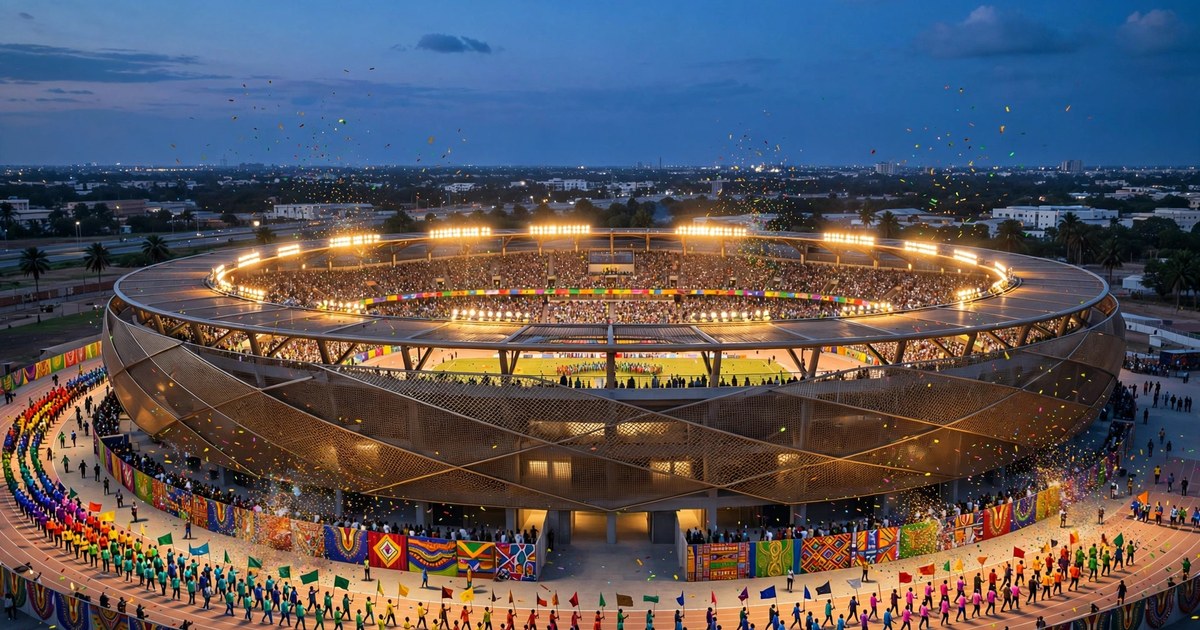
The Dakar 2026 Youth Olympic Games opened on Saturday 31 October 2026 in Senegal, bringing an Olympic event to African soil for the first time in history. President Bassirou Diomaye Faye declared the Games open at the Stade Abdoulaye Wade in Diamniadio, in front of tens of thousands of spectators, as 2,655 athletes aged 14 to 17 from 205 delegations prepared to compete across 25 sports until 13 November. The story is trending per news coverage, with the Associated Press, the International Olympic Committee and news outlets across Africa, Asia and Europe reporting the historic opening within hours of the ceremony.
Dakar 2026 Youth Olympic Games: Dates and Schedule
The Dakar 2026 Youth Olympic Games run from 31 October to 13 November 2026, fourteen days of competition across three Senegalese cities. Baseball5 had the honour of starting first, with preliminary matches beginning on Friday 30 October, a day before the opening ceremony. The first medals of the Games are decided on Sunday 1 November, the day competition begins in earnest in judo, swimming, rugby sevens and futsal. The Games close on Friday 13 November with the final competitions and the closing ceremony at the Diamniadio Olympic Stadium.
The middle of the programme is packed. Wushu, making its debut as an official Olympic medal sport, runs from 1 to 3 November at the Dakar Expo Centre, while table tennis and beach volleyball, which began on the opening day, continue into the first week. Boxing takes place from 7 to 12 November, athletics from 8 to 10 November at the Stade Iba Mar Diop, and breaking closes the programme on 12 and 13 November.
25 Sports at the Dakar 2026 Youth Olympic Games
Athletes at the Dakar 2026 Youth Olympic Games are contesting 25 competition sports: athletics, swimming, archery, badminton, baseball5, 3x3 basketball, boxing, breaking, road cycling, equestrian, fencing, futsal, artistic gymnastics, beach handball, judo, coastal rowing, rugby sevens, sailing, skateboarding, table tennis, taekwondo, triathlon, beach volleyball, beach wrestling and wushu. Ten more sports — canoeing, golf, hockey, karate, modern pentathlon, shooting, sport climbing, surfing, tennis and weightlifting — feature as engagement sports, giving young athletes a chance to try them without medals at stake.
The 153 medal events are split exactly evenly between men and women — 73 men's events, 73 women's events and 7 mixed events — making Dakar 2026 the first Olympic Games of any kind to achieve full gender equality across athlete quotas, sports, disciplines and events. Four disciplines are new to the Youth Olympic programme compared with Buenos Aires 2018: wushu, baseball5, coastal rowing and beach wrestling. Wushu's debut is a milestone in itself, with 48 athletes competing in four events — men's and women's changquan combined and men's and women's taijiquan combined — at the Dakar Expo Centre.
Rugby sevens, which opens its competition on 1 November at the Stade Iba Mar Diop, is among the fastest-growing youth sports in the programme, while baseball5 — the fast-paced, five-on-five street version of baseball — had the honour of opening the competition a day before the ceremony. The sport's big-stage appeal was on show only days earlier, when the Milwaukee Brewers won their first World Series title.
Why Dakar 2026 Matters: Africa's First Olympic Event
The Dakar 2026 Youth Olympic Games arrive 130 years after the modern Olympic Games began in Athens in 1896 — and Africa is the last continent to welcome the Olympic Movement. No African country had ever hosted an Olympic event of any kind before Senegal, and the continent has never hosted a Summer Olympics. That is what makes Dakar 2026 more than a youth sports festival: it is a test of whether Africa can host the world's biggest sporting events, and a glimpse of what a future senior Olympic Games on the continent could look like.
Senegal was chosen to host in 2018, when the International Olympic Committee awarded it the fourth Summer Youth Olympic Games. The event was originally planned for 2022 but was postponed in 2020 after the COVID-19 pandemic disrupted preparations around the world. Four years later than planned, the Games finally opened — with the IOC itself led for the first time by an African. Kirsty Coventry, a two-time Olympic swimming champion from Zimbabwe, became the IOC's first African and first female president when she was elected in 2025, and she was in Diamniadio for the opening ceremony.
"This historic moment is for Senegal and for Africa. And for our entire Olympic Movement," Coventry told the crowd in Diamniadio. "It is time for Africa, time for Senegal," she had said on arriving in Dakar earlier in the week.
The Games also break new ground in who gets to compete. The Youth Refugee Olympic Team is taking part in a Youth Olympics for the first time, alongside athletes from 204 National Olympic Committees, making up the 205 delegations in Dakar. And with equal numbers of male and female athletes and events, Dakar 2026 is the most gender-balanced Olympic event ever staged.
Venues: Dakar, Diamniadio and Saly
Competition is spread across eight venues in three cities: the capital Dakar, the planned city of Diamniadio about 30 kilometres outside the capital, and the beach resort of Saly. The Youth Olympic Village, where the athletes live, is in Diamniadio, close to the Stade Abdoulaye Wade, the 55,000-seat stadium that hosted the opening ceremony.
In Dakar, the Tour de l'Oeuf hosts 3x3 basketball, baseball5, breaking, skateboarding and swimming, while the Stade Iba Mar Diop hosts athletics, futsal, rugby sevens and taekwondo, and the Corniche West hosts the engagement sports and road cycling. Diamniadio's Dakar Arena hosts badminton and futsal, and the Dakar Expo Centre hosts artistic gymnastics, fencing, judo, table tennis, boxing and wushu. Saly, on the Atlantic coast, hosts the beach and water sports — beach handball, beach volleyball, beach wrestling, coastal rowing, sailing and triathlon — at Saly Beach West.
Opening Ceremony: The Flight of Sitoé
The opening ceremony, held on the evening of Saturday 31 October at 6:30 p.m. local time, featured 1,115 performers and celebrated Senegal's tradition of teranga, or hospitality. Under the theme "The Flight of Sitoé", the show followed three symbolic characters — Alkebulan, the mother; her son Keb; and Sitoé, a young girl embodying Africa's future — through music, dance, wrestling, visual art and storytelling, tracing Africa's past, present and future.
The Parade of Nations saw Greece lead the delegations into the stadium, as Olympic tradition dictates, with the Refugee Olympic Team following and host nation Senegal bringing up the rear. French actor Omar Sy, who has Senegalese roots, and Senegalese-Italian TikTok star Khaby Lame are ambassadors for the Games, and former FIFA secretary general Fatma Samoura was among the final relayers of the Youth Olympic flame on the eve of the ceremony. The cauldron was lit by Senegalese fencer Abdourahmane Marième Sy and judoka Aïcha Diop. Rwandan President Paul Kagame was among the heads of state in attendance.
The ceremony's motto, "Africa Welcomes, Dakar Celebrates", sums up what Senegal wants the world to take from these Games: a continent that waited 130 years for the Olympic Movement to come to it, finally welcoming it on its own terms.
What to Watch Next at the Dakar 2026 Youth Olympic Games
With the first medals decided on 1 November, the opening days will set the tone. Swimming, judo, rugby sevens and futsal all begin on the first Sunday, and wushu's historic debut runs through 3 November. The second week brings the headline track and field events from 8 to 10 November, boxing through 12 November, and the closing weekend of breaking before the curtain falls on 13 November.
For the teenage athletes in Dakar, the Games are a launchpad. The Youth Olympic Games were created in 2007 to develop future champions, and Dakar is where the next generation gets its first taste of the Olympic stage. Young teams can make history fast — the Golden State Valkyries won a WNBA championship in only their second season — and in Dakar, 2,655 teenagers get their first chance to do the same on the biggest stage their continent has ever hosted.
Whether Senegal's gamble pays off will be judged over the next two weeks — on the organisation, the crowds and the competition. But one thing is already settled: after 130 years, the Olympic Games have finally come to Africa.
Sources: Associated Press; International Olympic Committee; IANS; Bantu Gazette; JagranJosh; International Wushu Federation.