
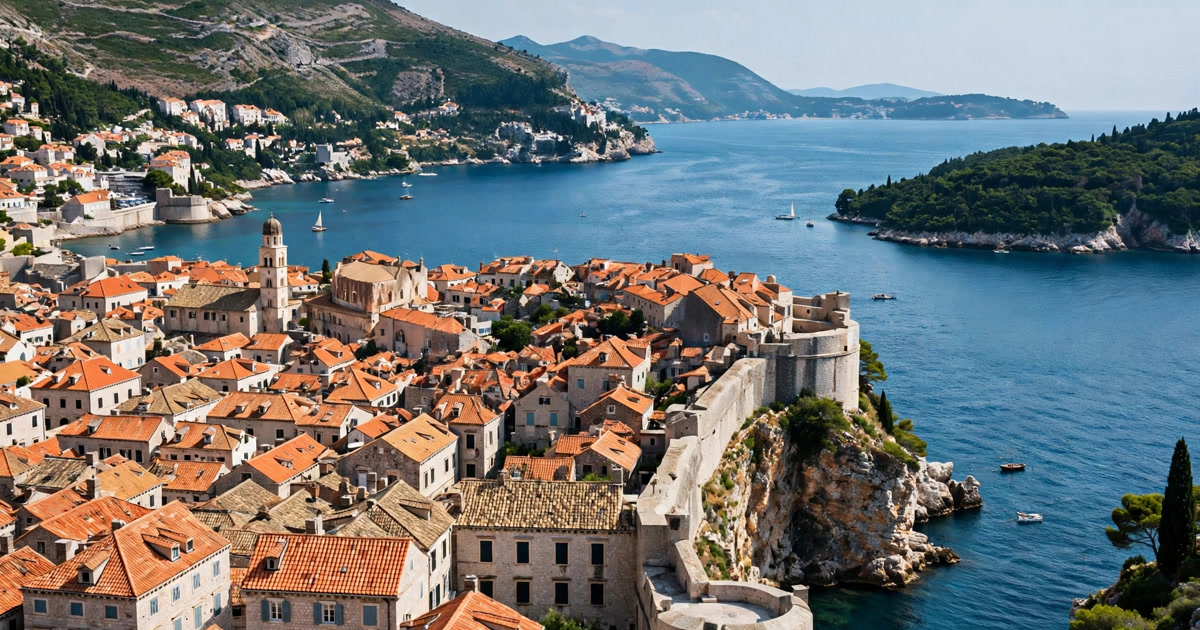
Croatia's Adriatic coast, with over a thousand islands, walled towns and clear water, ranks among Europe's finest seaside destinations. Croatia Adriatic coast travel spans Dubrovnik's walls, Split's palace, Hvar's beaches, Istria's hill towns and quieter islands that reward slow exploration.
This guide covers Croatia Adriatic coast travel by region: where to go, how ferries work, when to visit, and how to plan costs and activities. Use it to build an itinerary that balances famous sights with island calm.
Dubrovnik: The Pearl of the Adriatic
Croatia Adriatic coast travel often starts in Dubrovnik, whose intact city walls, Stradun promenade, Rector's Palace and cable-car views draw visitors year-round. Walk the walls early to avoid crowds and heat, then explore side streets, museums and harbour restaurants.
Dubrovnik day trips include Cavtat, Lokrum Island and the Elaphiti Islands, offering beaches and villages beyond the old town. Staying in Dubrovnik suits history lovers, though prices run highest among Croatian coastal cities.
Split and Central Dalmatia
Split anchors central Croatia Adriatic coast travel, with Diocletian's Palace forming a living old town of shops, apartments and restaurants within Roman walls. Nearby Trogir, a UNESCO town, and Klis Fortress add history, while Marjan Hill offers walks and views.
Central Dalmatian islands, including Hvar, Brač, Vis and Šolta, are reachable by ferry from Split, each with distinct character: Hvar for glamour and lavender, Brač for Zlatni Rat beach, Vis for remoteness and military history.
Istria and the North Coast
Istria gives Croatia Adriatic coast travel a different flavour, with Italian-influenced towns such as Rovinj, Poreč and Pula, Roman amphitheatres, hilltop villages like Motovun, and truffle, wine and olive-oil routes inland.
Istrian beaches are rockier than Dalmatian ones, but food, cycling and cultural festivals compensate, and the region suits travellers who value gastronomy alongside sea. Pula's amphitheatre hosts concerts and film festivals in summer.
Ferries, Seasons and Costs
Ferries run by Jadrolinija and others link mainland ports with islands, with summer schedules denser and advance booking wise for cars. Foot passengers travel flexibly, while island-hopping itineraries should allow buffer days for wind disruptions, especially from the bora.
Costs for Croatia Adriatic coast travel peak in July and August, with shoulder months May, June, September and October offering warm seas, lower prices and quieter towns. To save money, travel on a budget with apartments, local buses and konoba restaurants.
Practical Tips for Adriatic Travel
Practical Croatia Adriatic coast travel tips include reef shoes for rocky beaches, sun protection, water for island walks, and cash for small island businesses, though cards are widely accepted. Driving the coastal road offers stunning views but demands care on narrow, winding sections.
Add travel insurance for island trips, and use a holiday travel booking guide to compare flights, ferries and stays. Respect protected areas, including national parks such as Kornati and Mljet, and book park tickets early in peak season.
National Parks: Kornati and Mljet
Kornati National Park, an archipelago of barren islands, offers sailing, swimming and rugged beauty, with boat trips from Murter, Zadar and Šibenik. Mljet National Park combines lakes, forests and a Benedictine monastery islet, reachable by ferry.
Park tickets, boat bookings and seasonal access require planning, especially in summer when visitor numbers peak. National parks showcase Croatia's natural heritage beyond beaches and towns.
Croatian Islands by Ferry: Practical Guide
Island ferries in Croatia require understanding schedules, vehicle bookings, foot-passenger flexibility and wind cancellations, with Jadrolinija timetables changing seasonally. Island-hopping works best with buffer days and flexible accommodation.
Catamarans serve foot passengers faster than car ferries, linking Split, Dubrovnik and island ports efficiently. Check schedules the day before travel, since wind, especially bora, disrupts services.
Croatian Food on the Coast
Coastal Croatian food features grilled fish, octopus, black risotto, pašticada, olive oil, wines such as Plavac Mali and Pošip, and konoba tavernas serving local dishes. Island specialties include Hvar lavender products, Korčula wines and Pag cheese.
Eating locally, in konobas away from seafront tourist traps, offers better value and authenticity. Markets in Split, Dubrovnik and Zadar supply fresh produce for apartment self-catering.
Sailing Holidays in Croatia
Sailing holidays in Croatia suit bareboat charters, skippered yachts and flotillas, with bases in Split, Dubrovnik, Zadar and Istria. Sailing qualifications, including ICC or Day Skipper, are required for bareboat charters.
Sailing itineraries combine island anchorages, harbour towns and national parks, with weather awareness essential for bora and jugo winds. Charter companies provide briefings, provisioning and route advice for first-time Adriatic sailors.
Croatia Adriatic Coast Travel: Two-Week Itinerary
A two-week Croatia Adriatic coast travel itinerary starts in Dubrovnik, ferries to Korčula and Hvar, continues to Split and Trogir, then explores Zadar and Istria, with rest days for beaches and sailing. This pace balances sights with relaxation.
Croatia Adriatic coast travel rewards slower itineraries, since island ferries, national parks and old towns each deserve unhurried days. Adjust the route by interests: history, beaches, food or sailing.
Croatia Adriatic Coast Travel: Budget Tips
Budget tips for Croatia Adriatic coast travel include shoulder-season stays, apartments with kitchens, local buses, konoba meals and free old-town walks, keeping costs well below peak-season hotel and restaurant prices.
Croatia Adriatic coast travel on a budget still delivers Dubrovnik walls, island ferries and Adriatic swimming, proving value travel need not miss highlights. Book ferries and stays early for the best deals.
Croatian Coastal Villages Off the Beaten Path
Beyond famous towns, coastal villages such as Primošten, Ston, Vrbnik, Lubenice and Vis town offer stone lanes, local konobas, quiet coves and authentic island life without peak-season crowds. These villages reward travellers who venture beyond day-trip hubs.
Village stays suit slow travellers, with apartments, family restaurants and walking paths, plus ferry or bus links to larger towns. Exploring villages adds depth to coastal trips, revealing Croatia beyond postcard sights.
Croatia's Adriatic rewards travellers who mix walled towns, island ferries and Istrian food. Travel in shoulder months when you can, book ferries early, and leave time for unplanned island days.
Sources: Croatian National Tourist Board; Jadrolinija ferries; Croatian tourism guides.