
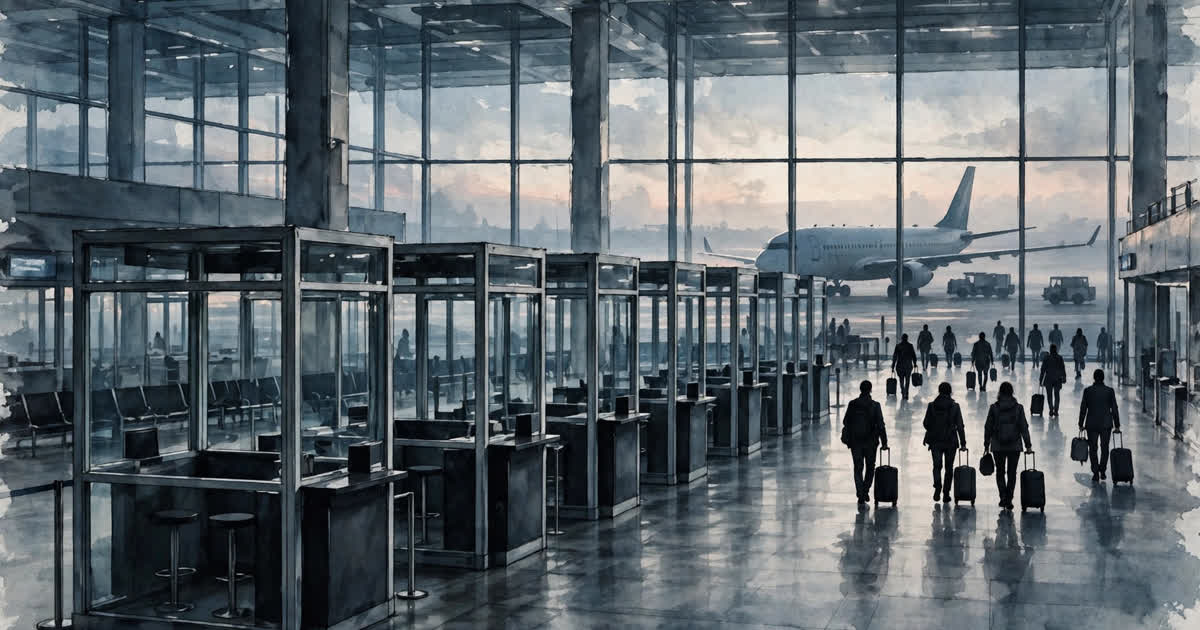
Destiny Church leader Brian Tamaki deported from Australia is the story that has reignited debate about free speech, border powers and religious tensions on both sides of the Tasman. Tamaki says he was detained for about 12 hours at Brisbane Airport after arriving on October 20, 2026, had his visa cancelled, spent a night in immigration detention and was returned to New Zealand on October 21. Australian authorities have not publicly confirmed the details of his individual case, citing privacy considerations, so the account of what happened at the border rests, for now, largely on Tamaki's own telling.
The timing sharpened the controversy. Just one day earlier, on October 19, Tamaki had appeared at the Manukau District Court and pleaded not guilty to three charges of inciting racial disharmony over Facebook posts made in June 2026. He is due back in court on January 25, 2027. The border incident and the court case are separate matters, but they share the same origin: public statements Tamaki made about religious and ethnic communities that drew police scrutiny, condemnation from community leaders and, eventually, criminal charges.
Brian Tamaki Deported: What He Says Happened at Brisbane Airport
According to Tamaki, he travelled to Brisbane with family members on Tuesday morning, October 20, to speak at a Destiny Church conference on the Gold Coast. He says Australian Border Force officers intercepted him shortly after arrival, took him into a small room and questioned him for approximately 12 hours. He says he was then held in immigration detention overnight, under guard, before being sent back to New Zealand the following day.
Tamaki revealed the incident in a video posted to social media on Thursday, October 22. In it, he claimed documents supplied by Australian authorities described his social media statements as "inflammatory and concerning" and said his presence in Australia could risk the good order of the Australian community, specifically its Sikh and Muslim communities. He also said officers questioned him about his remarks on immigration and about the Indian Prime Minister. These characterisations are Tamaki's claims about the documents and the questioning; Australian authorities have not confirmed them.
Tamaki has gone further, alleging that the New Zealand and Australian governments collaborated to silence him. "I was travelling to Australia to preach at a Christian conference, not to commit a crime," he said, adding that the episode could represent the first time a Christian conference had come under a hate-crime investigation in Australian history. That collaboration claim is also unconfirmed by either government, and no evidence for it has been publicly produced.
Brian Tamaki Deported — But What Have Australian Authorities Said?
So far, the official response has been limited. Australia's Department of Home Affairs has not confirmed the details of Tamaki's case, citing privacy considerations, but has emphasised the government's powers to refuse entry or cancel visas where non-citizens present risks to the community. Media outlets, including 1News, have reported approaching the department for comment.
That gap between Tamaki's detailed public account and the absence of an official account is the central unresolved question in the story. A person's account of an immigration decision is an important starting point for reporting, but the full official reasons are necessary before concluding whether a decision was legally justified, disproportionate or improperly motivated. One reported legal detail comes from commentary on the case citing section 116 of Australia's Migration Act as the visa-cancellation power, but the precise grounds relied on in Tamaki's case have not been publicly confirmed. Readers following New Zealand's public institutions may also be interested in our coverage of the resignation of New Zealand's top military officer, another recent story where official statements and personal accounts had to be weighed carefully.
The Court Case Behind the Headlines
The charges Tamaki faces in New Zealand arise from a June 2026 video and Facebook posts in which he accused Indian Prime Minister Narendra Modi of persecuting Christians and made statements about Hindus, Sikhs and Muslims in New Zealand. Reports of the video quote him saying "Let's purge New Zealand of Hindus, Sikhs and Muslims" and asking why mosques and temples should not be burned down in retaliation for alleged attacks on churches overseas. Tamaki later said he did not mean the remarks literally, insisted he had never advocated violence, and acknowledged that no Hindus had threatened him and no churches had been burned down in New Zealand.
New Zealand Police confirmed the charges on October 15, 2026. Tamaki faces three charges of inciting racial disharmony under section 131 of the Human Rights Act 1993, which makes it an offence to publish or use threatening, abusive or insulting words with intent to excite hostility or ill-will against a group on the ground of colour, race, or ethnic or national origins. He pleaded not guilty to all three charges at Manukau District Court on October 19, was granted bail, and will appear again on January 25, 2027. Speaking outside court, Tamaki said he did not know exactly which posts the charges concerned but suspected it was his comments about Prime Minister Modi, and he framed the prosecution as a question of free speech.
A related but separate strand concerns Tamaki's firearms. Police suspended his firearms licence and seized his firearms on June 30, 2026, after assessing the June video, with the Firearms Safety Authority notice describing the video as encouragement of violent action and significant property damage. His licence was subsequently revoked in August 2026, on the basis that he was no longer a "fit and proper person" to hold one, and he cannot re-apply for five years unless the decision is reversed. Tamaki has said he will seek a review and has vowed legal action over the revocation. For context on how detention and border law is debated elsewhere, see our coverage of a US appeals court ruling on bond hearings for detained immigrants.
Brian Tamaki Deported: What Happens Next
Two tracks now run in parallel. In New Zealand, the criminal case heads toward its January 25, 2027 hearing, where the court will test whether Tamaki's June statements meet the legal threshold for inciting racial disharmony, a charge that requires both the words and the intent set out in the Human Rights Act. A prosecution under the provision also requires the Attorney-General's consent, usually given by the Solicitor-General. Tamaki's defence, as he has framed it publicly, is that his comments targeted religious beliefs and political leaders rather than people because of their race, and that they were not literal calls to violence.
In Australia, the questions raised by the Brian Tamaki deported case are different and, for now, unanswered: what specific evidence did authorities rely on, how was the potential risk assessed, and will the government confirm or dispute Tamaki's account of the cancellation notice? Until those answers emerge, the Brian Tamaki deported episode will continue to be argued as a free-speech case by Tamaki's supporters and as a public-safety border decision by those who defend it. What is not in dispute is the sequence that made it news: a church leader charged in one country, then turned away at the border of another within 48 hours, with both events tracing back to words posted online in June. That sequence, and the legal tests still to come, is why the story of Brian Tamaki deported from Australia is likely to run well beyond this week.
Why does the Brian Tamaki deported story matter beyond one airport incident? Because the Brian Tamaki deported case sits at the intersection of border powers, criminal speech law and religious debate in two countries. Supporters read the Brian Tamaki deported episode as a warning about speech being policed at borders, while critics read it as a routine exercise of visa powers against a man already facing charges. Either way, the Brian Tamaki deported story will only be resolved when courts and governments speak on the record.
Sources: Waatea News; eLocal; Centrist; additional reporting from RNZ via eLocal and the Free Speech Union NZ.