
Brazil mpox cases passed 1,000 in 2026 this week, and the milestone arrived fast: the national total jumped by 191 confirmed cases in just six days, a rise of about 23%, with infections concentrated in Rio de Janeiro and São Paulo. The Ministry of Health's monitoring panel counted 1,009 confirmed cases as of 12 November, and the figure had already moved to 1,055 by 13 November, according to Folha de S.Paulo. Alongside the rising count came the country's first mpox death of 2026, a patient in Rio de Janeiro aged 40 to 49 with a pre-existing immunosuppressive condition. Health officials are watching a new viral lineage, clade 1b, which has become dominant in Rio since September. They are also clear on one point that matters for anyone reading the headlines: Brazil is not calling this an outbreak. The numbers remain far below the 2022 peak, when the country recorded about 10,500 cases and 14 deaths. What follows is what the figures actually show, why clade 1b is drawing attention, and who the vaccination campaign is aimed at.
How Brazil mpox cases reached 1,000 in 2026
The speed of the rise is the story of how Brazil mpox cases reached 1,000 in 2026. Six days before the 1,000 mark was crossed, the Ministry of Health panel stood at 832 confirmed cases on 6 November. By 12 November it had reached 1,009 — 191 new confirmations, roughly 23% growth in under a week. G1 reported the crossing on Thursday afternoon, and by Friday the panel had moved again to 1,055, according to Folha de S.Paulo. October and November account for more than half of all Brazil mpox cases recorded in 2026: Agência Brasil, working from the same panel, put 293 confirmations in October and 227 already in November — 520 cases across two months. The geography is lopsided. Rio de Janeiro leads with 390 confirmed cases and São Paulo follows with 388, so the two states together hold about 780 of the national total, more than 76%. Behind them the numbers fall away sharply: Ceará has 61, Minas Gerais 45, the Federal District 41 and Santa Catarina 24. Rio's state total of 390 is more than triple the 123 cases it recorded in all of 2025, and Rio's state health department reported that cases between September and November doubled compared with the rest of the year. The panel also lists 46 probable cases still being classified and 581 under investigation, so the confirmed total is a floor, not a ceiling. Since mpox was first notified in Brazil, the country has logged 15,455 cases and 19 deaths in total — a reminder that the current surge, while real, sits inside a much longer history with this virus.
Clade 1b: the lineage now driving the curve
The second half of the Brazil mpox cases story is genetic. The 2022 global outbreak, which reached Brazil and produced about 10,500 cases and 14 deaths that year, was driven by clade IIb. The lineage gaining ground now is clade Ib, first identified in eastern Democratic Republic of Congo in 2023 and the reason the World Health Organization declared a public health emergency of international concern in August 2024 — a declaration it later ended as cases fell in central and eastern Africa. In Rio de Janeiro, the first clade Ib infection was detected in March 2026, in a patient seen at the Fiocruz national institute of infectology. For months, nothing followed. Then September arrived. Since then, among Rio cases with a clade result available, 73% have been clade Ib, according to the state health secretariat, with the other 27% clade IIb — the lineage that was standard in Brazil until this year. A UFRJ analysis found both subclades Ib and IIb circulating in Rio, with 20 of 35 recent samples identified as Ib. São Paulo tells a similar story at a slower pace: the state's Adolfo Lutz Institute has identified clade Ib in 103 of this year's cases, concentrated in the São Paulo metropolitan region, and since September the newer lineage has outrun clade IIb there too, accounting for roughly a third of the state's cases across all of 2026. International studies indicate that clade 1b carries higher transmissibility and a potential for more severe disease than the clade 2b strain seen during the 2022 global outbreak, according to CNN Brasil reporting cited in Brazilian coverage — but Brazilian experts say more local data are needed to confirm any change in how the virus spreads or how severe it is. That caution matters: the genetic shift is real and measured, but its clinical meaning in Brazil is still being established by the surveillance now under way.
The first death of 2026 — and why officials say this is not an outbreak
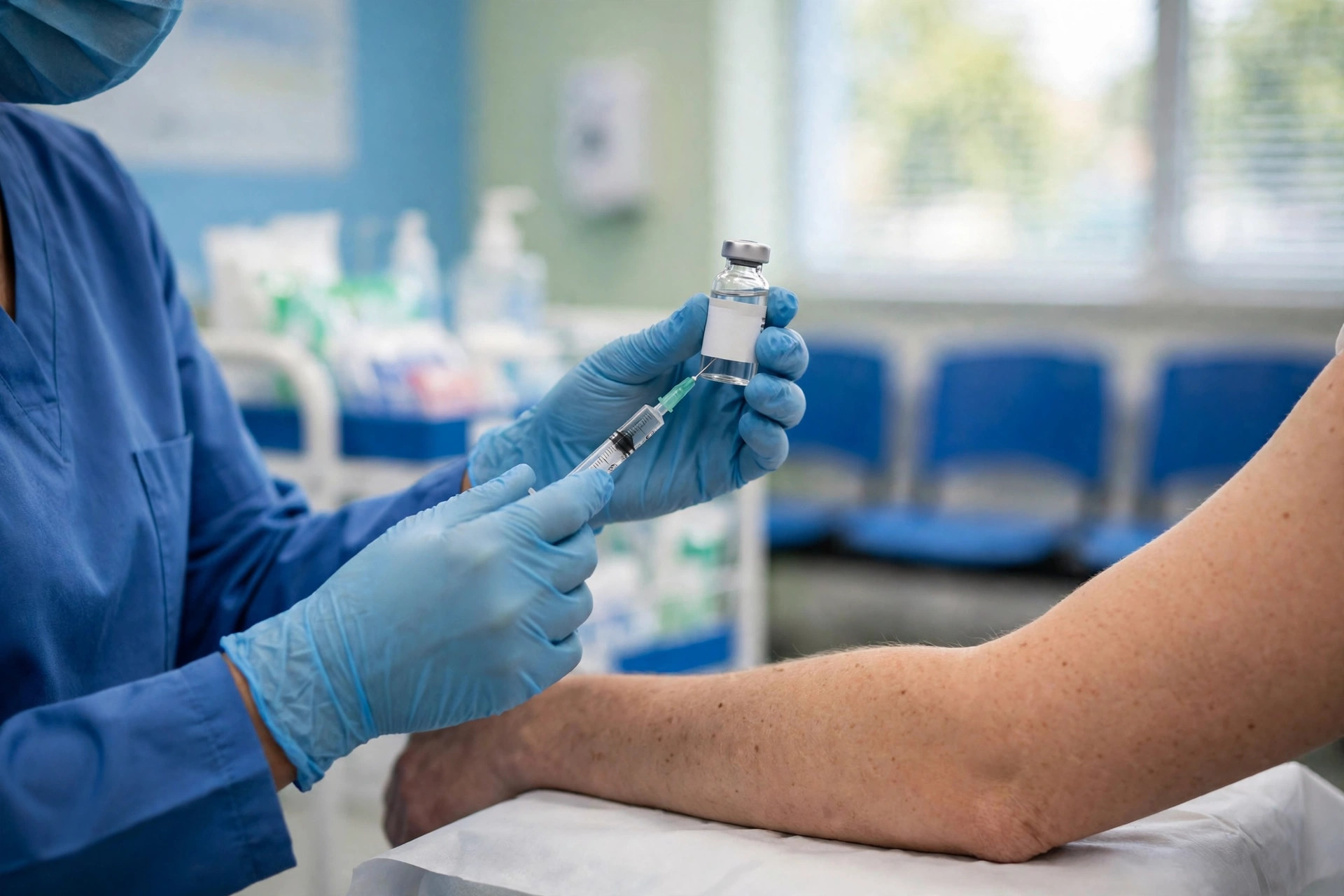
Rio de Janeiro confirmed the country's first mpox death of 2026 in mid-November. The patient was aged 40 to 49, had a pre-existing immunosuppressive condition, and was treated at the Oswaldo Cruz Foundation (Fiocruz). O Globo reported the death on a Friday, and the state health secretariat confirmed it. The case underlines a pattern health officials have stressed throughout the surge: the risk is highest for people with weakened immunity. That is also why the response is targeted rather than general. The Ministry of Health authorised the purchase of 25,000 vaccine doses on 8 November, through the PAHO Revolving Fund, to reinforce national stocks, and states have begun phased vaccination of priority groups — people with HIV/AIDS, PrEP users, and laboratory professionals exposed to the virus. Rio received about 2,000 doses for advanced-HIV patients. At the same time, Fiocruz has said plainly that the current Brazil mpox cases do not amount to an outbreak, because the current number of cases remains considerably below the peak recorded in 2022. The distinction is not a denial of the rise — the institute's own report records 1,009 confirmed infections and one death — but a technical judgement about scale. An outbreak label would imply a different level of spread; the present figures, concentrated in two states and still an order of magnitude below 2022, do not meet it. For the public, the practical message is narrower than the headlines suggest: mpox spreads by a virus from the same family as smallpox and causes fever, muscle aches and large boil-like skin lesions, and it can be deadly — but the people most at risk are those with weakened immunity, and the vaccine campaign is aimed squarely at them. Understanding how vaccines work helps explain why a targeted two-dose campaign for defined high-risk groups is the chosen tool, rather than a mass programme.
What Brazil mpox cases mean for vaccination and surveillance
What happens next for Brazil mpox cases depends on two things: whether the November pace holds, and what the genetic surveillance shows. The 25,000-dose purchase is a stockpile move as much as a vaccination move — it gives states the doses to keep the targeted campaign running while the curve is still rising. Expanded genomic surveillance is the other half of the response: health authorities have moved to test whether the growing clade 1b share changes how the virus spreads or causes illness, and the Adolfo Lutz Institute and Fiocruz laboratories are sequencing samples from both states. Readers should watch three numbers in the coming weeks. First, the weekly confirmed total on the Ministry panel — a second week of 20%-plus growth would put the total near 1,300 by the end of November. Second, the clade split in São Paulo, where clade Ib is still only about a third of cases; if it reaches Rio's 73%, the lineage shift will be nationwide rather than regional. Third, hospital admissions: Rio's state health department reported 55 patients requiring hospital admission among its cases, and that figure is a better gauge of severity than the case count alone. The broader context is worth keeping in view. Brazil is a country of 214 million people, and the two states driving the surge are also its most populous. The same public-health system that is tracking mpox is simultaneously managing other pressures — Brazil recorded its lowest Amazon deforestation in October 2026, a reminder that the country's news agenda runs far wider than one virus — and Brazil's 2026 election runoff has dominated politics this year. Mpox will not be the story that defines Brazil in 2026 unless the curve breaks sharply upward. For now the Brazil mpox cases form a fast-moving but contained surge, a new lineage to watch, a targeted vaccine campaign under way, and one death that shows why the targeting matters.