
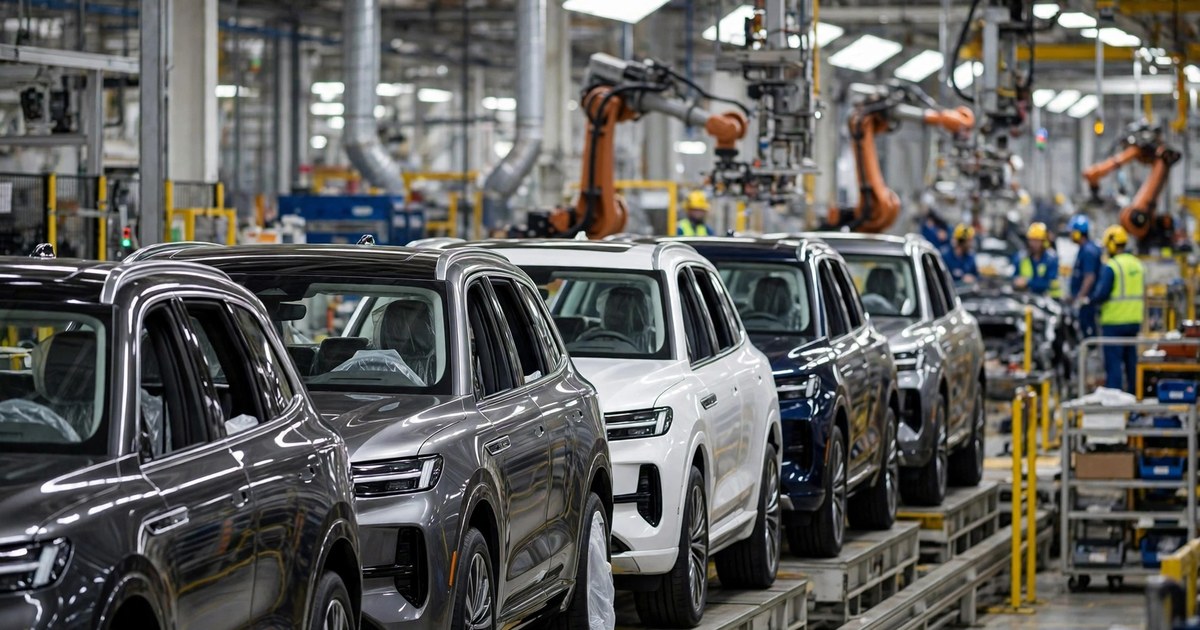
The Audi Georgia factory is now one of the biggest car-manufacturing stories trending per news coverage this weekend. Audi, Volkswagen's premium brand, plans to build a $4 billion assembly plant near Macon in central Georgia that will produce 200,000 SUVs a year and create approximately 4,500 jobs. United States President Donald Trump announced the plan on Saturday, 24 October 2026, at a rally in Perry, near Macon, where Audi chief executive Gernot Doellner appeared alongside him and confirmed the investment in person.
For Audi, the plant is a first. The German carmaker currently imports all of the vehicles it sells in the United States from Europe or Mexico, which has left it exposed to American tariffs on cars, steel, aluminium and parts. A factory on American soil changes that equation, at least for its biggest and most profitable models. For Georgia, the plant is a major jobs and supplier win in a state with competitive races for the US Senate and governor heading into the midterm elections on 3 November 2026. For car buyers, the effects will be slower: construction is due to begin next year, with production starting in the early 2030s, so no Audi built in Georgia will reach a showroom for several years.
What is the Audi Georgia factory?
The Audi Georgia factory is Audi's planned first vehicle assembly plant in the United States, to be built near Macon in central Georgia. According to Reuters reporting from the Perry rally, the $4 billion plant will assemble Audi's largest SUVs — the Q7, Q8 and Q9 — at a rate of about 200,000 vehicles a year once it is fully running. Audi said the investment will create approximately 4,500 jobs, and Doellner told the rally crowd: “We are planning to bring our biggest and most premium SUVs, and produce them here in Macon, Georgia.” He added: “This is a long-term investment because we believe in the American market.”
The announcement had been trailed hours earlier by a Reuters report citing a US government official, which said Trump was expected to announce the Georgia plan at an event near where Audi intends to build the plant. At that stage Audi had declined to comment. The rally announcement removed any doubt: Doellner stood on stage with Trump and described the Macon plant as a long-term commitment to American manufacturing, not a short-term political gesture.
Audi also expects to build a further 25,000 vehicles in South Carolina, according to the US official cited by Reuters. Those vehicles would be assembled at Volkswagen's Scout Motors plant, a $2 billion facility under construction in Blythewood, South Carolina, for the group's off-road Scout brand. Together, the Georgia and South Carolina moves would give the Volkswagen group a much larger American production footprint than Audi has ever had before.
Audi Georgia factory: the key numbers
The headline figures explain why the Audi Georgia factory has drawn so much attention. The investment is $4 billion. Annual output is planned at 200,000 SUVs. Jobs are estimated at about 4,500. Construction is scheduled to begin in 2027, and production is expected to start in the early 2030s. Those four numbers — money, volume, jobs and timing — are the ones to keep in mind whenever later claims about the project are made, because each of them will be tested as planning, permitting and construction proceed.
Two hundred thousand SUVs a year is a large plant by any measure, and it is focused deliberately on the top end of Audi's range. The Q7, Q8 and Q9 are large, high-margin vehicles, the kind of cars American buyers buy in large numbers and the kind most exposed to import tariffs when they are shipped in from abroad. Building them in Georgia therefore does two things at once: it moves production closer to the customers who buy them, and it reduces the tariff bill on each vehicle sold in the United States.
The jobs figure also matters in context. Four thousand five hundred direct jobs at a car plant typically support many more jobs in suppliers, logistics, dealerships and local services, although Audi has not published a total including those indirect roles. Georgia has already attracted large car and battery investments in recent years, and a premium-brand plant near Macon would strengthen the state's claim to be one of America's emerging car-making centres, alongside established hubs in the South and Midwest.
Why Audi chose Georgia for its factory
Georgia offers Audi a combination that few other states can match as neatly: a large workforce, established logistics through ports and highways, a business-friendly environment for manufacturers, and a location in the south-eastern United States where several carmakers already operate. Macon sits in central Georgia, within reach of Atlanta's workforce and transport links and of the ports on the Atlantic coast, which matters for both incoming parts and outgoing finished vehicles.
Politics is also part of the story, and it is important to be clear about what is claimed and what is proven. Trump has urged carmakers to build more vehicles in the United States and has argued that his tariffs are bringing factories back to America. Supporters of that argument point to the Audi announcement as evidence that the policy is working. Critics argue that tariffs have instead raised vehicle prices for American buyers and created uncertainty that has delayed some investments. Both arguments were aired in the same Reuters coverage of the announcement, and neither can be settled by a single factory decision: the plant will take years to build, and its economics will depend on tariff policy, demand for large SUVs, and Audi's global strategy over the next decade.
What is not in doubt is the tariff pressure Audi has already felt. Reuters reported that Trump's tariffs cost Audi €1.2 billion, about $1.4 billion, last year, because the company imports every vehicle it sells in America. Audi's sales have also fallen for two consecutive years, sliding 7% in the first half of 2026, with US sales down 16% this year amid fierce competition in China and the tariff burden. A Georgia factory does not fix the China problem, but it does directly address the American part of it.
Audi Georgia factory jobs: what 4,500 roles could mean
The promise of about 4,500 jobs is the figure most likely to matter to people living near Macon. Car-plant jobs typically include assembly-line workers, engineers, quality controllers, logistics staff, maintenance technicians and managers, and they tend to pay above the local average for manufacturing work, although Audi has not yet published pay scales or a hiring timetable for the Georgia site. Recruitment on any large scale is still years away, because construction has not yet started.
For the wider Georgia economy, the plant's supplier effect may prove as important as the direct jobs. A plant building 200,000 SUVs a year needs seats, electronics, glass, tyres, batteries and hundreds of other components, and suppliers often cluster near the assembly plant to cut transport costs and delivery times. That is why state and local officials compete so hard for car plants: the headline jobs number is only the visible part of a much larger industrial ecosystem.
There is also a longer-term question about skills. Modern car plants are highly automated, with robots doing much of the heavy lifting and humans supervising, programming and checking quality. That means the workforce of the early 2030s will need different skills from the workforce of twenty years ago, and Georgia's colleges and training providers are likely to become part of the story as the plant moves from announcement to construction to hiring.
What the Audi Georgia factory means for car buyers
If you are shopping for an Audi today, the Georgia factory will not change the price of the car in front of you. Production is not due to start until the early 2030s, so for the next several years Audi's American line-up will still be imported, still subject to whatever tariff regime applies at the time, and still priced accordingly. The plant is a bet on the next decade, not a discount for this year.
Over the longer term, however, American-built Q7, Q8 and Q9 models could be less exposed to import tariffs and shipping costs than imported equivalents, which in principle gives Audi more room on pricing, features or profit margins. Whether buyers actually see lower prices will depend on competition, on the cost of building cars in Georgia versus importing them, and on whether tariffs are still in place in the early 2030s. It would be a mistake to promise cheaper Audis on the basis of this announcement alone.
Buyers should also watch what happens in Germany. Reuters noted that Audi's Neckarsulm plant in south-west Germany is one of four German Volkswagen plants facing possible closure after 2030. Audi has not said the Georgia plant will replace Neckarsulm, and the two stories should not be merged into a single claim. But the timing is a reminder that carmakers are reshaping where they build cars globally, and that a new plant in one country often sits alongside difficult decisions in another.
Audi Georgia factory and the tariff debate
The Audi Georgia factory lands in the middle of America's argument about tariffs, and that argument is worth understanding on its own terms. Tariffs are taxes on imported goods, paid by importers — in this case, car companies and their suppliers — and they can push up prices, protect domestic producers, or both, depending on how companies respond. Trump's argument is that tariffs make it more attractive to build in America, and that the jobs and investment that follow are worth the disruption. The counter-argument, made by critics quoted in the Reuters coverage, is that tariffs raise prices for American consumers and create uncertainty that discourages investment.
The Audi case contains elements of both arguments. Tariffs clearly hurt Audi's American business last year, costing it more than a billion euros, and the company is now responding by planning American production. At the same time, overall US vehicle and parts employment has fallen since Trump took office, according to the same coverage, which suggests that tariffs alone have not produced a manufacturing jobs boom. The Georgia plant is therefore best read as one data point in a much larger and still unresolved debate, not as proof that either side has won it. Readers following the wider tariff story can see how the same policy has played out elsewhere, including in Trump's removal of some Canadian tariffs days before the midterms and in the lawsuit by US businesses challenging his tariff authority.
There is also a midterm politics dimension that should not be ignored. Trump made the announcement at a rally in Georgia, a state with competitive Senate and governor races, and framed it as part of his case that his economic policies are working for American workers. That is normal election-year politics, and it does not make the factory plan less real — Doellner's presence and Audi's own jobs and investment figures stand on their own — but it does explain the timing and the stagecraft of the announcement, which came just ten days before voters go to the polls. The rally context is also covered in reporting on Trump's Florida midterm rally.
What happens next for the Audi Georgia factory
The next steps are unglamorous but decisive. Audi and Georgia officials will need to finalise the exact site near Macon, agree any state or local incentives, secure planning and environmental approvals, and begin construction in 2027 as scheduled. Supplier announcements, hiring plans and training partnerships will follow, probably in stages over the next two to three years. Any slippage in that timetable — and large car plants frequently slip — will be the first sign of whether the early-2030s production target is realistic.
Investors and industry watchers will also look for three things: whether Audi confirms further details on the South Carolina Scout arrangement, whether Volkswagen gives a clearer picture of how Georgia fits into its global plant network, and whether demand for large SUVs holds up as the market shifts towards electric and hybrid models. Audi's current line-up is still heavily petrol and diesel powered at the top end, and the cars built in Georgia in the early 2030s may look quite different from today's Q7, Q8 and Q9.
For now, the Audi Georgia factory stands as a $4 billion, 4,500-job commitment from one of the world's premium car brands to build its biggest SUVs in America for the first time. It is trending per news coverage because it combines jobs, tariffs, midterm politics and the future of car manufacturing in a single announcement. The plant will not be built overnight, and its promises will be tested over years, not days — but as announcements go, few this weekend have been bigger, clearer, or easier for ordinary readers to understand: Audi is coming to Georgia, and it is bringing its biggest cars with it.
Sources: Reuters reporting from Perry, Georgia, 24 October 2026, and related Reuters coverage of the Audi Georgia plan.