
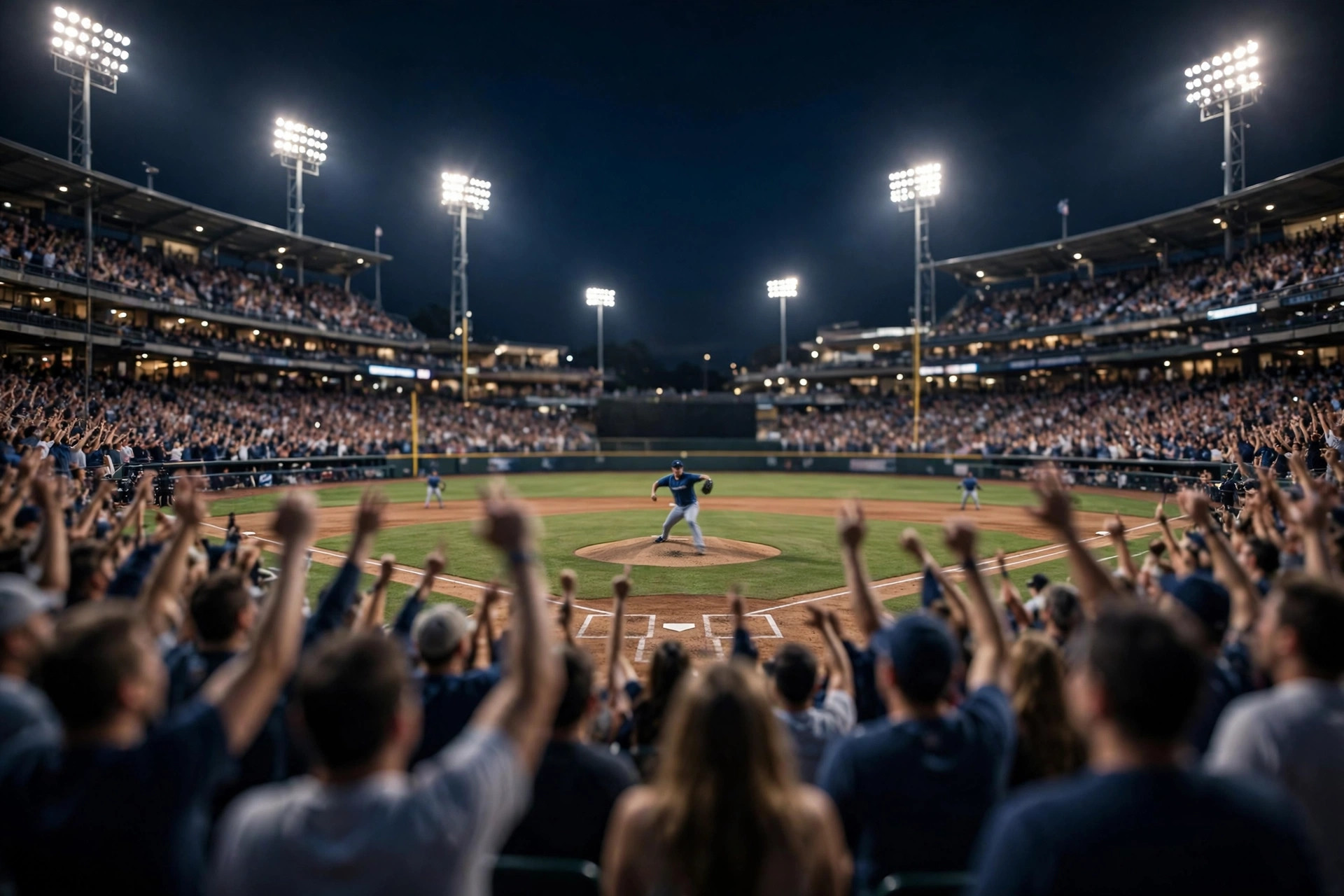
World Series Game 2 2026 arrives with the Milwaukee Brewers holding a 1-0 lead over the Tampa Bay Rays after a 3-2 victory in Game 1 in Milwaukee on 23 October. Game 2 is scheduled for Saturday, 24 October at 8pm Eastern Time at American Family Field in Milwaukee, which is Sunday, 25 October at 11am Australian Eastern Daylight Time for viewers in Australia. This article is a preview: because Game 2 was played late on 24 October in United States time, no Game 2 score is invented or reported here. Instead, it explains how Game 1 was won, why the pitching matchup matters, what each team needs to do next, and how the rest of the best-of-seven series is structured. For both teams, the stakes are historic, because a first-time champion is guaranteed in this series.
World Series Game 2 2026: How Game 1 Set Up the Series
Game 1 ended in a 3-2 win for the Brewers in Milwaukee, giving them an early advantage in a series where home-field advantage can be significant. In a best-of-seven series, winning the first game does not guarantee the championship, but it does change the pressure on the trailing team. The Rays, now needing to win Game 2 to avoid falling behind 2-0 before the series moves to Tampa Bay, face a different kind of urgency from the Brewers, who can play Game 2 knowing that even a loss would leave the series tied as it travels south. That asymmetry often shapes managerial decisions, bullpen use and risk-taking, because the cost of losing Game 2 is higher for the team already trailing.
The 3-2 scoreline also suggests a closely contested opener rather than a one-sided game. In baseball, a one-run game can turn on a single at-bat, a defensive play, a baserunning decision or a pitching change, and Game 1 fits that pattern of a tight postseason contest. For fans, a close opener raises expectations for Game 2: if the teams are evenly matched, the pitching matchup and small tactical details may matter more than raw power or star names. For the Brewers, the Game 1 win also extends the feel-good story of a team reaching the World Series and winning at home in front of its own supporters. For the Rays, the task is to reset quickly, a skill that postseason teams need because a series can change direction in a single game.
World Series Game 2 2026 Pitching Matchup: Henderson vs Rasmussen
The headline matchup for Game 2 pits Brewers rookie right-hander Logan Henderson against Rays right-hander Drew Rasmussen. Henderson's regular-season record was 11 wins and 3 losses with a 2.47 earned run average, striking out 110 batters in 98.1 innings. The Brewers won 21 of his starts while losing only 4, and he was 8-0 at home, never having lost a start at American Family Field. Those numbers describe a pitcher who has been remarkably successful in his rookie season, particularly at home, and who has given his team a strong chance to win whenever he has taken the mound. Rookie pitchers in the World Series face a unique challenge, however, because postseason pressure, national attention and the quality of opposing lineups all increase, and past regular-season success does not guarantee postseason success.
Rasmussen brings a different profile: experience, consistency and strong recent form. His regular-season record was 16 wins and 5 losses with a 2.67 earned run average. In the postseason he has been even better, going 2-0 with a 1.29 earned run average. Since the All-Star break, the Rays have won 14 of his last 15 starts, and in the second half of the season he went 11-0 with a 1.73 earned run average. Those figures suggest a pitcher in excellent form at exactly the right time of year, and a pitcher his team trusts in a must-win situation. The contrast is compelling: a rookie with a perfect home record against a veteran in outstanding second-half form, each capable of dominating a game if his command and pitch selection are sharp.
Pitching matchups in the World Series are about more than individual statistics. Managers must decide how long to leave a starter in the game, when to turn to the bullpen, how to match relievers against specific hitters, and how to handle pinch-hitters and defensive replacements in late innings. A starter who pitches deep into the game can preserve the bullpen for later games in the series, while an early exit can strain relief pitching for days. Both teams will therefore be watching pitch counts, velocity, control and the ability to escape trouble with runners on base. A single home run, a walk that leads to a rally, or a defensive error can change the game, which is why World Series games often feel tense even when the score is low.
What Each Team Needs in World Series Game 2 2026
For the Brewers, Game 2 is an opportunity to take a commanding 2-0 lead before travelling to Tampa Bay. Teams that win the first two games at home put enormous pressure on their opponents, who must then win at home simply to stay alive in the series. Milwaukee's task is to support Henderson with run production, solid defence and disciplined at-bats against Rasmussen, who has been difficult to score against in the second half. Home support at American Family Field, where Henderson has never lost a start, adds another layer to the Brewers' advantage, though home crowds cannot pitch or hit, and the Rays will be determined to spoil that record.
For the Rays, Game 2 is about levelling the series and regaining momentum. A win would make the series 1-1 as it moves to Tampa Bay for Game 3, giving the Rays home-field advantage for the next three games and a chance to take control. Rasmussen's form gives them a strong foundation, but they will also need their hitters to produce against Henderson, who has limited opponents all season. Tampa Bay's recent history in Rasmussen's starts — winning 14 of the last 15 since the All-Star break — suggests a team that plays well behind him, whether through run support, defence or bullpen performance. If the Rays can score early, they can change the dynamic of the game and force Milwaukee to chase from behind.
Why a First-Time Champion Is Guaranteed
One of the most appealing storylines of this World Series is that a first-time champion is guaranteed, whichever team wins. Neither the Brewers nor the Rays have previously won a World Series, so the 2026 champion will be a new name on the trophy. That fact adds emotional weight for both fan bases, many of whom have waited decades for a championship, and it gives neutral viewers a reason to invest in the series beyond team loyalty. First-time champions often become defining moments in a franchise's history, remembered by generations of supporters and shaping the identity of the club for years afterwards.
The guarantee of a new champion also reflects broader changes in baseball, where revenue sharing, analytics, player development and smart roster building have allowed smaller-market teams to compete with larger-market clubs. Both Milwaukee and Tampa Bay are examples of teams that have built competitive rosters through scouting, development and tactical innovation rather than through the largest payrolls in the sport. Their presence in the World Series therefore resonates beyond their own cities, as evidence that sustained success can be built in different ways. For younger fans, this series may be their first experience of a World Series involving their team, making the memories formed now particularly lasting.
World Series Game 2 2026: Schedule, Broadcast and What Happens Next
After Game 2 in Milwaukee, the series moves to Tampa Bay for Game 3 on Tuesday, 27 October. The best-of-seven format means the first team to win four games takes the championship. If the series is still undecided after the Tampa Bay games, it returns to Milwaukee for Games 6 and 7 if needed. That structure rewards consistency over a full series rather than a single hot streak, because a team must win four times against the same opponent, adjusting to different pitchers, ballparks and tactical situations along the way. Broadcast coverage in the United States is on FOX, making the games widely accessible to American viewers, while international viewers follow through local broadcast and streaming arrangements, including the Australian timing noted above.
Game 2 itself will be watched for early signs of how the series may develop. If Henderson continues his home dominance, Milwaukee's confidence will grow. If Rasmussen continues his second-half excellence, Tampa Bay will feel it has the pitching to win the series. If the game is close late, bullpen depth and managerial decisions may decide it. Whatever happens, Game 2 will not decide the championship on its own, because even a 2-0 lead can be overturned in a seven-game series, and even a 1-1 tie leaves five potential games to play. That is the enduring appeal of the World Series format: it tests teams over time, rewards adaptation, and allows for comebacks that would be impossible in a single-game final. Readers catching up on the opener can read World Series Game 1 coverage and the Brewers' 3-2 Game 1 win report.
Key Facts for Game 2
To recap the key facts for this preview: Game 1 was won by the Brewers 3-2 in Milwaukee on 23 October, giving them a 1-0 series lead. Game 2 is on Saturday, 24 October at 8pm Eastern Time at American Family Field, Milwaukee, or Sunday, 25 October at 11am Australian Eastern Daylight Time. The starters are Logan Henderson for Milwaukee, with an 11-3 record, 2.47 earned run average, 110 strikeouts in 98.1 innings, a 21-4 team record in his starts and an 8-0 home record, against Drew Rasmussen for Tampa Bay, with a 16-5 record, 2.67 earned run average, a 2-0 postseason record with a 1.29 earned run average, 14 wins in his last 15 starts since the All-Star break, and an 11-0 second-half record with a 1.73 earned run average. Game 3 is on Tuesday, 27 October in Tampa Bay. The series is best-of-seven, with Games 6 and 7 if needed back in Milwaukee, and broadcast on FOX. No Game 2 score is reported here, because this is a preview of a game played late on 24 October in United States time.