
SK Hynix Q3 profit 2026 surged to a record as demand for the memory chips that power artificial intelligence continued to outrun supply. The South Korean chipmaker reported its results for the three months from July to September 2026 on 28 October 2026, showing revenue above 100 trillion won for the first time and operating profit up 632.1% from a year earlier. The scale of the increase reflects a sharp rise in prices for advanced memory, strong sales of high-bandwidth memory used in AI accelerators, and a market in which supply is tight and customers are signing long-term deals to secure future production.
This article explains the SK Hynix Q3 profit 2026 result in plain terms. It sets out the headline numbers, how they compared with analyst expectations, what drove the growth, what the company said about supply through the end of the decade, and what the result means for the wider AI hardware market. The figures come from SK Hynix reporting and Reuters coverage in October 2026. Profit figures in won are large and can be hard to grasp, so this article keeps the focus on the changes from a year earlier, the margins involved, and the supply outlook that investors and customers are watching most closely.
SK Hynix Q3 Profit 2026: The Headline Numbers
Revenue for the third quarter of 2026 was 104.62 trillion won, up 327.9% from the same quarter a year earlier and up 31.9% from the previous quarter. It was the first quarter in which SK Hynix revenue passed 100 trillion won. Operating profit was 83.33 trillion won, up 632.1% year on year and up 37.6% quarter on quarter. The operating margin was about 80%, at 79.7%, which means that for every 100 won of revenue, about 80 won remained as operating profit before other items. That margin is unusually high for a manufacturing business and underlines how strong pricing has been for the memory products in greatest demand.
The result beat analyst expectations. The consensus compiled by FnGuide expected revenue of 98.23 trillion won and operating profit of 76.96 trillion won, while the LSEG SmartEstimate for operating profit was 76.7 trillion won. SK Hynix exceeded both revenue and operating profit forecasts by a clear margin. Net profit was 39.78 trillion won, up 215.7% from a year earlier but down about 58% from the second quarter. The fall from the second quarter does not reflect weaker core trading; the second quarter included a large non-operating gain, while the third quarter included non-operating expenses, including currency-related and investment valuation losses. The operating result is therefore the cleaner guide to the strength of the underlying memory business in the quarter.
Background: Why AI Memory Matters So Much
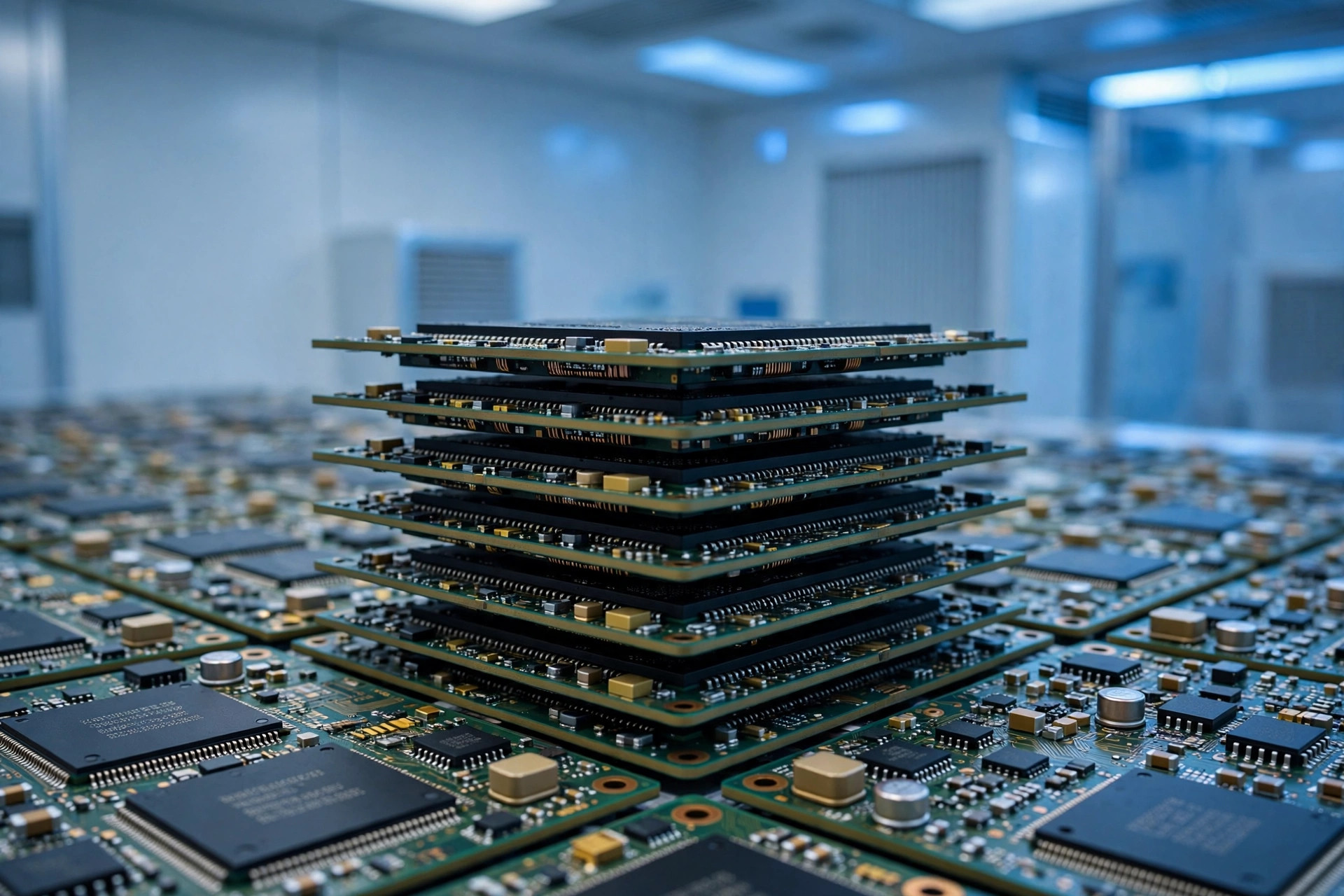
Modern AI systems need vast amounts of memory that can move data quickly between processors. High-bandwidth memory, known as HBM, is stacked memory placed close to the graphics processing units and accelerators that train and run large AI models. Without enough HBM, even the fastest processors cannot work at full speed. SK Hynix supplies HBM for Nvidia AI accelerators and holds more than half of the global HBM market, with Samsung as its main rival. That position places SK Hynix at the centre of the AI hardware supply chain, alongside chip designers, foundries and the cloud companies buying accelerators at scale.
Conventional memory also matters. Server DRAM is used in data centre servers, and NAND flash is used for storage. When AI data centres expand, demand rises for all three: HBM for accelerators, DRAM for servers, and NAND for storage. Prices for DRAM and NAND rose sharply in the third quarter, which lifted revenue and profit even before the volume of HBM shipments is considered. The combination of higher prices and higher volumes for the most advanced products is what produced a record quarter. It also explains why the company and its rivals are racing to add capacity, while still warning that supply will remain tight for years.
What Happened: HBM4, DRAM Prices and Strong Demand
Several drivers came together in the third quarter. Shipments of HBM4, the latest generation of high-bandwidth memory, were ramping up. Sales of server DDR5 memory rose by more than 40% from the previous quarter. DRAM prices rose by a high-20% percentage amount from the previous quarter, and NAND prices rose by a mid-20% percentage amount. Those price rises were not small adjustments; they were large quarterly moves that transformed revenue and profit. When prices rise that fast, the benefit flows quickly to producers that have product available to sell, which is why the operating margin reached about 80%.
The company expects HBM4 to overtake HBM3E in both shipment volume and revenue in the fourth quarter. That transition matters because it shows customers moving to the newer, higher-performance product as AI accelerators advance. Long-term supply deals are also shaping the outlook. SK Hynix has signed long-term supply agreements with 14 major customers that cover more than half of its planned production for 2027 and 2028. Deals of that kind give customers confidence that they will receive memory, and give SK Hynix visibility over future sales. They also signal that buyers expect tight supply to continue and are willing to commit early rather than risk shortages later. Readers following the wider AI market can see the demand context in Microsoft and Alphabet earnings in October 2026, in the Anthropic IPO story, and in the launch of Gemini 4 Argon, all of which reflect heavy investment in AI systems that depend on advanced memory.
Why the SK Hynix Q3 Profit 2026 Result Matters
The SK Hynix Q3 profit 2026 result matters for three reasons. First, it confirms that the AI memory boom is not only a story about chip designers and cloud companies. Memory suppliers are capturing a large share of the value created by AI infrastructure spending, because their products are scarce and essential. Second, it shows how concentrated the supply chain has become. With SK Hynix holding more than half of the HBM market, decisions by a small number of suppliers can affect the pace at which AI systems can be built. Third, it raises questions about costs for everyone else. If memory prices stay high, data centre operators, device makers and ultimately consumers may face higher costs for servers, phones, computers and cloud services.
Shares in SK Hynix rose by more than 10% in Seoul after the results, reflecting investor enthusiasm for the record quarter and the supply outlook. A share price move on one day does not prove a long-term trend, but it shows how the market read the numbers: strong current profit, plus a shortage expected to last for years, plus long-term customer commitments. That combination is attractive to investors, even though chip markets have historically moved in cycles and today's shortage can become tomorrow's surplus if capacity grows faster than demand.
Key Facts: Revenue, Profit and the Shortage Outlook
The following points summarise the verified figures and statements from the third-quarter report and related coverage.
- Third quarter 2026, July to September, reported 28 October 2026: revenue 104.62 trillion won, up 327.9% year on year and 31.9% quarter on quarter, the first quarter above 100 trillion won.
- Operating profit 83.33 trillion won, up 632.1% year on year and 37.6% quarter on quarter, with an operating margin of about 80%, at 79.7%.
- Result beat consensus: FnGuide expected 98.23 trillion won revenue and 76.96 trillion won operating profit; LSEG SmartEstimate expected 76.7 trillion won operating profit.
- Net profit 39.78 trillion won, up 215.7% year on year but down about 58% from the second quarter, which had included a large non-operating gain, while the third quarter included non-operating expenses.
- Drivers: HBM4 shipments ramping, server DDR5 sales up over 40% quarter on quarter, DRAM prices up high-20% quarter on quarter, NAND prices up mid-20%.
- HBM4 is expected to overtake HBM3E in shipment volume and revenue in the fourth quarter of 2026.
- Long-term deals with 14 major customers cover over half of planned 2027 to 2028 production; DRAM and HBM volumes are effectively sold out through 2029.
- Company expects the memory supply shortage to last through 2030, and plans shareholder returns of about 100 trillion won, about 75.4 billion dollars, for 2026 including dividends and buybacks and cancellations.
What Happens Next: Shortages, Capacity and the Sixth Record Quarter
Looking ahead, SK Hynix expects the memory supply shortage to last through 2030. That is a long horizon, and it suggests that even with new capacity, demand from AI is expected to keep pace or stay ahead. The company says DRAM and HBM volumes are effectively sold out through 2029, which means customers have already committed to much of what will be produced over the next three years. If demand grows faster than expected, prices could stay high or rise further. If demand slows or capacity grows faster, the shortage could ease sooner, but the company's own planning assumes tight conditions for several years.
The third quarter was reported as the sixth straight record quarter in terms of the record revenue and profit run, a reminder that this boom has been building for some time rather than appearing suddenly. The key questions for the next quarters are whether HBM4 volumes continue to ramp as expected, whether DRAM and NAND prices stay firm, whether long-term deals continue to cover a large share of future production, and whether rivals add enough capacity to change the balance. For now, the SK Hynix Q3 profit 2026 result stands as the clearest sign yet of how profitable the AI memory market has become, and how central memory supply is to the next stage of artificial intelligence development.
Sources: Reuters, SK Hynix, October 2026.