
Monaco Grand Prix guide explained: how the season works
This Monaco Grand Prix guide explains why a 3.337-kilometre street circuit through Monte Carlo remains Formula 1's most famous race, even though overtaking is rarer here than anywhere else on the calendar. The race has run on these streets since 1929 and has been part of the Formula 1 World Championship since 1950, and winning in Monaco still means more to drivers than winning almost anywhere else. This Monaco Grand Prix guide covers the circuit, the history, the best viewing spots, and the practical planning that turns a notoriously expensive weekend into a manageable one.
The simplest way to use Monaco Grand Prix guide is to separate three questions that fans often mix up: what is coming next, what has just finished, and where a team stands overall. Fixtures answer the first question, results answer the second, and the table answers the third. When you check Monaco Grand Prix guide on a Monday morning, start with the results, then look at the next round, and only then judge the table. A single weekend can change the mood around a club completely, but it rarely changes the whole season, so reading Monaco Grand Prix guide in that order keeps one surprising scoreline in proportion.
Monaco Grand Prix circuit: corners that decide the race
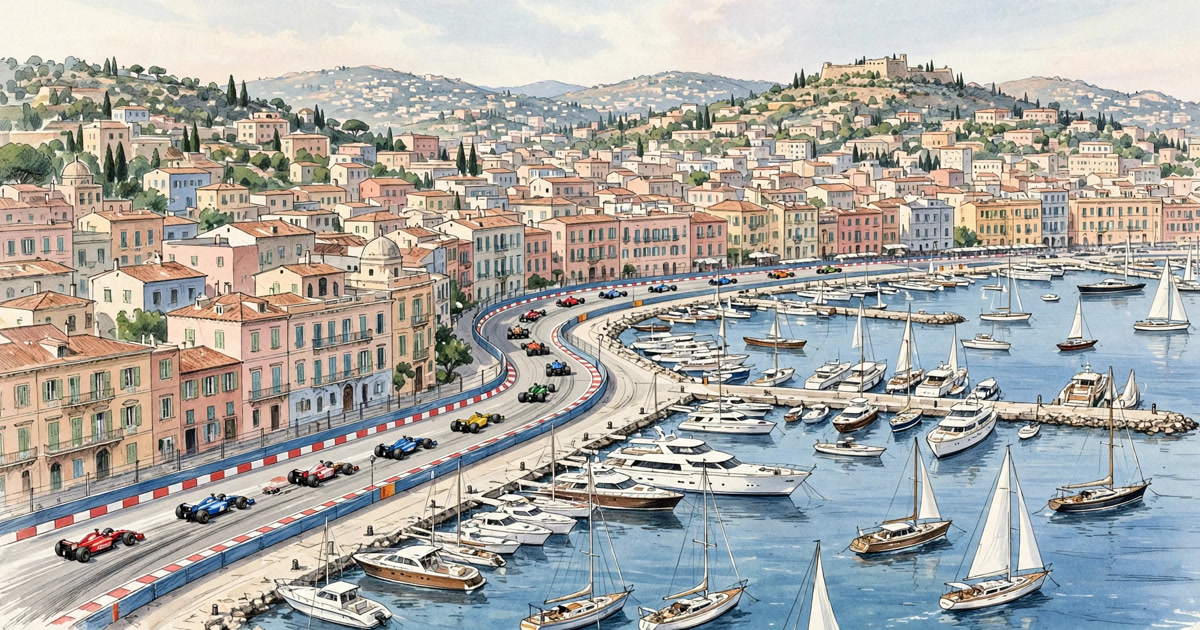
The circuit is a lap of Monaco itself: Sainte-Devote at the start, up the hill to Casino Square, down through Mirabeau to the Fairmont Hairpin, the slowest corner in Formula 1, then through the tunnel, past the harbour, and around the Piscine swimming-pool complex to La Rascasse and the final corner, Antony Noghes. There are 19 corners, no room for error, and barriers instead of run-off areas, which means qualifying matters more here than at any other race. The driver on pole has a huge advantage, because passing on race day requires either a mistake ahead or a bold move into a gap that barely exists.
History hangs over every corner. Ayrton Senna won in Monaco six times, more than anyone else, and his mastery of the barriers remains the standard for street-circuit driving. Graham Hill, Michael Schumacher, and Lewis Hamilton all built parts of their legends here, while Charles Leclerc, who grew up in Monaco within walking distance of the track, finally won his home race after years of heartbreak. The race is also part of motorsport's Triple Crown, alongside the Indianapolis 500 and the Le Mans 24 Hours, which is why a Monaco win carries prestige far beyond championship points.
How to follow Monaco Grand Prix guide all season
Most leagues publish fixtures in rounds or matchdays, and the same round is often spread over several days, from Friday evening to Monday night. That spread is deliberate: broadcasters want separate television slots, and clubs need recovery time between league games and cup or European ties. When you follow Monaco Grand Prix guide, always note the kick-off time in your own time zone as well as the local time, because a game listed for the evening in Monaco may start in the afternoon or the early hours where you live. Fixture dates can also move at short notice for television, weather, or a clash with another competition, so check again in the week of the match before you book travel.
If you are planning to watch in person, treat the fixture list as a starting point, not a promise. Buy tickets only through a club's official channels or a seller the club names, keep your booking confirmation, and arrive early for big games, when security checks and queues are longest. For away trips, plan transport that does not depend on a single late train or bus, and check whether the stadium area has restrictions on bags, flags, or cameras. Our budget travel tips can help you keep an away weekend affordable, and what travel insurance covers explains the cover worth considering before you travel.
Monaco Grand Prix tickets, transport, and planning tips
Planning a Monaco Grand Prix weekend starts with transport and tickets. The Monaco-Monte Carlo station is minutes from the start-finish straight, with frequent trains from Nice in about twenty minutes, and public transport is strongly recommended because roads close for the race. Grandstand choice matters enormously: harbour-front stands give views of the Piscine and the yachts, the hill above the palace offers a cheaper general view, and hospitality terraces and yachts provide the glamour at a very high price. Book accommodation months ahead, consider staying in Nice or Cap-d'Ail, and budget for food and drink, because Monaco prices during race week are the highest on the Formula 1 calendar. Monaco's motorsport story does not end with Formula 1: the Rallye Monte-Carlo, traditionally the opening round of the World Rally Championship in January, sends cars over mountain passes above the principality, where drivers can meet dry asphalt, ice, and snow on a single stage. That rally, first run in 1911, is the oldest event of its kind and rewards tyre choice and local knowledge as much as outright speed, and its ceremonial finish in Monaco gives rally fans a second, very different reason to visit the principality.
The most common mistake when following Monaco Grand Prix guide is to read too much into one result. A heavy defeat in autumn does not end a title race, and a winning run in spring does not guarantee a trophy. Form, injuries, suspensions, and the difficulty of the remaining fixtures all matter more than any single scoreline. A better habit is to compare a team's last five results with its next five fixtures, and to watch how it performs against direct rivals rather than only against the teams at the bottom. That simple comparison turns Monaco Grand Prix guide from a list of scores into a story you can actually follow week after week.
Tables also deserve a careful reading when you follow Monaco Grand Prix guide. Three points for a win and one for a draw is the standard system, but tie-breakers differ: some leagues use goal difference first, others use head-to-head results, and a few use a combination that changes with the phase of the season. That is why two clubs can sit level on points yet occupy different positions, and why a team that looks safe in tenth can still be dragged into trouble if its rivals hold the head-to-head advantage. Check the league's tie-breaker rules once, and you will never again be confused by a table that seems to contradict the results. Finally, remember that Monaco Grand Prix guide are a guide to a living competition, not a prediction: injuries, transfers, managerial changes, and cup runs rewrite the story every month, which is exactly why following a full season is more rewarding than following a single weekend.
A final habit will make following Monaco Grand Prix guide far more enjoyable: keep a simple season note for your own club or favourite team, recording each result, the scorers you remember, and one sentence about how the game felt. After a month, that note becomes a personal history of the season, far richer than any table, and it helps you spot patterns, such as a team that always concedes late or always starts slowly after an international break. Share that note with friends, compare predictions before each round, and let the season become a shared story rather than a stream of isolated scores. That is, in the end, what following Monaco Grand Prix guide is really for.