
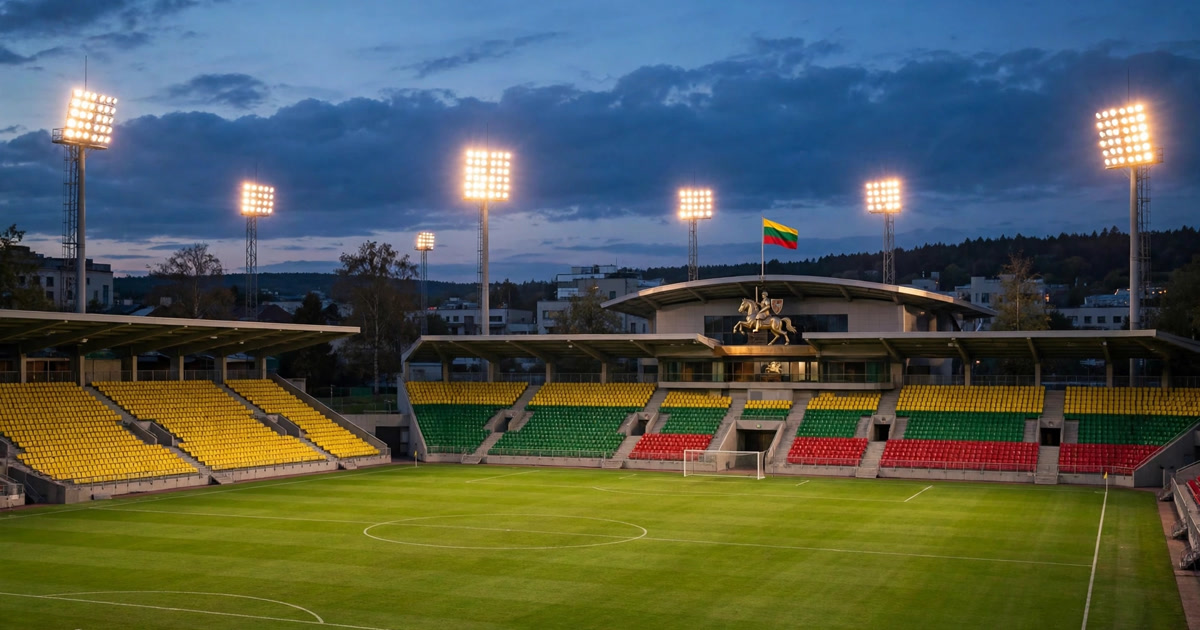
Lithuanian football centres on the A Lyga, a summer-season league dominated in recent years by Žalgiris Vilnius, with Sūduva Marijampolė and other clubs challenging. The Lithuania football league offers a compact, passionate scene in a basketball-mad country.
This guide explains the Lithuania football league: its format, main clubs, national-team links, European stakes and how to follow results. It suits fans of Baltic football and newcomers to the Lithuanian game.
A Lyga Format
The Lithuania football league plays a calendar-year season, roughly March to November, with 10 clubs playing multiple rounds. The summer season avoids harsh winters and produces a long title race with frequent meetings between rivals.
Points decide the title, European places and relegation, with the bottom club relegated and promotion from the I Lyga. Lithuania football league results thus matter from spring openers to November finales.
Žalgiris Vilnius and the Title Race
Žalgiris Vilnius dominates recent Lithuania football league history, with the capital club, named after the medieval Battle of Grunwald, winning multiple titles and reaching European group stages. Based at LFF Stadium, Žalgiris sets the league's standard.
Challengers include Sūduva Marijampolė, a former champion with strong organisation, plus Kauno Žalgiris, Panevėžys and Hegelmann, each bringing regional support. Results against Žalgiris often decide whether the title race stays competitive.
Other Clubs and Regional Football
Lithuania football league clubs also include Riteriai Vilnius, Džiugas Telšiai, Banga Gargždai and TransINVEST, reflecting Vilnius, Kaunas, Klaipėda and smaller towns. Regional identities matter, with Samogitian, Aukštaitian and coastal support distinct.
Smaller clubs rely on academies, foreign signings and cup runs, and their upsets against Žalgiris produce the league's memorable moments. Following these clubs reveals Lithuanian football's breadth beyond the capital.
National Team and European Links
Lithuania football league form feeds the national team, which plays at Darius and Girėnas Stadium in Kaunas and LFF Stadium in Vilnius, seeking a first major-tournament qualification. Domestic players mix with foreign-based professionals in national squads.
European places include Champions League qualifying for champions and Conference League qualifying for cup winners and top clubs. Coefficient points from these runs affect future paths, making European results nationally important.
How to Follow Lithuania Football League Results
Reliable Lithuania football league results come from LFF channels, club sites and sports apps, with fixtures, live scores, tables and scorers in Lithuanian and English. Summer-season evening matches suit long daylight and family attendance.
For matchdays, Vilnius and Kaunas games are accessible by public transport, with affordable tickets. A beginners guide to running habit keeps fans active, while travel on a budget tips help with away trips across Lithuania's compact league map.
Lithuanian Football Academies
Lithuanian football academies, especially Žalgiris's, develop players through youth leagues, school partnerships and coaching education, feeding domestic clubs and foreign moves. Academy success sustains the league despite basketball's dominance.
Young Lithuanians move to Scandinavian, Polish and other European clubs, returning stronger for national duty. Following academy prospects gives fans early insight into future league and national-team stars.
Futsal and Women's Football
Futsal in Lithuania grows through indoor leagues and national-team programmes, suiting winter months, while women's football expands with clubs such as Gintra Universitetas, a regular Women's Champions League participant.
Both formats broaden Lithuanian football participation and offer pathways beyond men's outdoor football. Fans following futsal and women's results gain a fuller picture of the sport's Lithuanian footprint.
Stadiums and Matchday Culture
Lithuanian stadiums include LFF Stadium in Vilnius, Darius and Girėnas Stadium in Kaunas, and smaller grounds in Marijampolė, Panevėžys and Telšiai, with family sections and affordable tickets. Matchdays are relaxed and community-focused.
Supporters' groups, flags and songs add atmosphere, especially for Žalgiris-Sūduva clashes and cup finals. Visiting an A Lyga ground offers an authentic, low-cost football experience in a basketball-mad country.
Lithuanian Players Abroad
Lithuanian players abroad compete in Poland, Scandinavia, Italy and beyond, raising national-team levels and inspiring young players. Foreign experience brings tactical, physical and professional development that domestic football alone cannot offer.
Tracking Lithuanians abroad helps fans understand national-team selection, since club form in stronger leagues weighs heavily. Domestic results remain the foundation, but exports show Lithuanian football's reach.
Lithuania Football League: Key Fixtures Guide
Key fixtures in the Lithuania football league include Žalgiris-Sūduva clashes, Vilnius-Kaunas derbies and late-season title deciders, where results swing championships. Mark derby dates early for the largest crowds.
The Lithuania football league calendar also features cup finals and European qualifying draws shaping club seasons. Following key fixtures reveals the league's narrative beyond weekly tables.
Lithuania Football League: Season Preview Habits
Season previews for the Lithuania football league should track transfers, managerial changes, academy promotions and European draws, since small squads change quickly. Pre-season friendlies and cup results hint at form.
The Lithuania football league rewards followers who learn squads and stories, not just tables. Read previews, watch opening rounds, and adjust expectations as the summer season unfolds.
Football Versus Basketball Culture
Football in Lithuania lives in basketball's shadow, yet it holds loyal support through club communities, ultras groups and national-team pride, with football fans celebrating their sport's distinct identity. Derbies and European nights draw passionate crowds.
The two sports coexist, with many athletes playing both as children and fans following both nationally. Football's growth depends on youth investment, facilities and media coverage, all improving steadily despite basketball's dominance.
Youth Leagues and School Football
Youth leagues and school football in Lithuania feed the A Lyga through age-group competitions, school tournaments and academy pathways, emphasising participation and fundamentals alongside elite development for talented players.
County competitions and school festivals introduce children to organised football, while academies identify prospects for professional clubs. This broad base sustains Lithuanian football's future despite basketball's greater popularity.
Lithuanian football offers a summer-season league with a dominant champion and ambitious challengers. Follow Žalgiris, watch Sūduva, and the A Lyga story becomes clear.
Sources: Lithuanian Football Federation (LFF); A Lyga official data.