
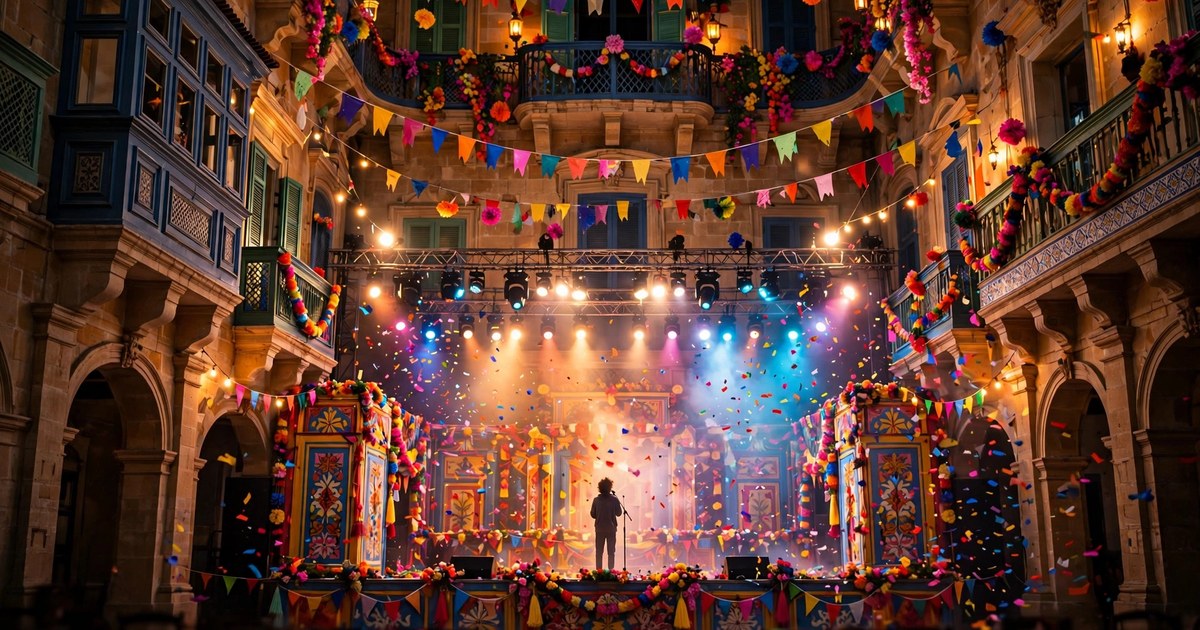
Junior Eurovision 2026 takes centre stage tonight, Saturday 24 October, as 16 countries compete in the Grand Final live from the Malta Fairs & Conventions Centre (MFCC) in Ta' Qali, Malta. The show begins at 21:00 CEST (Central European Summer Time), and the winner will be decided by a 50/50 split between professional juries and an online public vote.
The 2026 contest is the 24th edition of Junior Eurovision, and it marks the event's return to Malta for the first time since 2016. Hosted by Malta's public broadcaster PBS, it is the third time the island nation has staged the contest, having previously hosted in 2014 and 2016.
Junior Eurovision 2026: When and Where Is the Final?
The Junior Eurovision 2026 final takes place on Saturday, 24 October 2026, at 21:00 CEST, live from the MFCC in Ta' Qali. For viewers converting the time: that is 20:00 BST in the United Kingdom and Ireland, and 12:00 noon PDT / 3:00 PM EDT in North America. The show is broadcast by participating broadcasters and streamed via the contest's official platforms, with the live final following a jury show held on Friday, 23 October.
The hosts for the evening are Gaia Cauchi, Destiny and Keane Cutajar. Cauchi won Junior Eurovision for Malta in 2013, while Destiny represented Malta at the adult Eurovision Song Contest — a hosting line-up that deliberately connects the contest's past and present.
Junior Eurovision 2026 Running Order: All 16 Countries
Sixteen countries will perform in the Junior Eurovision 2026 final, in the following running order:
1. Netherlands — Maria, "Stronger Together" (opens the show)
2. Cyprus — Harry Georgiou, "Who I Can Be"
3. Portugal — Salvador Rio, "Alma"
4. Montenegro — Mija Vujović, "Muzika Nas Spaja"
5. San Marino — Violamarie, "Ruota Panoramica"
6. France — Alec, "Comment Tu Vas ?"
7. Poland — Wiktor Sas, "Gravity"
8. Armenia — Naré, "BOO!"
9. Malta — Beppe, "Blue Bird" (the host entry)
10. Italy — Matteo Trullu, "Che Cos'è l'Amore?"
11. Ukraine — Erika Kolesnichenko, "NOT A LULLABY"
12. North Macedonia — Ana Stojanoska, "Idnata Jas"
13. Ireland — Caleb Kirwan & Naomi Gribben, "Níos láidre"
14. Albania — Eslin Kurti, "Kërce Me Mua"
15. Georgia — Davit Lomidze, "Sun on the Rooftops"
16. Spain — Lucas Paulano, "Cuore Bello (Te Quiero, Te Quiero)" (closes the show)
The Netherlands' Maria opens the night, while Spain's Lucas Paulano has the coveted closing slot — traditionally a strong position in Eurovision voting, since the last performance is freshest in viewers' minds. Hosts Malta perform ninth, right in the middle of the show, with 11-year-old Beppe performing "Blue Bird" alongside five dancers and a large aeroplane prop.
Junior Eurovision 2026: The Malta Stage and Festa Theme
This year's stage, designed by Gio Forma, takes its inspiration from the Maltese "festa" — the village feast tradition at the heart of Maltese community life. The design features a central performance area surrounded by architectural elements evoking Maltese streetscapes, with colourful facades and traditional balconies framing the performers.
Rehearsal footage released during the week showed how differently each delegation has used that stage. Armenia's Naré leans into a maximalist, kitsch-inspired look for "BOO!", while other acts have kept the focus on the singer and the emotional character of the song. Malta's own staging, with its aeroplane prop and five dancers, promises one of the night's most visually playful moments.
Junior Eurovision 2026: How Voting Works
The Junior Eurovision 2026 result is decided equally by two halves: professional juries from the 16 participating countries (50%) and an online public vote (50%). The jury show took place on Friday, 23 October, with juries awarding their points in advance.
Online voting opened at 23:59 CET on Friday, 23 October, on the official platform JESC.tv, based on rehearsal performance clips. The first round of voting closes at 20:59 CET on Saturday, 24 October — one minute before the live show begins. After all 16 performances, voting reopens for approximately 15 minutes, giving viewers a final chance to pick their three favourite songs after watching the live show. Viewers can vote for their own country — a rule that differs from the adult Eurovision Song Contest.
Junior Eurovision 2026: Who Are the Favourites?
With juries having already cast half the vote and the online vote split across two rounds, picking a winner before the show is genuinely difficult — and this preview deliberately makes no prediction. What can be said is that the field is unusually open: France and Poland have strong recent Junior Eurovision records, Georgia is traditionally one of the contest's most successful countries, and host entries often benefit from home-crowd energy. Ireland's first-ever duo, Caleb Kirwan and Naomi Gribben, arrive with a compelling story after both winning their national final, while Ukraine's Erika Kolesnichenko and Armenia's Naré bring two of the most distinctive songs of the night.
Beyond the trophy, Junior Eurovision remains one of the world's biggest showcases for young performers, watched by millions of families across Europe and beyond. For many of tonight's singers, aged between 9 and 14, it will be the largest audience of their lives so far — and the contest's emphasis on celebration over controversy is a large part of its enduring appeal. Fans of big live entertainment nights may also enjoy following the Ballon d'Or 2026 ceremony preview, while the contest's family-friendly spectacle sits in a different world from the year's more dramatic celebrity stories, such as the H3 podcast hiatus.
Whatever the result, tonight's Junior Eurovision 2026 final promises colour, energy and 16 young voices competing for one trophy in Ta' Qali. Tune in at 21:00 CEST — and remember the second voting window opens for just 15 minutes after the last song.
Junior Eurovision 2026: What Happens After the Final?
Once the votes are counted, the winning artist will be crowned on stage in Ta' Qali and the trophy presented in front of the live audience and millions watching at home. Traditionally, the winning broadcaster is then invited to host the following year's contest, although the European Broadcasting Union confirms the next host country separately after discussions with the winner's broadcaster. That means tonight's result does more than decide a song contest: it also shapes where Junior Eurovision heads in 2027.
For families watching together, the final is also a chance to discover new music from across Europe in a single evening — from ballads to upbeat pop, in more than a dozen languages. The contest's official channels will publish the full results, the winning performance and highlights shortly after the show, so even viewers who miss the live broadcast can catch up on the night's biggest moments.
Sources: European Broadcasting Union (EBU); Eurovisionfun; ESCToday; Eurovoix.