
Hungary football national team explained: how the season works
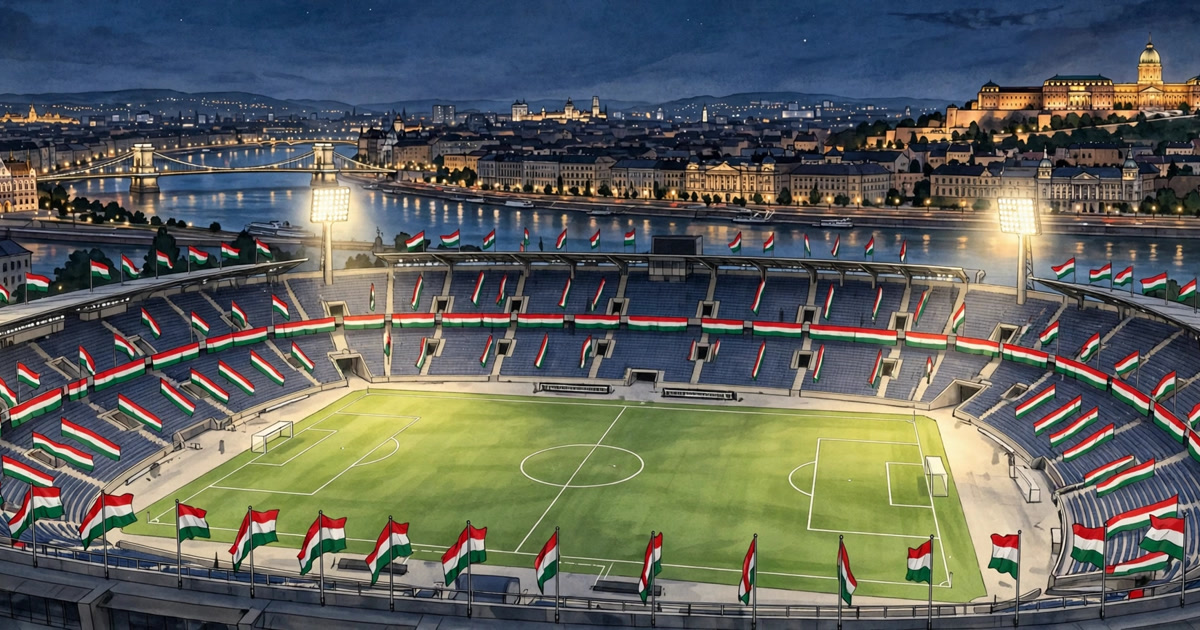
The Hungary football national team carries one of the great histories in world football, and its modern revival has made Hungarian football essential viewing again. The Magical Magyars of the 1950s, built around Ferenc Puskas, changed how the game was played, and today's team, playing at the Puskas Arena in Budapest, has returned Hungary to major tournaments. This guide to the Hungary football national team explains that history, the domestic NB I league, and how to follow both.
The simplest way to use Hungary football national team is to separate three questions that fans often mix up: what is coming next, what has just finished, and where a team stands overall. Fixtures answer the first question, results answer the second, and the table answers the third. When you check Hungary football national team on a Monday morning, start with the results, then look at the next round, and only then judge the table. A single weekend can change the mood around a club completely, but it rarely changes the whole season, so reading Hungary football national team in that order keeps one surprising scoreline in proportion.
Hungarian clubs to know, from Ferencvaros to Ujpest
Ferencvaros are the dominant club in modern Hungarian football, regularly winning the NB I and competing in European group stages, while Ujpest, MTK, Honved, and Debrecen carry the other great traditions. The Budapest derby between Ferencvaros and Ujpest remains the biggest domestic fixture, and the atmosphere at the Groupama Arena for a big European night shows how far Hungarian club football has come. The NB I features 12 clubs playing each other three times, giving every team 33 league games.
Internationally, Hungary's story has two chapters. The first is the Golden Team of the early 1950s, which beat England 6-3 at Wembley and 7-1 in Budapest and reached the 1954 World Cup final, revolutionising tactics with a deep-lying centre-forward and fluid movement. The second is the modern revival, built on a strong domestic core, a clear tactical identity under long-serving coaching, and home support at the Puskas Arena that has turned Budapest into a difficult away trip for any European side.
How to follow Hungary football national team all season
Most leagues publish fixtures in rounds or matchdays, and the same round is often spread over several days, from Friday evening to Monday night. That spread is deliberate: broadcasters want separate television slots, and clubs need recovery time between league games and cup or European ties. When you follow Hungary football national team, always note the kick-off time in your own time zone as well as the local time, because a game listed for the evening in Hungary may start in the afternoon or the early hours where you live. Fixture dates can also move at short notice for television, weather, or a clash with another competition, so check again in the week of the match before you book travel.
If you are planning to watch in person, treat the fixture list as a starting point, not a promise. Buy tickets only through a club's official channels or a seller the club names, keep your booking confirmation, and arrive early for big games, when security checks and queues are longest. For away trips, plan transport that does not depend on a single late train or bus, and check whether the stadium area has restrictions on bags, flags, or cameras. Our budget travel tips can help you keep an away weekend affordable, and what travel insurance covers explains the cover worth considering before you travel.
Following Hungary: NB I, qualifiers, and Budapest derbies
For new supporters, the qualifying cycles are the best way in. Hungary's European Championship and World Cup qualifiers are usually tight, dramatic, and decided by fine margins, because the team is strong enough to beat anyone at home and vulnerable enough to drop points away. Watch how Hungary performs against the group's favourite and against its direct rival for second place: those four games, home and away, almost always decide whether the campaign ends in qualification or disappointment.
The most common mistake when following Hungary football national team is to read too much into one result. A heavy defeat in autumn does not end a title race, and a winning run in spring does not guarantee a trophy. Form, injuries, suspensions, and the difficulty of the remaining fixtures all matter more than any single scoreline. A better habit is to compare a team's last five results with its next five fixtures, and to watch how it performs against direct rivals rather than only against the teams at the bottom. That simple comparison turns Hungary football national team from a list of scores into a story you can actually follow week after week.
Tables also deserve a careful reading when you follow Hungary football national team. Three points for a win and one for a draw is the standard system, but tie-breakers differ: some leagues use goal difference first, others use head-to-head results, and a few use a combination that changes with the phase of the season. That is why two clubs can sit level on points yet occupy different positions, and why a team that looks safe in tenth can still be dragged into trouble if its rivals hold the head-to-head advantage. Check the league's tie-breaker rules once, and you will never again be confused by a table that seems to contradict the results. Finally, remember that Hungary football national team are a guide to a living competition, not a prediction: injuries, transfers, managerial changes, and cup runs rewrite the story every month, which is exactly why following a full season is more rewarding than following a single weekend.
A final habit will make following Hungary football national team far more enjoyable: keep a simple season note for your own club or favourite team, recording each result, the scorers you remember, and one sentence about how the game felt. After a month, that note becomes a personal history of the season, far richer than any table, and it helps you spot patterns, such as a team that always concedes late or always starts slowly after an international break. Share that note with friends, compare predictions before each round, and let the season become a shared story rather than a stream of isolated scores. That is, in the end, what following Hungary football national team is really for.