
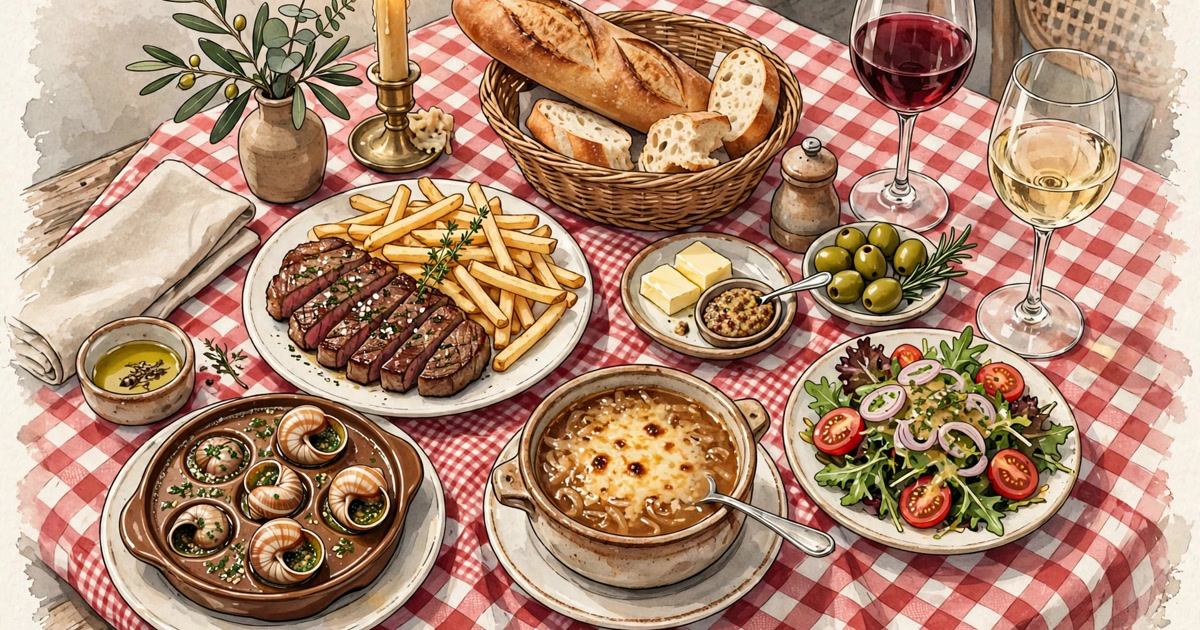
French Recipes and Restaurants: Two Sides of One Culture
French recipes and restaurants belong together, because French home cooking and French restaurant cooking grew from the same techniques: stocks, sauces, slow braising, and respect for seasonal produce. A home cook who learns to make a proper stock, to deglaze a pan, and to season gradually has learned the foundations of both a weeknight dinner and a bistro classic. Restaurants, in turn, preserve regional dishes and techniques that home cooks then adapt, so the two traditions feed each other constantly.
This guide covers both sides. First, the classic dishes any home cook can learn, then the restaurant landscape, from bistros and brasseries to fine dining, and finally the practical etiquette that makes eating out in France enjoyable rather than intimidating. Whether you cook at home or travel to France to eat, the same principles apply: good ingredients, careful technique, and time taken over the meal itself.
Classic French Recipes to Learn at Home
Start with dishes that teach technique while tasting wonderful. Ratatouille, a Provençal vegetable stew of aubergine, courgette, peppers and tomatoes, teaches knife work and gentle simmering. Boeuf bourguignon, beef braised slowly in red wine with mushrooms and onions, teaches browning, braising and patience, and tastes even better the next day. A simple vinaigrette, a roast chicken with pan juices, and a chocolate mousse complete a repertoire that covers vegetables, meat, salad and dessert.
French recipes and restaurants share a love of sauces, but home sauces need not be intimidating. A pan sauce made by deglazing with wine or stock after searing meat, finished with butter and herbs, transforms a simple chop or chicken breast. Learn one mother sauce, such as bechamel for gratins, and you have a base for dozens of dishes. Keep good butter, Dijon mustard, fresh herbs, garlic and shallots on hand, and French cooking becomes a matter of assembly rather than shopping expeditions.
The French Restaurant Landscape: Bistros, Brasseries and More
French restaurants come in distinct types, and knowing them helps you choose well. A bistro is small, informal and often family-run, with a short menu of classics written on a blackboard. A brasserie is larger, livelier and open long hours, serving Alsatian-inspired dishes, seafood platters and brasserie staples. A restaurant gastronomique offers fine dining with tasting menus, while auberges and fermes-auberges in the countryside serve hearty regional food in rural settings.
Menus follow patterns worth learning: a formule or menu du jour at lunch offers two or three courses at a set price and is usually the best value in the house. A la carte lets you choose freely but costs more. Water is normally served as a carafe d'eau on request, bread is complimentary, and service is included in French prices, though leaving small change is appreciated. Lunch service typically runs from noon to 2pm and dinner from 7pm, with many kitchens closed between services, so plan around those hours, and our guide to travelling on a budget can help you find good-value lunch menus.
Regional Food Across France
French recipes and restaurants vary dramatically by region, and travelling through France is partly a food journey. Brittany offers crepes, galettes and seafood, Normandy gives butter, cream, apples and Camembert, Provence brings olive oil, tomatoes, herbs and bouillabaisse, and Alsace contributes choucroute, tarte flambee and Riesling wines. The south-west is known for duck confit and cassoulet, Lyon for its bouchons serving pork and offal specialities, and Burgundy for beef, snails and mustard.
When travelling, eat regionally: order the local speciality, drink the local wine, and ask staff what is in season. Markets are the best introduction to a region's food, offering cheese, charcuterie, bread and produce to taste and buy, and many towns hold a weekly market that doubles as a social event. Regional eating is also usually cheaper than ordering international dishes far from their home, and it supports the producers who keep these traditions alive.
Eating Out in France: Etiquette and Practical Tips
French restaurant etiquette is simpler than its reputation suggests. Greet staff with bonjour on arrival, wait to be seated rather than choosing a table in formal restaurants, and keep hands visible on the table, with wrists resting lightly, rather than in your lap. Bread goes on the table or a side plate, not on your main plate, and cheese is eaten with bread, not crackers, in most settings.
Book ahead for popular restaurants, especially at weekends, and arrive on time, since French kitchens run to a schedule. Tipping is not obligatory, since service is included, but rounding up or leaving a few euros for good service is customary. If you have dietary requirements, state them clearly when booking, since French kitchens can adapt but prefer advance notice. With those basics, French recipes and restaurants become accessible pleasures, and checking what travel insurance covers is the only extra step before a food-focused trip.
Making the Most of French recipes and restaurants
The practical lesson of this guide is simple: use the official French recipes and restaurants sources first, note what applies to your own circumstances in France, and double-check dates, eligibility and costs before you commit to anything connected with food: recipes and restaurants. Small checks at the start prevent the most common problems, from missed deadlines to wrong assumptions about what a service covers.
Save this guide, set reminders for any deadlines it mentions, and return to French recipes and restaurants whenever your situation changes, since a new job, move, or family change can alter what applies to you. Shared with family or colleagues who face the same questions, French recipes and restaurants advice becomes easier to follow, and you will find that the system, once understood, is far more navigable than it first appears.
It also helps to keep a short personal note alongside this guide: the dates you applied, the offices you contacted, the reference numbers you were given, and the outcomes, since that record answers most follow-up questions without a fresh search. Official guidance on French recipes and restaurants changes over time, so a dated note of what applied when you acted protects you if a rule later changes or a decision is questioned.
In the end, the goal is not to memorise every detail of food: recipes and restaurants in France, but to know where to look, whom to ask, and what to check before deciding. With official sources bookmarked, documents organised, and French recipes and restaurants revisited at the right moments, you can handle this topic with confidence, and help others do the same.