
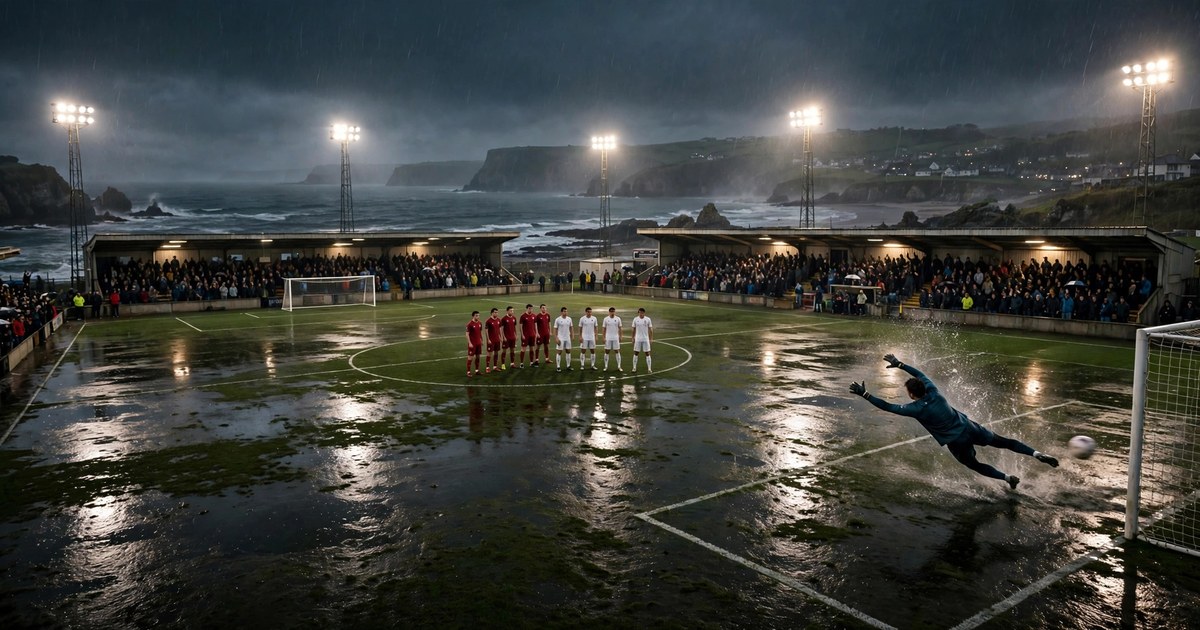
Fleetwood vs Arsenal ended in one of the great cup shocks of recent years on Tuesday, 27 October 2026, when League Two side Fleetwood Town beat Premier League champions Arsenal 5-3 on penalties after a 1-1 draw in the Carabao Cup fourth round at Highbury Stadium. The Fleetwood vs Arsenal result was trending per news coverage within hours of full time, topping Google Trends searches in the United States as supporters, neutrals and pundits tried to make sense of how a team sitting 18th in the fourth tier had knocked out the champions of England.
It was the first-ever meeting between the two clubs, and it finished as the greatest win in Fleetwood Town's history. Aaron Loupalo-Bi gave the hosts a shock 21st-minute lead, Viktor Gyokeres equalised for Arsenal five minutes into the second half, and 16-year-old Max Dowman was sent off late on before Fleetwood held their nerve from the penalty spot. Jay Lynch saved Bruno Guimaraes' penalty and Conor Haughey scored the winning kick, sparking a pitch invasion as Fleetwood reached the Carabao Cup quarter-finals.
This article explains the Fleetwood vs Arsenal result in full: how the match unfolded, what happened in the penalty shootout, why Max Dowman was sent off, what Mikel Arteta's reaction meant, and why this Fleetwood vs Arsenal upset will be talked about alongside the most famous giant-killings in League Cup history.
Fleetwood vs Arsenal result: how a 1-1 draw became a 5-3 shootout win
The Fleetwood vs Arsenal result was 1-1 after 90 minutes, with no extra time played at this stage of the Carabao Cup. Under the competition's rules for the early rounds, a draw goes straight to a penalty shootout, and that is where Fleetwood's night became legendary. Both teams scored their first three penalties, keeping the shootout level and the tension inside Highbury Stadium at breaking point.
The decisive moment came with Arsenal's fourth kick. Fleetwood goalkeeper Jay Lynch stopped Bruno Guimaraes, the big summer signing who had come off the bench during the second half, and suddenly the League Two side had the advantage. Fleetwood converted all five of their penalties, and when Conor Haughey stepped up to take the fifth, he held his nerve to seal a 5-3 shootout win. Fans flooded onto the pitch to celebrate with the players, while Fleetwood manager Matt Lawlor was reported to have wept tears of joy at the scale of what his team had just achieved.
The statistics underline how unlikely the Fleetwood vs Arsenal result was. Arsenal had 53 per cent of possession and 26 shots to Fleetwood's three, with seven efforts on target to the hosts' two. Fleetwood, by contrast, had only two shots on target all night and scored from one of them. In a cup tie, however, efficiency and belief can matter more than dominance, and Fleetwood defended with organisation and courage for long periods before producing a perfect shootout. Corner kicks finished 5-2 in Arsenal's favour, yet the champions could not find a second goal, and in a shootout there is no second chance.
How Fleetwood vs Arsenal unfolded at Highbury Stadium
The Fleetwood vs Arsenal match began in bizarre fashion. Inside the first minute, play was stopped because of an unauthorised drone flying over Highbury Stadium, and both sets of players stood in the cold for more than eight minutes while the drone was dealt with. When play finally resumed on a windy night by the Irish Sea, it was Fleetwood who settled quicker, despite arriving at the game in 18th place in League Two after losing their previous two league matches against Exeter and Cheltenham.
Fleetwood's opener arrived in the 21st minute and exposed Arsenal's inexperience at the back. Harrison Neal hooked a ball forward and Fulham loanee Aaron Loupalo-Bi muscled his way past 17-year-old defender Marli Salmon with ease, raced into the penalty area and planted a low finish past debutant goalkeeper Illan Meslier. The home fans went wild, the Captain Pugwash theme tune reportedly blared from the speakers, and Arsenal, who had rotated heavily, looked stunned.
Only Myles Lewis-Skelly and Viktor Gyokeres had kept their places from Arsenal's previous game against Everton. Teenagers Dowman and Salmon started, 18-year-old winger Ceadach O'Neill made his debut, and Meslier was handed a debut in goal. Jurrien Timber and Kai Havertz also started, but Arsenal's passing was sloppy and their crosses were overhit as Fleetwood defended their lead. Arteta grew visibly agitated on the touchline as his side struggled for a cutting edge, and Dowman, Arsenal's brightest threat in the first half, almost set up Gyokeres for an opener with a cross the striker could not quite reach.
Arteta's answer at half-time was to bring on captain Martin Odegaard and Ben White for Salmon and Timber, and the change had an immediate effect. Odegaard took control of the game, and five minutes into the second half Gyokeres bundled home a scrappy equaliser, wrestling with his marker before poking O'Neill's ball past Lynch from close range. It was reported as Gyokeres' first goal of the season, and for a moment it looked as though normal service had been resumed. Arsenal should have gone ahead soon afterwards: Havertz was denied from close range and Lewis-Skelly fired an effort wide, while Meslier made an important save when the ball fell to Fleetwood substitute Davies inside the box.
Fleetwood, nicknamed the Cod Army in reference to the town's fishing industry, refused to fold. They stayed organised, competed in every duel and kept believing that a shootout was within reach. Eberechi Eze and Guimaraes were also sent on by Arteta as Arsenal searched for a winner, but the equaliser never came, and the game headed towards penalties with the home crowd sensing something extraordinary.
Max Dowman red card and Mikel Arteta's reaction in Fleetwood vs Arsenal
The Fleetwood vs Arsenal tie took another dramatic turn in the 85th minute, when Max Dowman was shown a straight red card. The 16-year-old was dismissed for kicking out at Fleetwood midfielder Harrison Neal after a strong challenge from Neal, and the incident sparked a melee between the two sets of players. Dowman had carried Arsenal's greatest threat for much of the night and had been praised for his willingness to track back and defend in the closing stages, which made the dismissal all the more damaging.
As Dowman walked off, Arteta approached him on the touchline and gave the youngster a stern word. The exchange was widely discussed in post-match coverage, with former Arsenal player Paul Merson saying on Sky Sports that he did not like how the moment looked. Other reports described Arteta as furious with Dowman, whose reaction had left Arsenal down to ten men for the final minutes and the shootout. The dismissal was described in coverage as Dowman's first senior red card, a harsh lesson for a teenager who had been one of the few Arsenal players to impress on the night.
The red card also shaped the shootout. Arsenal had already used their senior options from the bench, and Fleetwood went into the penalties with momentum, a roaring home crowd and nothing to lose. Dowman's dismissal did not decide the shootout on its own, because Fleetwood still had to score five penalties and Lynch still had to save one, but it completed a miserable night for Arsenal's rotated side and gave Fleetwood one more reason to believe.
Why the Fleetwood vs Arsenal upset matters so much
The Fleetwood vs Arsenal upset matters because it is rare for a team from the fourth tier to beat the Premier League champions, and rarer still for it to happen on penalties in front of a packed small ground. The last time Arsenal had lost to a fourth-tier team was in 2012, when they were beaten by Bradford City on penalties in the Carabao Cup quarter-finals. That defeat has lived in Arsenal folklore ever since, and the Fleetwood result will now sit alongside it as a warning about what can happen when a rotated team meets a motivated underdog in a one-off cup tie.
It also matters because of what Arsenal have won and lost in this competition. Arsenal have not won the League Cup since 1993, and last season they reached the final before being beaten by Manchester City, only to then pip City to the Premier League title. This season's exit therefore ends their hopes of League Cup glory for another year, and it raises familiar questions about squad depth, rotation and how seriously the competition is treated when league and European fixtures pile up. Arteta had been hoping for a comfortable night that would allow him to rest senior players ahead of a big league weekend. Instead, he was forced to call on Odegaard, White, Eze and Guimaraes, and still lost.
For Fleetwood, the Fleetwood vs Arsenal result matters in the opposite way. A club languishing in 18th place in League Two, with two straight league defeats behind them, had no form to suggest a result like this was coming. Yet cup football rewards a single performance, and Fleetwood produced one: disciplined defending, a ruthless finish from Loupalo-Bi, a goalkeeper who delivered in the shootout, and five perfect penalties. Reaching the quarter-finals gives the club a memorable tie to look forward to, prize money and attention that a mid-table League Two season rarely brings, and a story their supporters will retell for decades.
What Fleetwood vs Arsenal means next for both clubs
For Fleetwood Town, the immediate reward is a place in the Carabao Cup quarter-finals and a night that will define their season whatever happens next in the league. The challenge now is to carry the confidence from beating Arsenal into League Two, where they remain 18th and need points far more urgently than headlines. Lawlor's side showed they can defend, compete and handle pressure in a shootout, and those qualities travel well if they can repeat them against teams closer to their own level.
For Arsenal, the Fleetwood vs Arsenal defeat means the League Cup is over and the focus returns entirely to the Premier League and Europe. The positives are narrow but real: Gyokeres scored, Dowman showed again why he is so highly rated before his red card, and young players such as Salmon, O'Neill and Meslier gained senior experience in a hostile cup atmosphere. The negatives are clearer: a rotated team failed to beat League Two opposition over 90 minutes, a senior signing missed the decisive penalty, and a teenager had to be publicly corrected by his manager on the touchline. Arteta will want the response to come quickly, in the league, where Arsenal's title defence cannot afford a hangover from a cup shock.
For neutrals, Fleetwood vs Arsenal was a reminder of why the League Cup still matters. The drone delay, the early goal, the scrappy equaliser, the red card, the perfect shootout and the pitch invasion combined into a single night that no one inside Highbury Stadium will forget. Fleetwood were the better team when it mattered most: in the first 21 minutes, in the final minutes with ten men against them, and from twelve yards. Arsenal, for all their possession and shots, were not. That, in the end, is why the Fleetwood vs Arsenal result will endure as one of the biggest upsets in EFL Cup history.
More sport on Worldlession: read how Real Madrid beat Barcelona in El Clasico, who was crowned at the Ballon d'Or 2026 awards, and how the Silver Ferns won the Constellation Cup in Sydney.
Sources: USA Today reporting on the Fleetwood vs Arsenal upset and penalty shootout; Sky Sports Carabao Cup highlights and match coverage; talkSPORT reporting on the pitch invasion, Dowman red card and Arsenal's last League Cup win in 1993; Flashscore and The Score reporting on Fleetwood's shootout win and Matt Lawlor's reaction; The Sun and Hayters reporting on the drone delay, goals and penalty sequence. Figures in this article are as reported on 27 October 2026.