
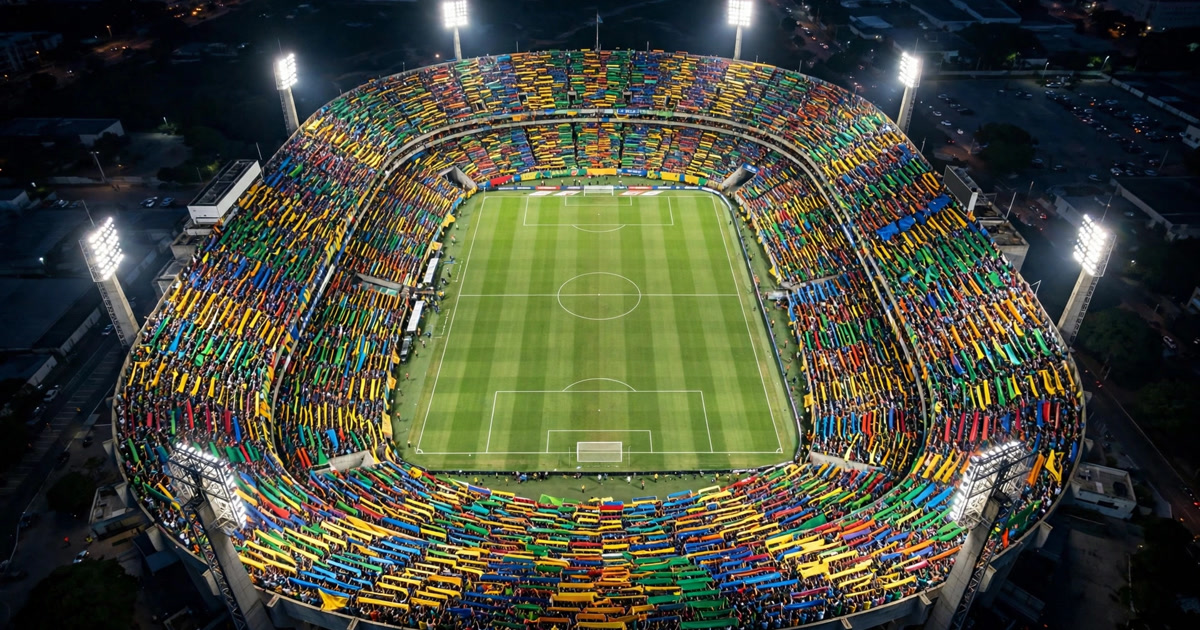
If you want to follow Brazilian club football properly, the Brasileirão fixtures and results are the place to start. The Campeonato Brasileiro Série A, usually shortened to the Brasileirão, is Brazil's top division and one of the most competitive leagues in world football, with twenty clubs, a long season, and a title race that often stays open deep into the campaign. This guide explains how the Brasileirão fixtures and results work, how to read the table, which derbies matter most, and how to keep up from outside Brazil without getting lost in conflicting kick-off times and competition names.
The Brasileirão fixtures and results matter because Brazil's league is not a short tournament with a knockout finish. Every club plays every other club twice, once at home and once away, for thirty-eight rounds. That marathon format rewards consistency rather than one lucky week, and it means the Brasileirão fixtures and results tell a long story: a slow start can be recovered, a strong autumn run can change everything, and relegation battles at the bottom are often just as dramatic as the title race at the top.
How the Brasileirão fixtures and results are organised
The Brasileirão fixtures and results follow a double round-robin format. Twenty teams play thirty-eight matches each, and three points are awarded for a win and one for a draw, just as in most leagues around the world. The club with the most points at the end of the season is champion, while the bottom four clubs are relegated to Série B. That simple structure hides a great deal of complexity, because fixture congestion, travel across a continental-sized country, and cup competitions all shape the Brasileirão fixtures and results week by week.
Brazilian football also has state championships early in the year, the Copa do Brasil, and South American competitions such as the Copa Libertadores and Copa Sudamericana. A club fighting on three fronts may rotate its squad for a league match, rest key players before a continental tie, or prioritise a cup semi-final over a mid-table league game. When you read the Brasileirão fixtures and results, always check whether a team played in midweek, travelled a long distance, or fielded a weakened side, because those details explain results that look surprising on paper.
Kick-off times can also confuse new followers. Brazil spans several time zones, matches are spread across weekends and midweek evenings, and television scheduling often moves games. The reliable habit is to check the Brasileirão fixtures and results on the day of the match rather than relying on a fixture list printed weeks earlier, and to confirm whether a time is shown in Brasília time, local stadium time, or your own time zone before setting an alarm.
How to read the Brasileirão table and results
Reading the Brasileirão fixtures and results becomes much easier once you understand the table. Points come first, then number of wins, then goal difference, then goals scored. That order matters: a team with more wins ranks above a team with the same points but more draws, so attacking football is rewarded in tie-breaks as well as in points. The top of the table brings qualification for the Copa Libertadores, the next places bring Copa Sudamericana qualification, and the bottom four face relegation.
Form is another useful lens on the Brasileirão fixtures and results. Look at the last five matches, home and away records separately, and goals scored and conceded, rather than judging a club by its name alone. Flamengo, Palmeiras, Corinthians, São Paulo, Atlético Mineiro, Fluminense, Botafogo, Grêmio and Internacional are historically powerful, but the Brasileirão regularly produces surprise challengers from outside the traditional giants, and newly promoted clubs can be very difficult to beat at home.
Results also need context. A 1-0 away win in a derby, a draw after playing most of the match with ten players, or a high-scoring win against a relegated side all mean different things. Good coverage of the Brasileirão fixtures and results will note red cards, injuries, suspensions and weather, especially for matches in the north-east heat, the southern winter, or at high altitude in some away grounds. Reading beyond the scoreline is what turns casual score-checking into real understanding.
Brasileirão fixtures and results: clubs, derbies and stars to know
No guide to the Brasileirão is complete without its derbies. The Fla-Flu between Flamengo and Fluminense, the Gre-Nal between Grêmio and Internacional, the Paulista derby between Corinthians and Palmeiras, the Majestoso between Corinthians and São Paulo, and the Clássico Mineiro between Atlético Mineiro and Cruzeiro all carry decades of history. These matches are often tight, emotional and decided by a single moment, so form counts for less than usual and the atmosphere is worth experiencing even as a neutral.
Brazil is also famous for developing young talent, and the Brasileirão is often the first place where future world stars announce themselves. Teenagers break into first teams, play a handful of eye-catching matches, and earn moves to Europe, while experienced internationals return home to finish their careers. Following the league therefore means watching two stories at once: the race for the title and the emergence of the next generation of Brazilian players.
For visitors, planning a trip around the Brasileirão can be rewarding, but it needs care. Stadium tours, ticket availability, safety around grounds, and transport in large cities all vary by club and city. Book through official club channels where possible, arrive early, and follow local advice on matchday. If you are planning a wider trip, our guide on how to travel on a budget and our explainer on what travel insurance covers will help you plan the practical side of a football trip to Brazil.
How to follow the Brasileirão fixtures and results from abroad
The simplest routine for following the Brasileirão from abroad is to pick one reliable source for scores, one for the table, and one for news, and to check them at the same time each matchday. Official league and federation pages give authoritative fixtures, major sports broadcasters give live scores and highlights, and club social media accounts give team news, line-ups and injury updates. Cross-checking two sources protects you when a kick-off time changes or a match is postponed.
Broadcast rights for the Brasileirão varies by country and change between seasons, so check your local sports broadcaster or streaming service before assuming a match will be shown. Some services carry selected matches only, others carry a weekly highlights show, and radio and live-text coverage can fill the gaps. Setting alerts for your club, rather than for the whole league, keeps notifications useful instead of overwhelming during a busy round of ten matches.
Finally, remember that the Brasileirão rewards patience. A single weekend rarely decides the season, and the most enjoyable way to follow the league is to watch the table evolve over months, learn the stories behind the clubs, and enjoy the unpredictability that makes Brazilian football distinctive. Keep a simple weekly habit, note the derbies and the relegation six-pointers, and you will soon read a Brazilian league table with the confidence of a lifelong fan.