
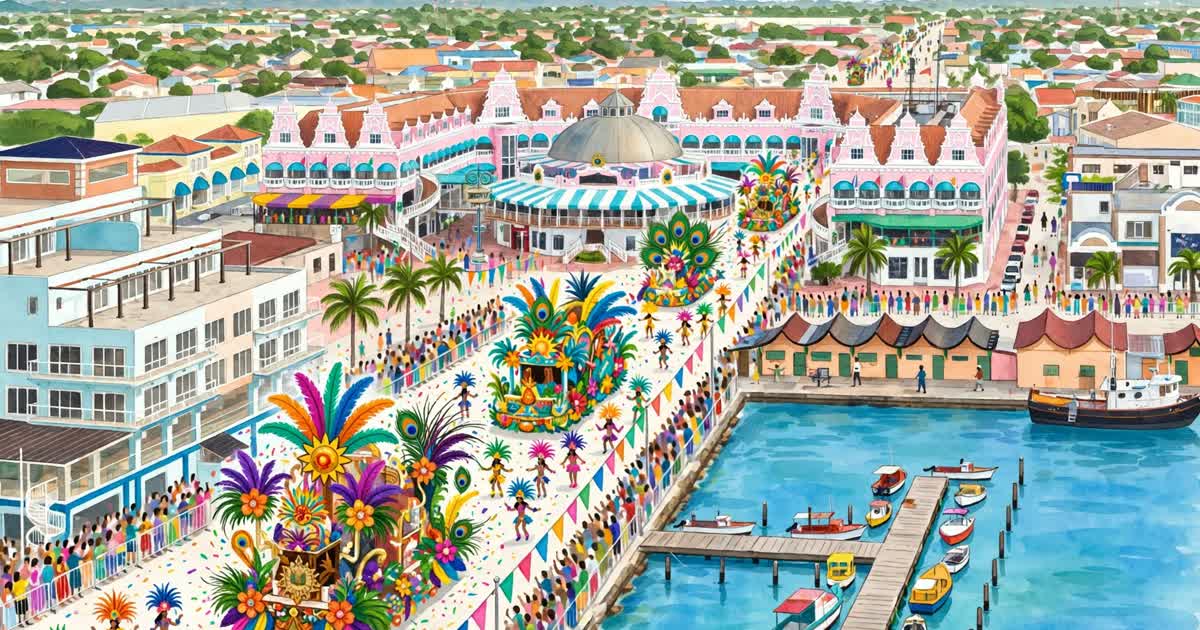
Aruba Carnival is one of the longest carnivals in the Caribbean, stretching from November through February with queen elections, music competitions, street parties, and grand parades that transform Oranjestad and San Nicolas into stages of colour and sound. Rooted in island traditions and shaped by Dutch, Spanish, African, and Latin influences, Aruba Carnival blends European carnival customs with Caribbean music and dance in a uniquely Aruban celebration.
This guide explains Aruba Carnival completely: the season calendar, the Torch Parade, Tumba Festival, queen elections, children parades, and the Grand Parades that climax the season, plus other Aruba festivals worth planning around. Whether you visit for Carnival or another celebration, understanding the festival calendar unlocks the island cultural heart.
Aruba Carnival Season and Dates
Carnival in Aruba season officially opens on 11 November, when the Carnival schedule is traditionally announced and the spirit of celebration begins building. Street events get going in January with the Torch Parade, followed by weeks of competitions, queen elections, and parades through January and February, climaxing with the Grand Parades and the burning of King Momo before Ash Wednesday. Exact the Aruban Carnival season dates shift slightly each year with the Easter calendar, so confirm the current schedule before booking.
The long Carnival in Aruba season means visitors can experience Carnival atmosphere across months, not just a single weekend. Early season events in November and December include opening ceremonies and fundraising parties, while January and February pack in the major parades and competitions. Planning around the Aruban Carnival season dates requires checking the official Visit Aruba schedule, since venues and times are published in November for the coming season.
Torch Parade and Opening Parades
The Torch Parade, or Parada di Flambeu, is the first official parade of Carnival in Aruba, lighting up Oranjestad streets in early January with participants carrying torches and illuminated costumes. Originally organised by the Tivoli Club, Aruba oldest social club, the Torch Parade is now the official opening parade on the Carnival organiser schedule, beginning at 8 p.m. and setting the pace for weeks of festivities. Its glowing procession through the capital is one of Carnival most photogenic moments.
Following the Torch Parade, the Aruban Carnival season parades multiply: the Fantasy Parade showcases creative themed costumes, children parades in Noord, Oranjestad, and San Nicolas celebrate young masqueraders, and school parades fill streets with student bands. Each parade has its own character, from family-friendly daytime events to late-night street parties, giving visitors many ways to experience Carnival in Aruba beyond the grand finales.
Tumba Festival and Aruba Carnival Music
Tumba music is the signature sound of the Aruban Carnival season, a lively genre blending African rhythms, Caribbean melodies, and Latin influences into songs written specifically for the season. The Tumba Festival, held in January, crowns the best tumba songs and performers, with youth and adult competitions drawing huge crowds to the Carnival Entertainment Village in San Nicolas. Winning tumba songs become the anthems that parade bands dance to for weeks.
Beyond tumba, Carnival in Aruba music includes calypso and roadmarch contests, soca monarch competitions, and live performances by local and international artists at fetes and street parties. Music trucks accompany parades with powerful sound systems, and the season soundtrack, released months ahead, lets revellers learn songs before arriving. For music lovers, Aruba Carnival offers a deeper, more distinctive soundscape than carnivals dominated by a single genre.
Queen Elections and Aruba Carnival Pageantry
Queen elections are central to Aruba Carnival pageantry, with contests for Carnival Queen, Children Queen, Teen Queen, and other titles held in January. Contestants present elaborate costumes, talent performances, and public appearances, and the crowning ceremonies are major social events attended by thousands. The elected queens lead parades, attend official events, and represent Carnival throughout the season and beyond.
Pageantry in Aruba Carnival extends to costume design itself, with mas groups spending months creating themed sections adorned with sequins, feathers, and glitter. The Grand Parades showcase these creations at their best, with judges awarding prizes for design, presentation, and performance. Visitors who attend a queen election gain insight into Aruba Carnival values: beauty, creativity, community pride, and the celebration of Aruban identity across generations.
Grand Parades and the Climax of Aruba Carnival
The Grand Parades climax Aruba Carnival in February, with the San Nicolas Grand Parade followed by the Oranjestad Grand Parade, the largest and most spectacular events of the season. Massive floats, music trucks, and thousands of costumed revellers fill the streets for hours, with crowds lining routes, dancing alongside bands, and celebrating into the night. The Lighting Parades, with illuminated costumes after dark, add magical evening spectacles in both towns.
Aruba Carnival ends traditionally with the burning of King Momo, a life-size effigy, at midnight on Shrove Tuesday, marking the close of festivities and the start of Lent. Carnival Monday is a public holiday in Aruba, giving locals and visitors a day to recover and reflect. The Grand Parade weekend demands early planning: book accommodation months ahead, secure viewing positions early on parade days, and prepare for crowds, heat, and long, joyful days.
Other Aruba Festivals Beyond Carnival
Beyond Aruba Carnival, the island festival calendar includes the Aruba International Film Festival, the Soul Beach Music Festival, sailing regattas, and cultural celebrations for Dia di Betico, honouring national hero Betico Croes on 25 January, which falls within Carnival season itself. Food festivals, art fairs, and beach events fill the year, while Christmas and New Year bring concerts, fireworks, and family celebrations to Palm Beach and Oranjestad.
Planning a trip around Aruba festivals beyond Carnival offers quieter but equally rewarding experiences, with lower hotel prices outside peak season. The Aruba Tourism Authority publishes annual event calendars, and local venues announce concerts and exhibitions throughout the year. Whether you choose Carnival grandeur or a smaller festival, Aruba celebrations share a common spirit: music, community, and the island famous hospitality, expressed in every season.
For related guidance, see Aruba beaches and resorts guide, Play Whe results Trinidad guide, Grenada beaches and sailing guide.
Sources: Visit Aruba (visitaruba.com), Aruba Carnival official schedules (SMAC), Aruba Tourism Authority festival guides.